About this artwork
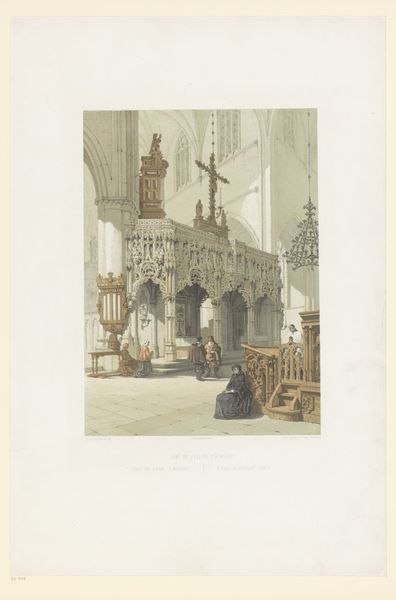
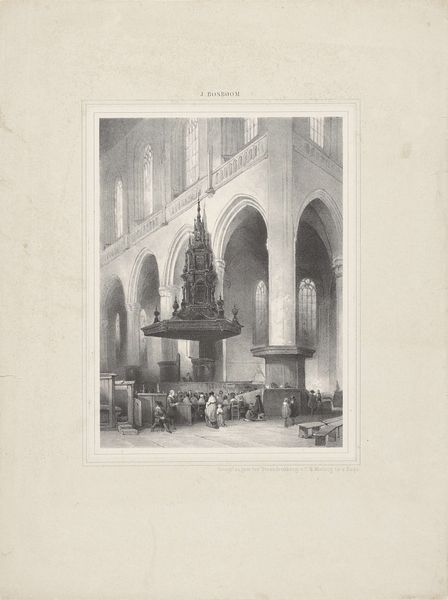
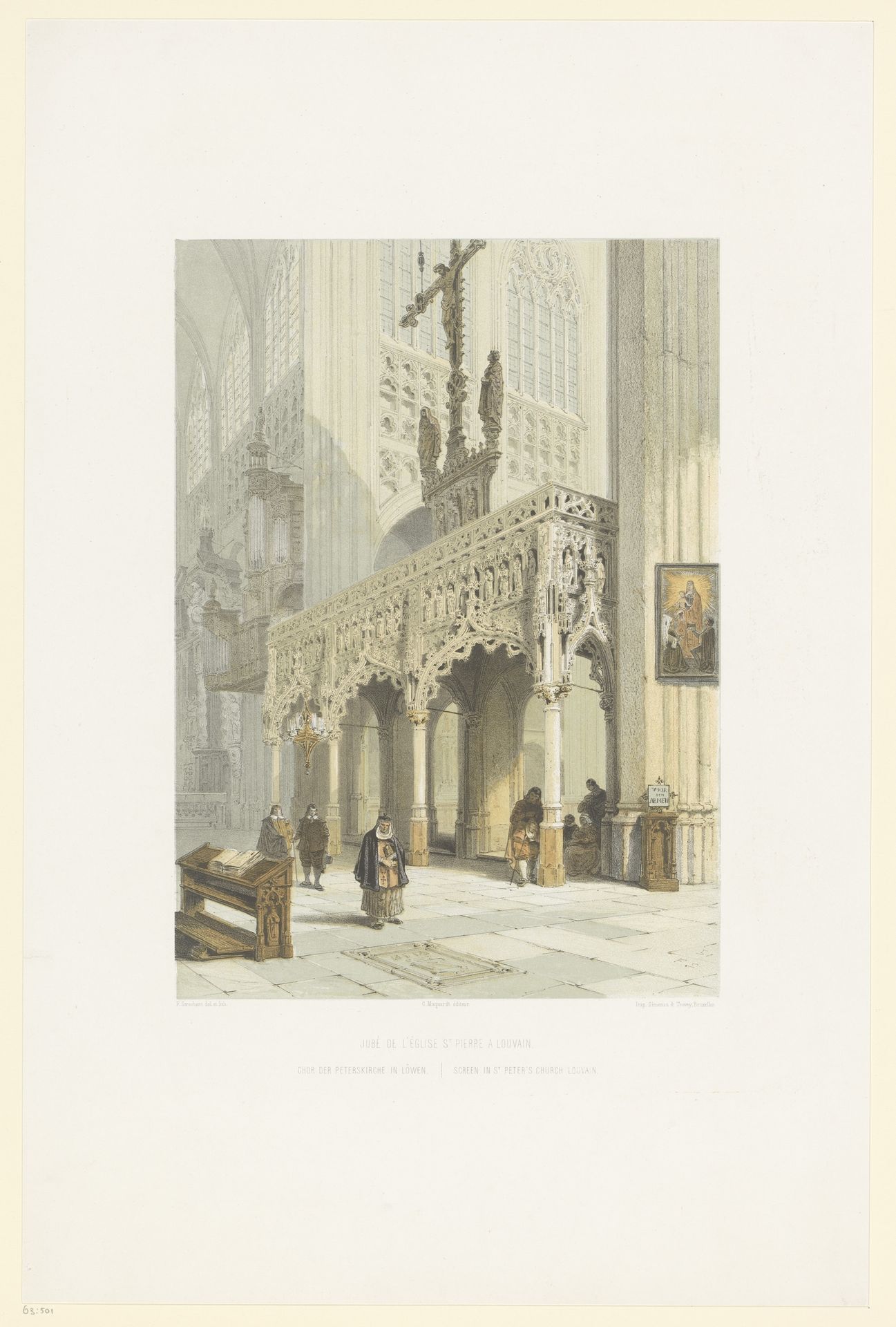
François Stroobant made this print of the Oksaal, or rood screen, in the Sint-Pieterskerk in Leuven sometime in the 19th century. The architecture and figures are rendered in careful detail, indicating the role of religious institutions in shaping daily life in Belgium at this time. Stroobant shows us how the church, as a public institution, orders both space and society. The rood screen itself separates the nave from the chancel, dividing the space between the clergy and the laity, emphasizing social hierarchies within the church. We see figures dressed in clerical garb moving through the space, reinforcing the church’s presence in the town. The architecture's soaring heights and intricate details create a sense of awe and reverence, inviting contemplation of the divine. To understand this image better, we might turn to church records, urban plans of Leuven, and the history of the diocese. By looking at these records, the image becomes a window into the social and institutional history of 19th-century Belgium.
Oksaal in de Sint-Pieterskerk te Leuven
1852 - 1878

François Stroobant
1819 - 1916Location
RijksmuseumArtwork details
- Dimensions
- height 521 mm, width 345 mm
- Location
- Rijksmuseum
- Copyright
- Rijks Museum: Open Domain
Comments
Be the first to share your thoughts about this work.
About this artwork
François Stroobant made this print of the Oksaal, or rood screen, in the Sint-Pieterskerk in Leuven sometime in the 19th century. The architecture and figures are rendered in careful detail, indicating the role of religious institutions in shaping daily life in Belgium at this time. Stroobant shows us how the church, as a public institution, orders both space and society. The rood screen itself separates the nave from the chancel, dividing the space between the clergy and the laity, emphasizing social hierarchies within the church. We see figures dressed in clerical garb moving through the space, reinforcing the church’s presence in the town. The architecture's soaring heights and intricate details create a sense of awe and reverence, inviting contemplation of the divine. To understand this image better, we might turn to church records, urban plans of Leuven, and the history of the diocese. By looking at these records, the image becomes a window into the social and institutional history of 19th-century Belgium.
Comments
Be the first to share your thoughts about this work.