About this artwork
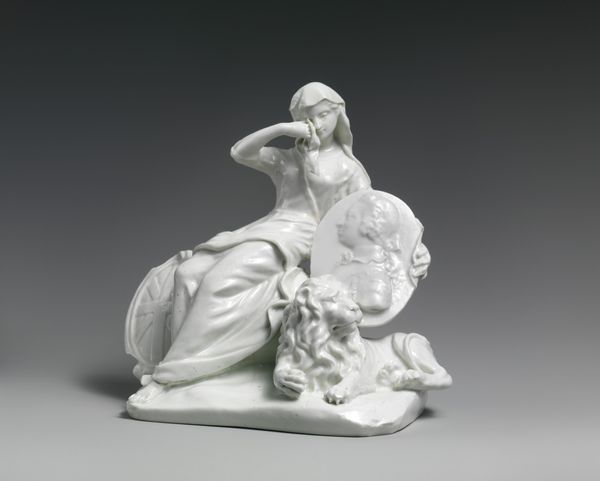
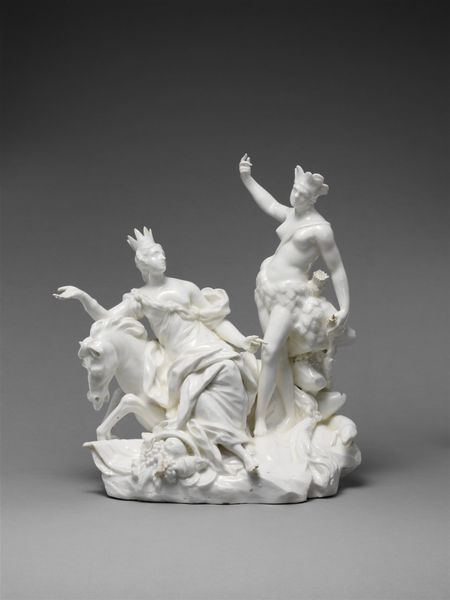
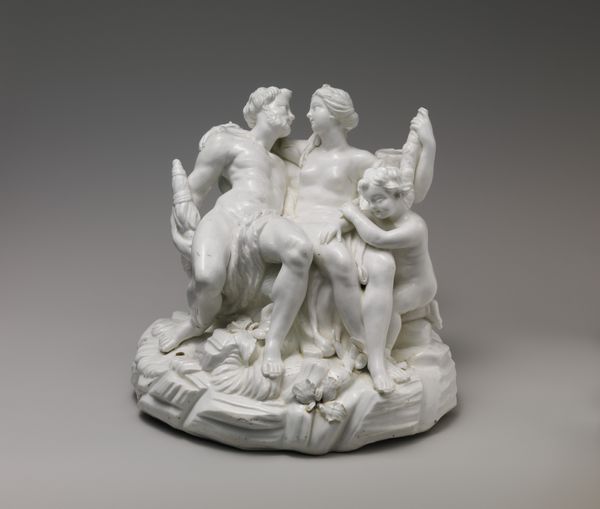
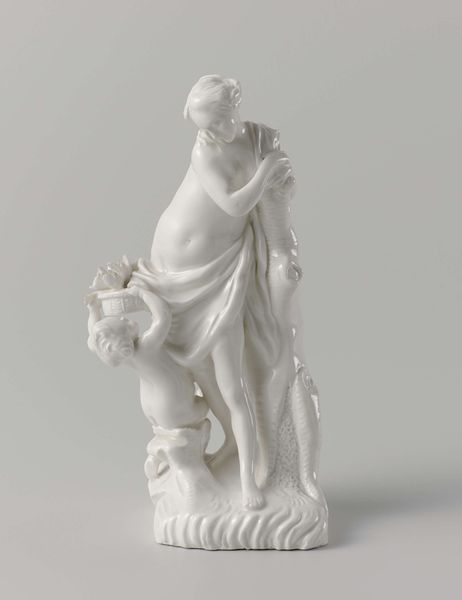
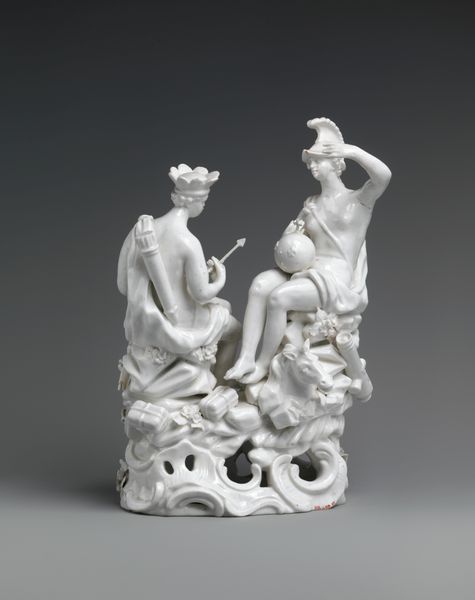
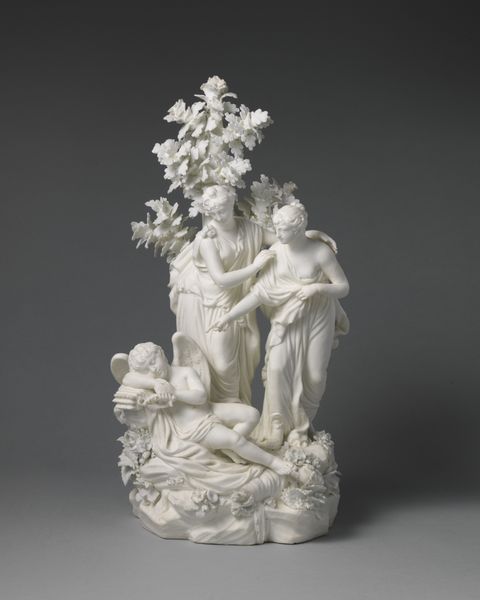
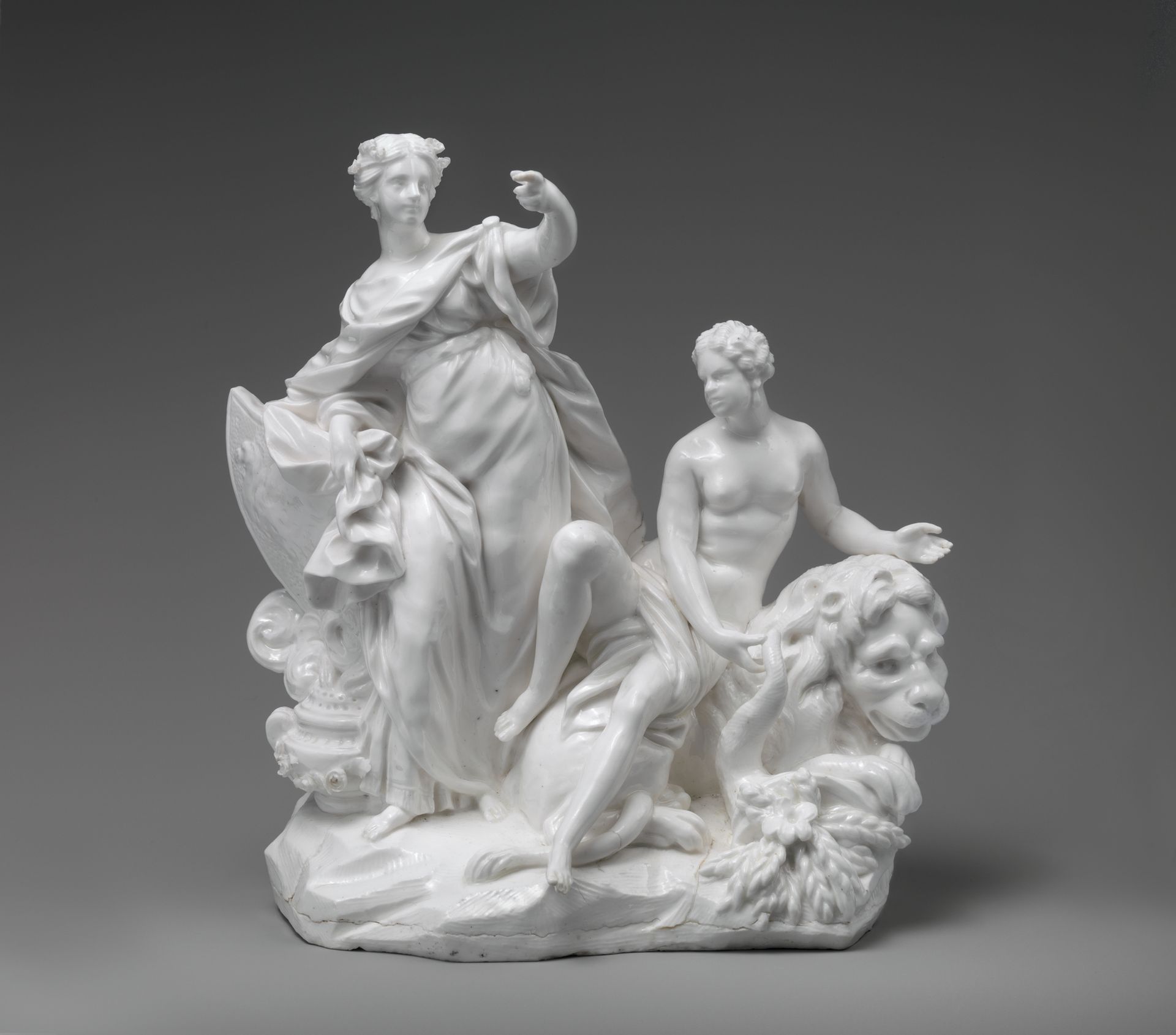
This is ‘Asia and Africa’, a porcelain sculpture made at the Vincennes Manufactory in France, sometime between 1740 and 1756. It uses allegory to explore the social and cultural relationship between Europe, Asia and Africa. The image creates meaning through visual codes of the time; each figure embodies the European understanding of its place in the world. Asia is presented as a draped female figure holding what seems to be a shield, Africa as a figure riding a lion. These figures speak to the contemporary European fascination with, and often skewed understanding of, non-European continents. What’s striking is the institutional context of its production, created during a time when the porcelain industry in France sought to emulate the styles of other cultures, particularly Chinese porcelain. This sculpture reflects not just artistic expression, but also the economic and political ambitions of 18th-century France. To understand this work better, we might look at travel literature from the time, or institutional records from the manufactory. Art history here is contingent on these social and institutional contexts.
Asia and Africa
1747 - 1757

Vincennes Manufactory
1740 - 1756
The Metropolitan Museum of Art
Metropolitan Museum of Art, New York, NYArtwork details
- Dimensions
- Overall (confirmed): 11 3/16 × 10 3/8 × 7 1/8 in. (28.4 × 26.4 × 18.1 cm)
- Location
- Metropolitan Museum of Art, New York, NY
- Copyright
- Public Domain
Comments
Be the first to share your thoughts about this work.
About this artwork
This is ‘Asia and Africa’, a porcelain sculpture made at the Vincennes Manufactory in France, sometime between 1740 and 1756. It uses allegory to explore the social and cultural relationship between Europe, Asia and Africa. The image creates meaning through visual codes of the time; each figure embodies the European understanding of its place in the world. Asia is presented as a draped female figure holding what seems to be a shield, Africa as a figure riding a lion. These figures speak to the contemporary European fascination with, and often skewed understanding of, non-European continents. What’s striking is the institutional context of its production, created during a time when the porcelain industry in France sought to emulate the styles of other cultures, particularly Chinese porcelain. This sculpture reflects not just artistic expression, but also the economic and political ambitions of 18th-century France. To understand this work better, we might look at travel literature from the time, or institutional records from the manufactory. Art history here is contingent on these social and institutional contexts.
Comments
Be the first to share your thoughts about this work.