About this artwork
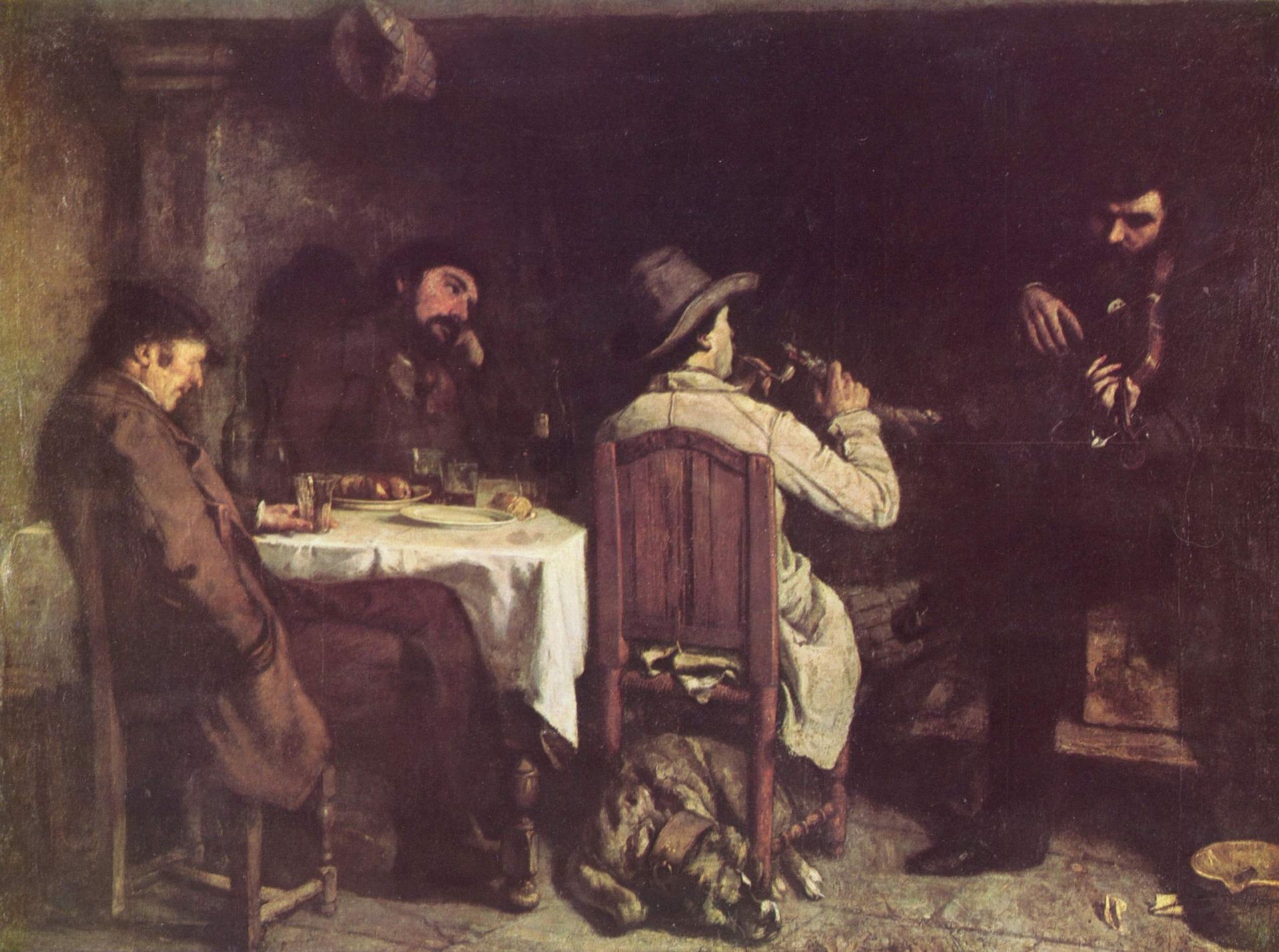
Gustave Courbet painted ‘After Dinner at Ornans’ with oil on canvas. Its deep tonal range and chiaroscuro draw us into the dimly lit interior of a post-meal scene. The painting is divided into two distinct zones: the left side, dominated by the white tablecloth, and the dark, cavernous right, anchored by the somber figure standing by the fireplace. This division isn't just spatial but also symbolic, with the table representing a space of communal consumption. Courbet's radical approach to realism challenged the idealized forms of academic painting. Instead of depicting grand historical or mythological scenes, he chose a seemingly mundane subject – a group of men relaxing after a meal. This shift in focus was a deliberate act, questioning established hierarchies and asserting the value of everyday life. The use of light and shadow plays a crucial role here. The way Courbet manipulates these elements creates a sense of intimacy, but also hints at the darker, less polished aspects of human existence. This contrast destabilizes traditional notions of beauty, emphasizing the importance of representing the world as it is.
After Dinner at Ornans 1849

Gustave Courbet
1819 - 1877Location
Palais des Beaux-Arts de Lille, Lille, FranceArtwork details
- Medium
- painting, oil-paint
- Dimensions
- 195 x 257 cm
- Location
- Palais des Beaux-Arts de Lille, Lille, France
- Copyright
- Public domain
Tags
portrait
painting
oil-paint
oil painting
group-portraits
romanticism
genre-painting
realism
Comments
No comments
About this artwork
Gustave Courbet painted ‘After Dinner at Ornans’ with oil on canvas. Its deep tonal range and chiaroscuro draw us into the dimly lit interior of a post-meal scene. The painting is divided into two distinct zones: the left side, dominated by the white tablecloth, and the dark, cavernous right, anchored by the somber figure standing by the fireplace. This division isn't just spatial but also symbolic, with the table representing a space of communal consumption. Courbet's radical approach to realism challenged the idealized forms of academic painting. Instead of depicting grand historical or mythological scenes, he chose a seemingly mundane subject – a group of men relaxing after a meal. This shift in focus was a deliberate act, questioning established hierarchies and asserting the value of everyday life. The use of light and shadow plays a crucial role here. The way Courbet manipulates these elements creates a sense of intimacy, but also hints at the darker, less polished aspects of human existence. This contrast destabilizes traditional notions of beauty, emphasizing the importance of representing the world as it is.
Comments
No comments