About this artwork
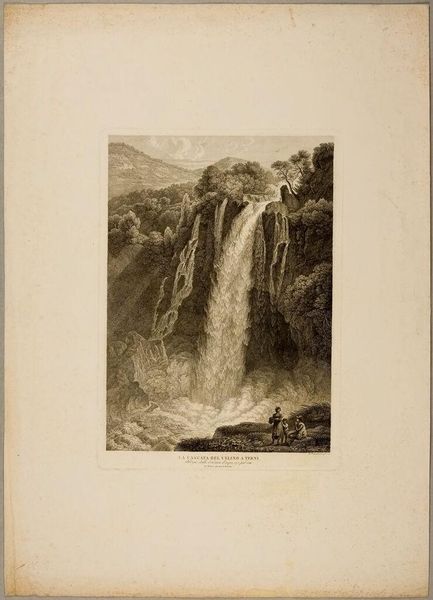
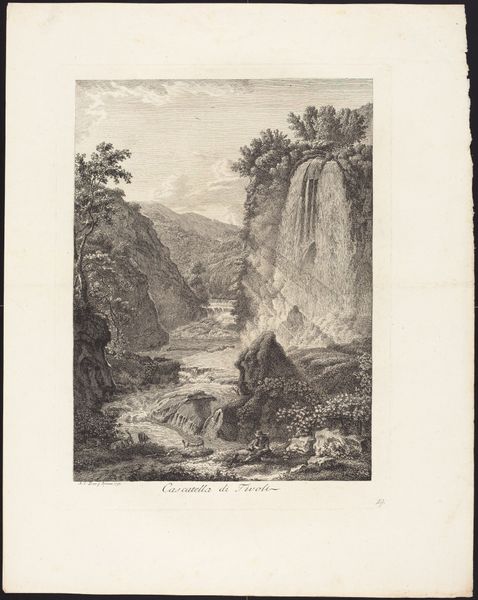
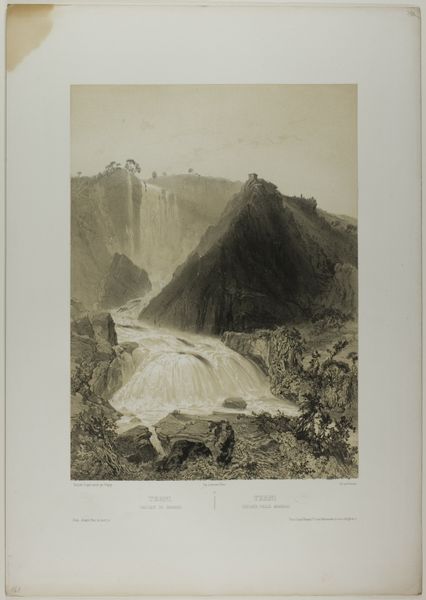
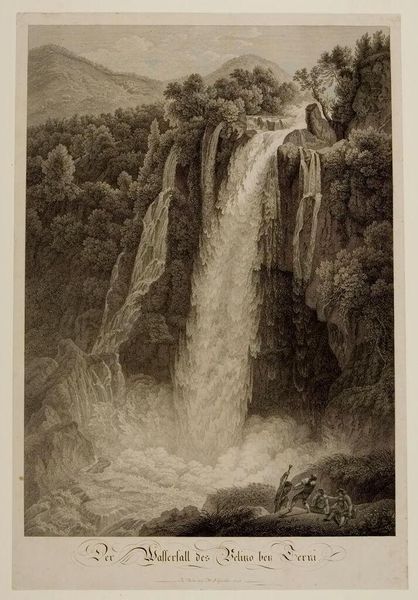
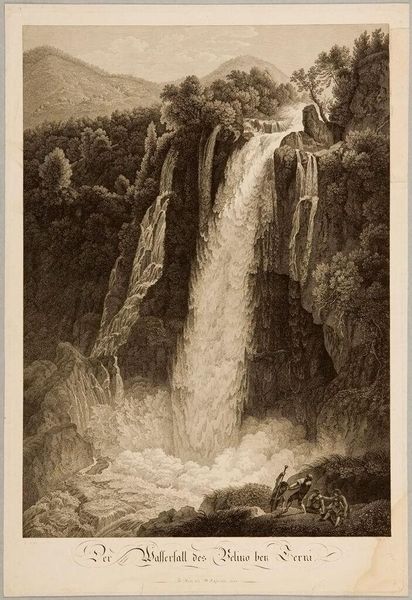
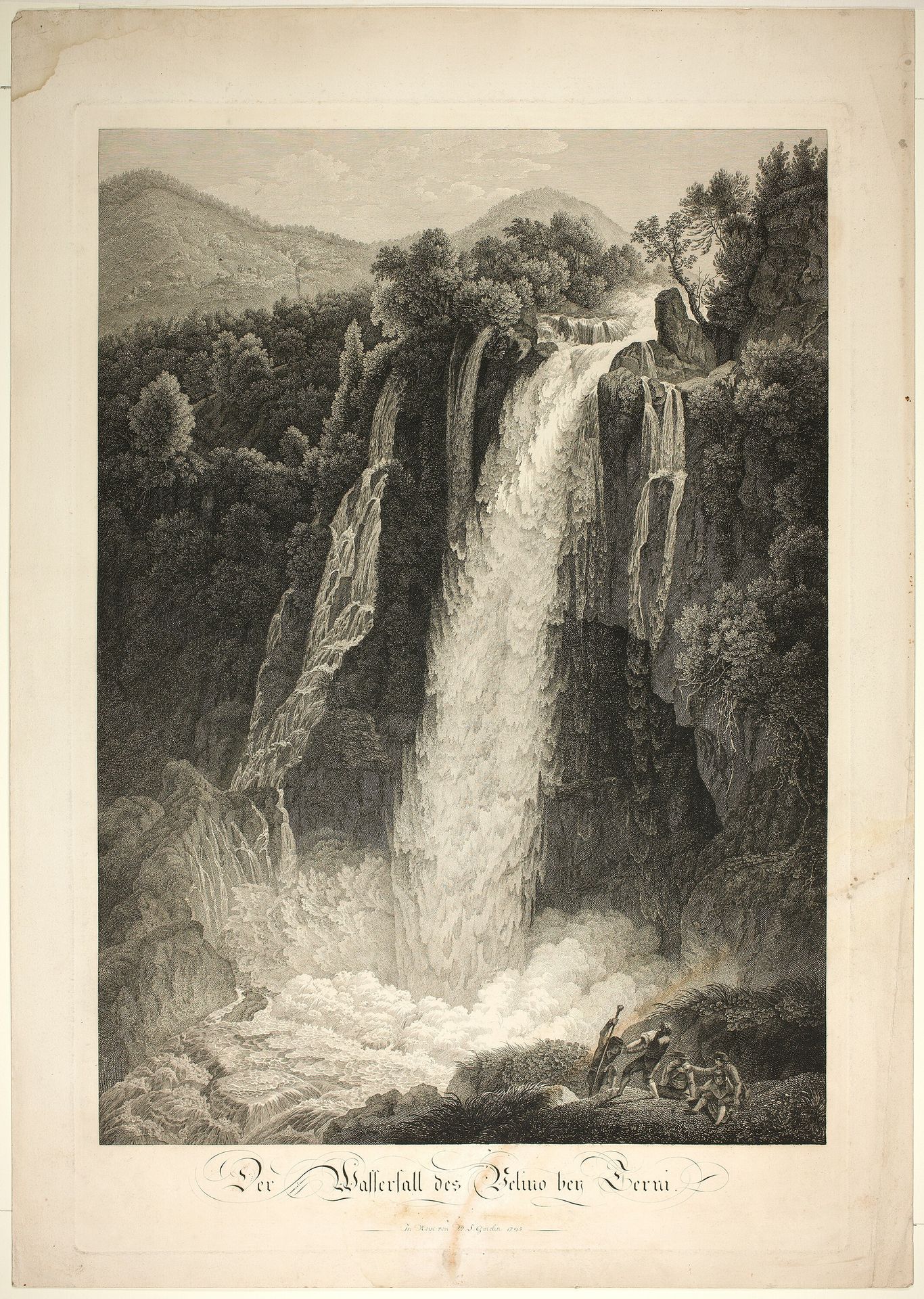
This print of the Waterfall of Velino near Terni in Rome was made by Friedrich Wilhelm Gmelin around the turn of the 19th century. Gmelin was part of a generation of Northern European artists who travelled to Italy, drawn by its classical heritage and picturesque landscapes. This image is a testament to the period's fascination with the sublime - the artistic movement that found beauty in the awe-inspiring and sometimes terrifying aspects of nature. The waterfall itself becomes a symbol of untamed power, dwarfing the figures in the foreground. This imagery was particularly resonant in a society undergoing rapid industrial and political change. For many at the time, nature was understood as the only space separate from the social transformations of modern life. To understand this artwork fully, we might delve into travelogues and journals of the period, exploring the experiences and expectations of those who embarked on the Grand Tour. By looking at this artwork through that lens, we can see how the artistic choices made here reflect broader cultural values of the time.
The Waterfall of Velino Near Terni, Rome
1795


Artwork details
- Medium
- drawing, print, etching, paper
- Dimensions
- 607 × 411 mm (plate); 675 × 477 mm (sheet)
- Location
- The Art Institute of Chicago
- Copyright
- Public Domain
Tags
drawing
germany
etching
landscape
paper
romanticism
history-painting
Comments
Be the first to share your thoughts about this work.
About this artwork
This print of the Waterfall of Velino near Terni in Rome was made by Friedrich Wilhelm Gmelin around the turn of the 19th century. Gmelin was part of a generation of Northern European artists who travelled to Italy, drawn by its classical heritage and picturesque landscapes. This image is a testament to the period's fascination with the sublime - the artistic movement that found beauty in the awe-inspiring and sometimes terrifying aspects of nature. The waterfall itself becomes a symbol of untamed power, dwarfing the figures in the foreground. This imagery was particularly resonant in a society undergoing rapid industrial and political change. For many at the time, nature was understood as the only space separate from the social transformations of modern life. To understand this artwork fully, we might delve into travelogues and journals of the period, exploring the experiences and expectations of those who embarked on the Grand Tour. By looking at this artwork through that lens, we can see how the artistic choices made here reflect broader cultural values of the time.
Comments
Be the first to share your thoughts about this work.