About this artwork
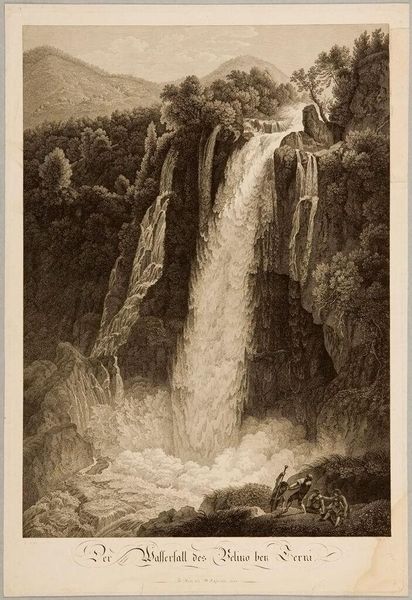
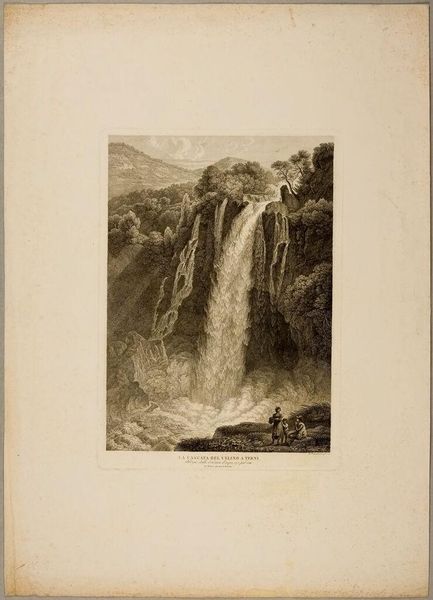
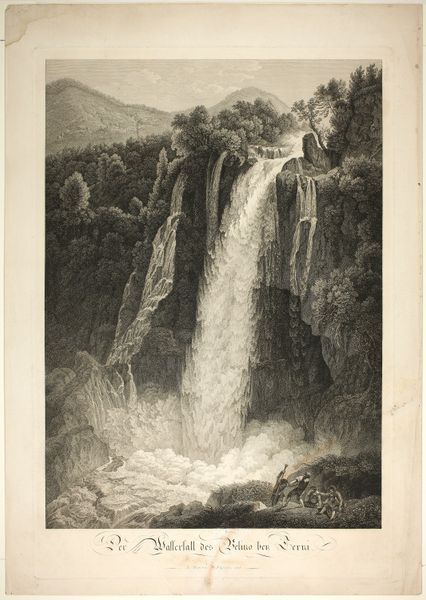
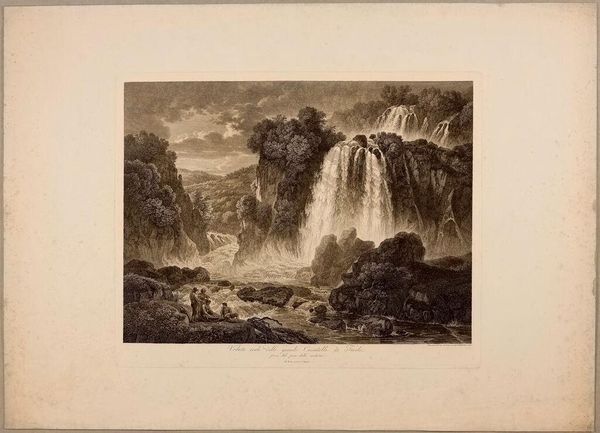
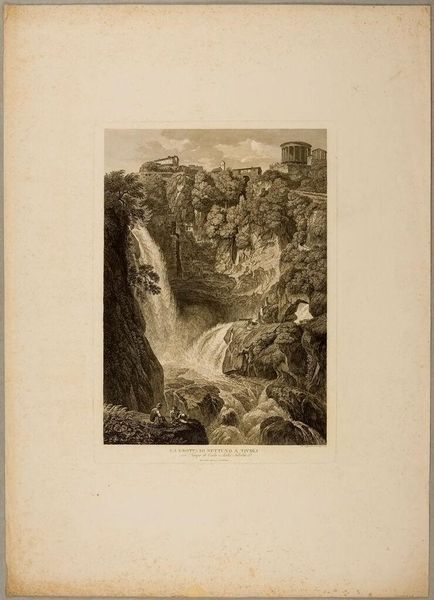
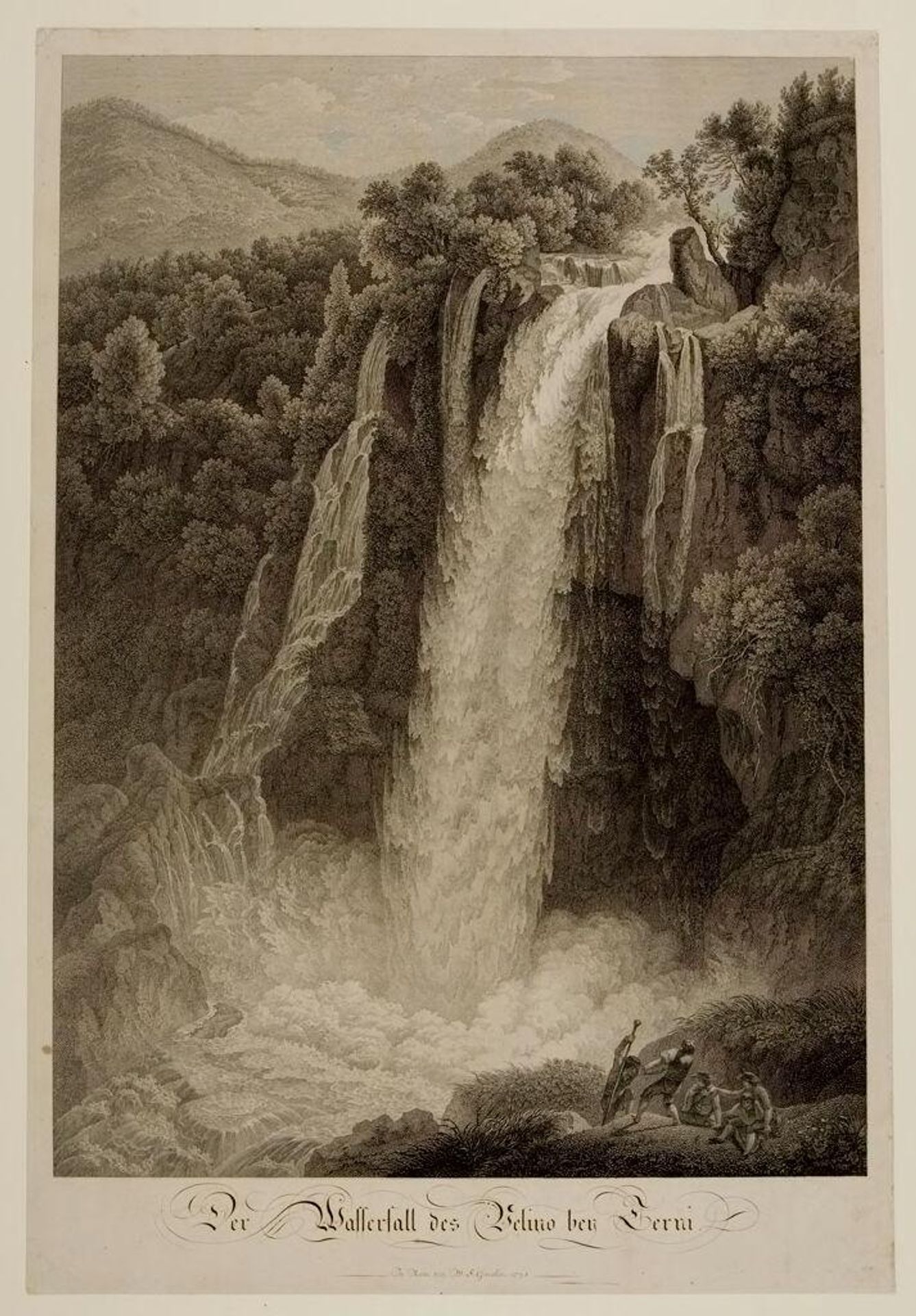
Curator: Looking at Friedrich Wilhelm Gmelin's "Der wasserfall des Velino bei Terni", I'm struck by how the artist orchestrates light and shadow to create a sense of depth and drama. The plate is 60 by 45 cm. Editor: It's immediately clear that this landscape is less about the objective portrayal of nature and more about imposing power dynamics between humanity and the natural world. Curator: I'd argue the detailed rendering of the waterfall and surrounding foliage speaks to a deep appreciation for the natural world, rendered with precise lines. Editor: But consider the figures at the base of the falls—seemingly dwarfed by the cascade. It's a composition that reinforces the idea of man's subjugation before the sublime. Curator: The artist's choice of medium—likely etching—allows for intricate detailing that captures the textures of the rocks and the movement of the water. Editor: And how might we interpret that choice of medium? The etchings, the lines and shades, seem to create a clear division between nature and the men looking at the falls, suggesting perhaps an understanding of the colonial undertones related to land ownership. Curator: Indeed, it's a testament to the enduring allure of landscape art as both a celebration of the visual and a reflection of societal values. Editor: I'm left wondering if the pursuit of the sublime always necessitates an act of domination, even within art.
Der wasserfall des Velino bei Terni
1795


Artwork details
- Dimensions
- plate: 60 x 45 cm (23 5/8 x 17 11/16 in.)
- Location
- Harvard Art Museums
- Copyright
- CC0 1.0
Comments
Share your thoughts
About this artwork
Curator: Looking at Friedrich Wilhelm Gmelin's "Der wasserfall des Velino bei Terni", I'm struck by how the artist orchestrates light and shadow to create a sense of depth and drama. The plate is 60 by 45 cm. Editor: It's immediately clear that this landscape is less about the objective portrayal of nature and more about imposing power dynamics between humanity and the natural world. Curator: I'd argue the detailed rendering of the waterfall and surrounding foliage speaks to a deep appreciation for the natural world, rendered with precise lines. Editor: But consider the figures at the base of the falls—seemingly dwarfed by the cascade. It's a composition that reinforces the idea of man's subjugation before the sublime. Curator: The artist's choice of medium—likely etching—allows for intricate detailing that captures the textures of the rocks and the movement of the water. Editor: And how might we interpret that choice of medium? The etchings, the lines and shades, seem to create a clear division between nature and the men looking at the falls, suggesting perhaps an understanding of the colonial undertones related to land ownership. Curator: Indeed, it's a testament to the enduring allure of landscape art as both a celebration of the visual and a reflection of societal values. Editor: I'm left wondering if the pursuit of the sublime always necessitates an act of domination, even within art.
Comments
Share your thoughts