About this artwork
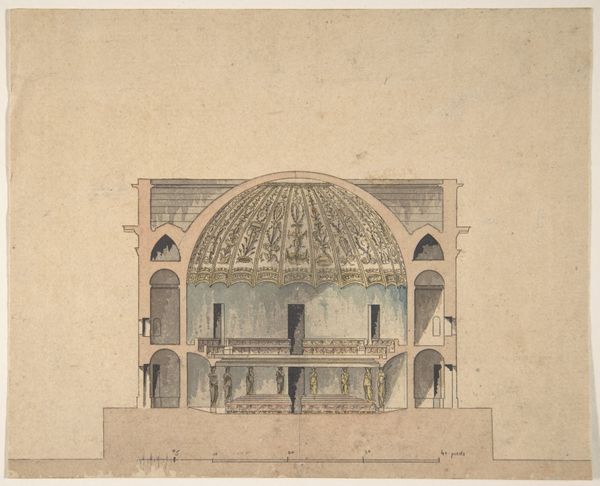
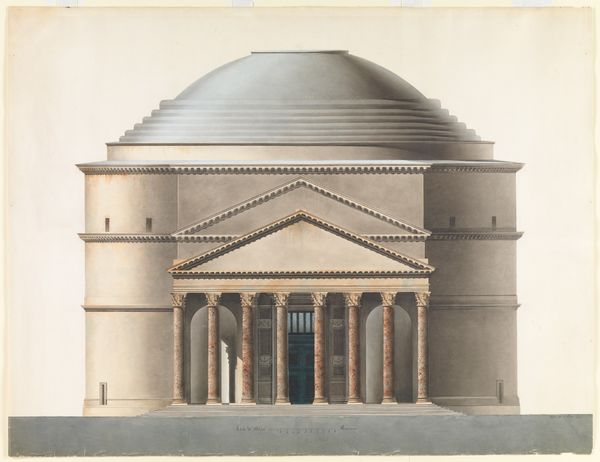
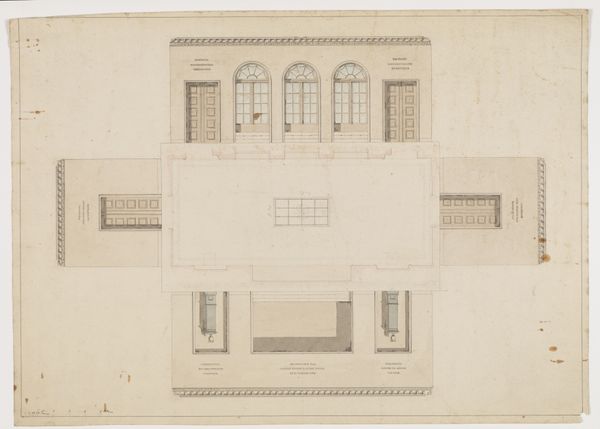
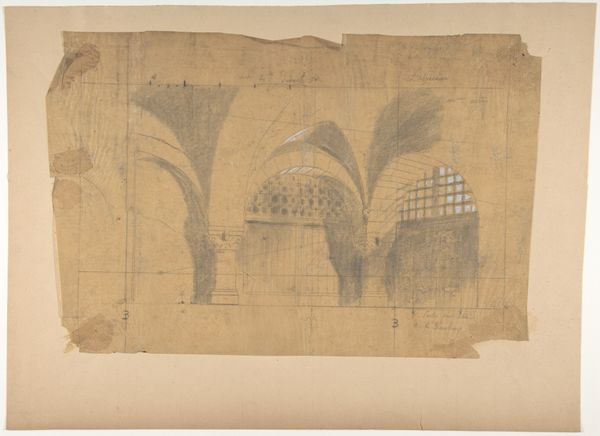
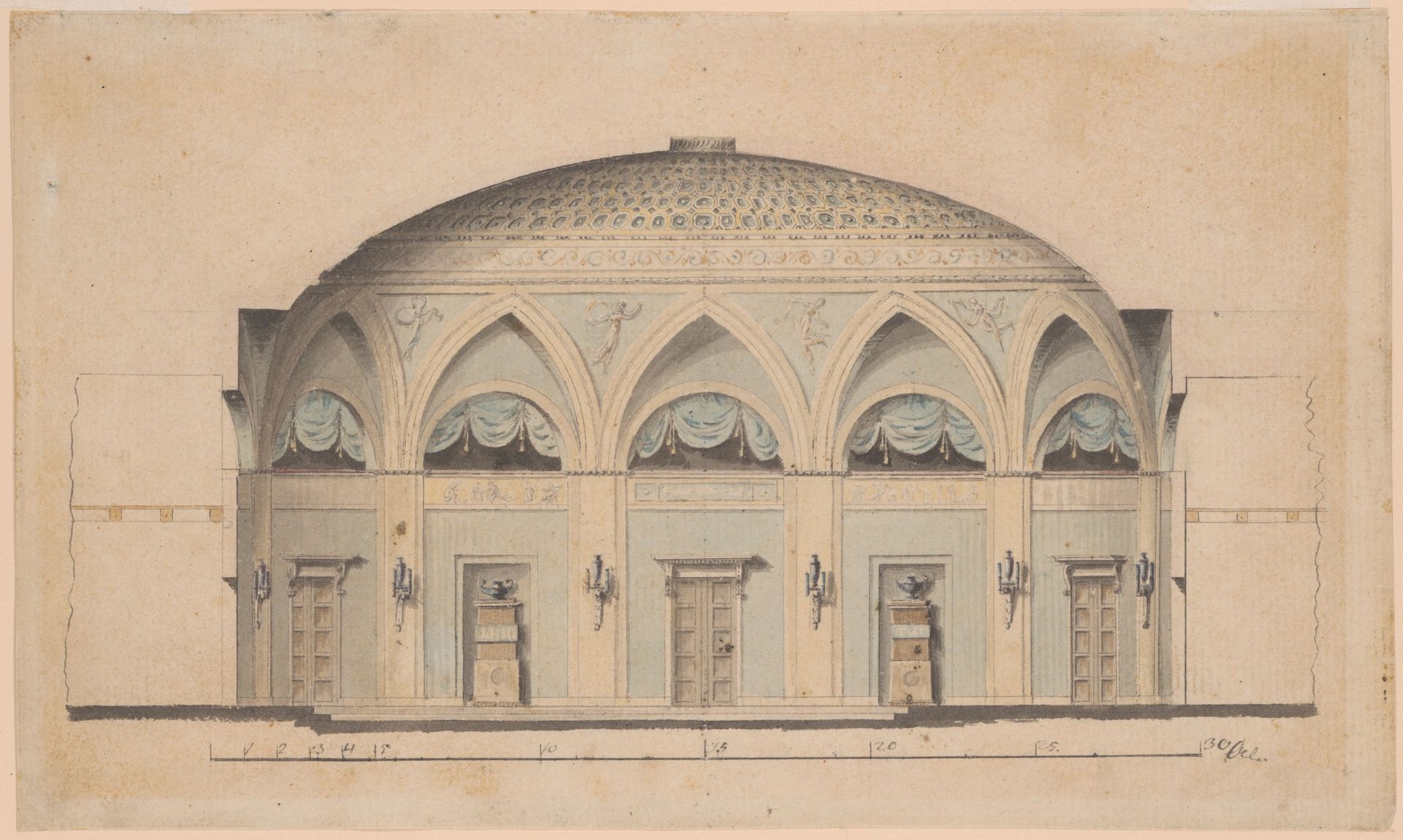
This watercolor cross-section of a domed room, made by an anonymous artist, presents a symphony of classical motifs. Urns and candelabra, emblems of memory and light, punctuate the space. These are no mere decorations, but invocations of ancient rituals and a yearning for the eternal. Observe the candelabra: from the simple oil lamps of antiquity to the ornate, multi-branched forms seen here, they symbolize enlightenment and the dispelling of darkness. These objects are not new inventions, but rather are part of a long tradition of symbolic representation. The dome itself, reminiscent of the Pantheon's oculus, evokes a connection to the heavens. This architectural feature acts as a powerful psychological symbol, creating a sense of awe, spiritual contemplation, and a desire to bridge the gap between the earthly and the divine. The motifs recur across time, evolving yet retaining their primal resonance. Their reappearance is no mere coincidence but a testament to the enduring power of symbols.
Cross-Section of a Domed Room with Urns and Candelabra
1750 - 1850


Artwork details
- Medium
- drawing, coloured-pencil, print, watercolor, architecture
- Dimensions
- sheet: 5 3/8 x 9 1/8 in. (13.7 x 23.1 cm)
- Location
- Metropolitan Museum of Art, New York, NY
- Copyright
- Public Domain
Tags
Comments
Share your thoughts
About this artwork
This watercolor cross-section of a domed room, made by an anonymous artist, presents a symphony of classical motifs. Urns and candelabra, emblems of memory and light, punctuate the space. These are no mere decorations, but invocations of ancient rituals and a yearning for the eternal. Observe the candelabra: from the simple oil lamps of antiquity to the ornate, multi-branched forms seen here, they symbolize enlightenment and the dispelling of darkness. These objects are not new inventions, but rather are part of a long tradition of symbolic representation. The dome itself, reminiscent of the Pantheon's oculus, evokes a connection to the heavens. This architectural feature acts as a powerful psychological symbol, creating a sense of awe, spiritual contemplation, and a desire to bridge the gap between the earthly and the divine. The motifs recur across time, evolving yet retaining their primal resonance. Their reappearance is no mere coincidence but a testament to the enduring power of symbols.
Comments
Share your thoughts