c. 1652
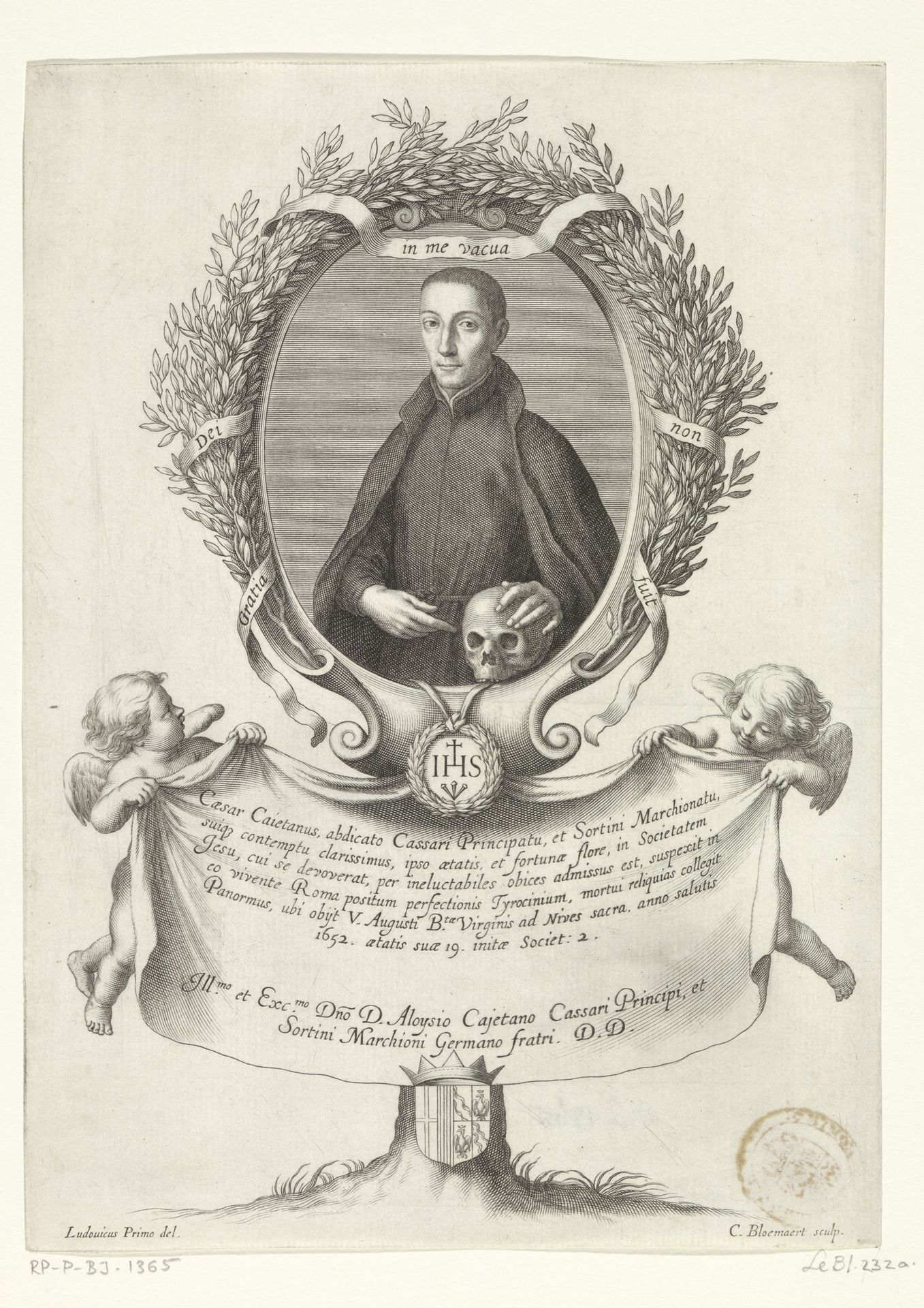
Portret van de Jezuïet Cesario Cájetan op 19-jarige leeftijd

Cornelis Bloemaert
1603 - 1684Location
RijksmuseumListen to curator's interpretation
Curatorial notes
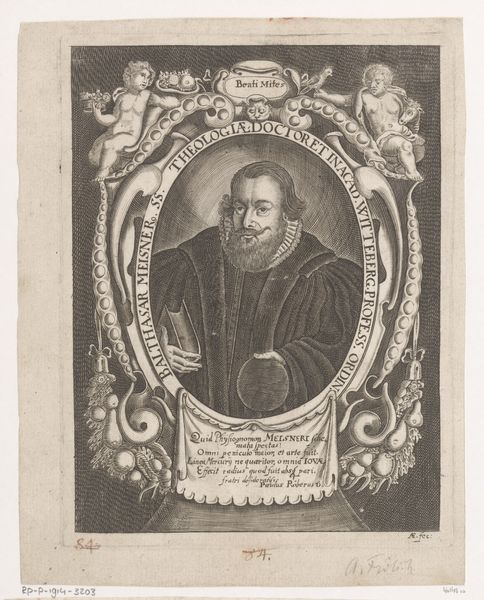
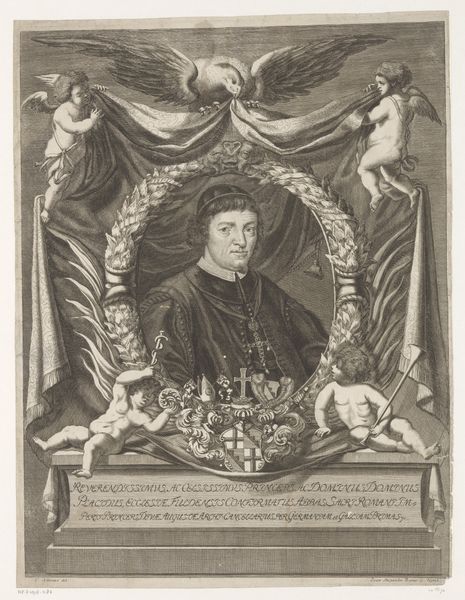
This is Cornelis Bloemaert’s 17th-century engraving of the Jesuit Cesario Cájetan, and it is filled with symbols speaking of life, death, and devotion. Notice the skull, a memento mori, clasped by Cájetan. This motif, urging contemplation of mortality, has ancient roots, appearing in Roman funerary art, and later, in countless Renaissance vanitas paintings. These skulls speak to the fleeting nature of earthly existence. It connects to our collective awareness of death and decay, echoing through art history as a stark reminder of our shared fate. The laurel wreath surrounding the portrait, symbolizing triumph and eternity, contrasts sharply with the skull. This juxtaposition evokes a powerful tension between worldly achievement and spiritual aspiration, suggesting a transformation from earthly endeavors to divine pursuits. These symbols resonate because they tap into deep-seated human concerns, the very cycle of life, death, and rebirth. They provoke thought and elicit a feeling of profound connection to those who have pondered these mysteries across time.