About this artwork
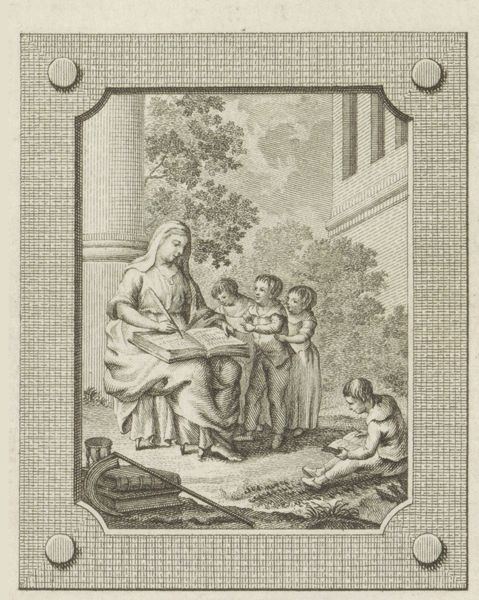
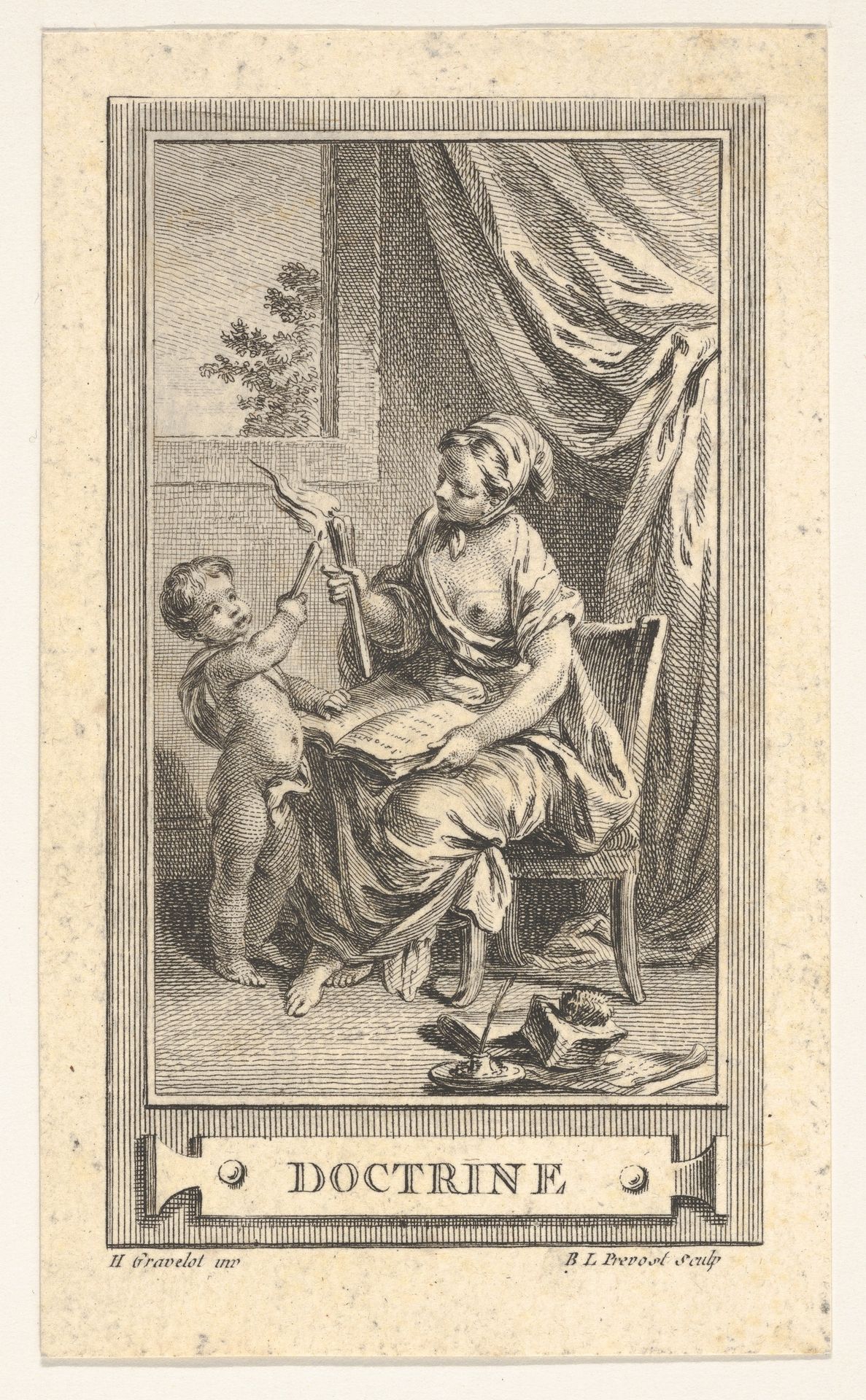
Benoit Louis Prevost created this print, Doctrine, as part of an iconological almanac in eighteenth-century France. The image depicts a woman, presumably a mother, teaching a child to read. At this time, the institution of the family was being radically re-thought. Enlightenment philosophers like Rousseau considered the family as the fundamental unit of society and the basis of civic virtue. Prevost’s image connects to this discourse by depicting the domestic scene as a site of instruction, the mother as the first teacher, and the child as a future citizen. The visual codes within the print reinforce these ideas. The setting is a comfortable, bourgeois interior, and the woman is fashionably dressed, suggesting the value of education to the upper classes. The image also makes reference to classical art, showing the woman with partially exposed breasts, reminiscent of allegories of Charity and Abundance. For the historian, this print offers a window onto the values of eighteenth-century French society and prompts deeper research into family life, education, and the public role of women.
Doctrine, from the Almanach iconologique
1760 - 1770

Benoit Louis Prevost
1747 - 1804
The Metropolitan Museum of Art
Metropolitan Museum of Art, New York, NYArtwork details
- Dimensions
- sheet: 4 5/16 x 6 1/2 in. (11 x 16.5 cm)
- Location
- Metropolitan Museum of Art, New York, NY
- Copyright
- Public Domain
Comments
Be the first to share your thoughts about this work.
About this artwork
Benoit Louis Prevost created this print, Doctrine, as part of an iconological almanac in eighteenth-century France. The image depicts a woman, presumably a mother, teaching a child to read. At this time, the institution of the family was being radically re-thought. Enlightenment philosophers like Rousseau considered the family as the fundamental unit of society and the basis of civic virtue. Prevost’s image connects to this discourse by depicting the domestic scene as a site of instruction, the mother as the first teacher, and the child as a future citizen. The visual codes within the print reinforce these ideas. The setting is a comfortable, bourgeois interior, and the woman is fashionably dressed, suggesting the value of education to the upper classes. The image also makes reference to classical art, showing the woman with partially exposed breasts, reminiscent of allegories of Charity and Abundance. For the historian, this print offers a window onto the values of eighteenth-century French society and prompts deeper research into family life, education, and the public role of women.
Comments
Be the first to share your thoughts about this work.