About this artwork
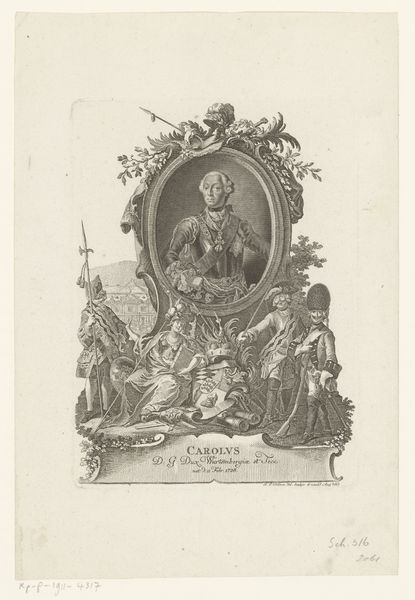
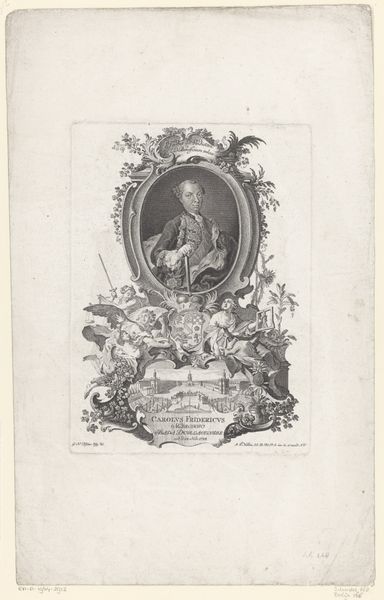
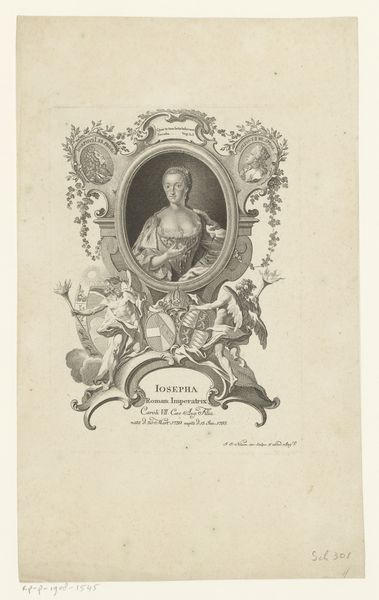
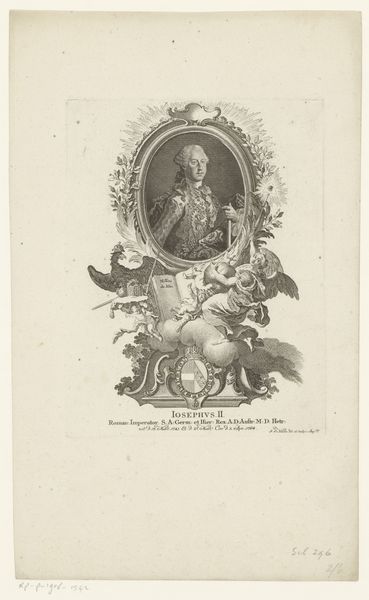
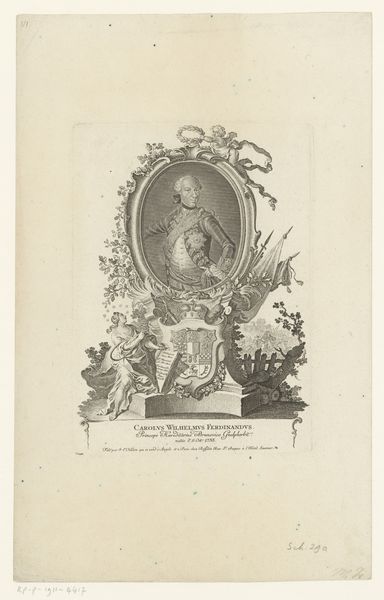
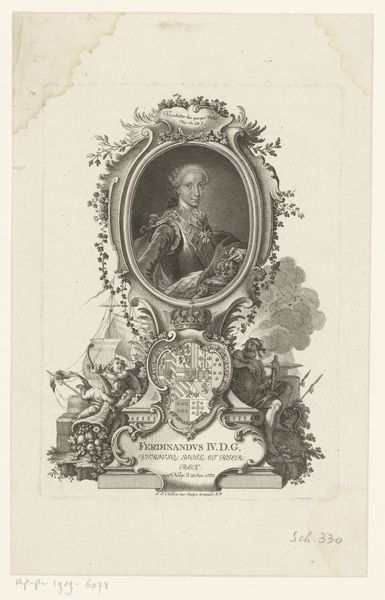
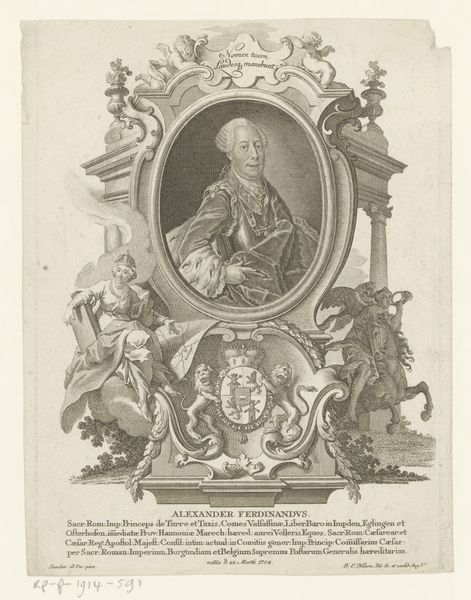
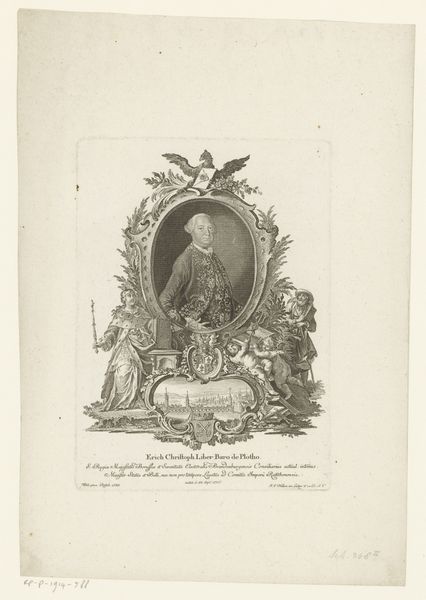
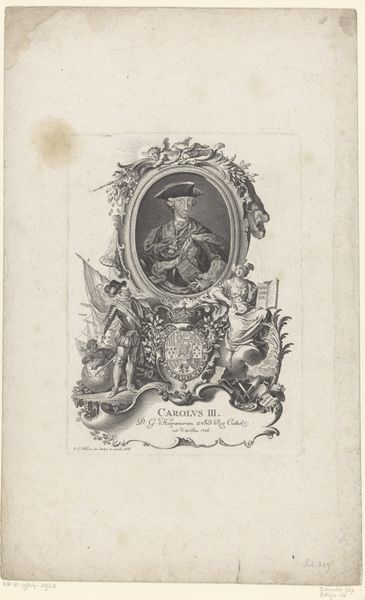
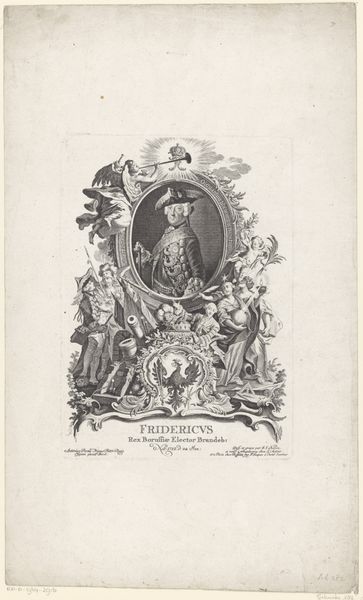
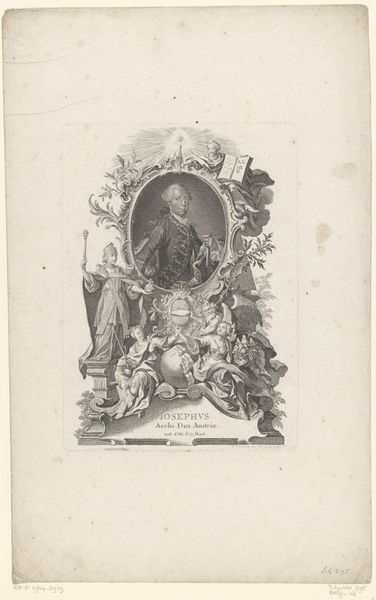
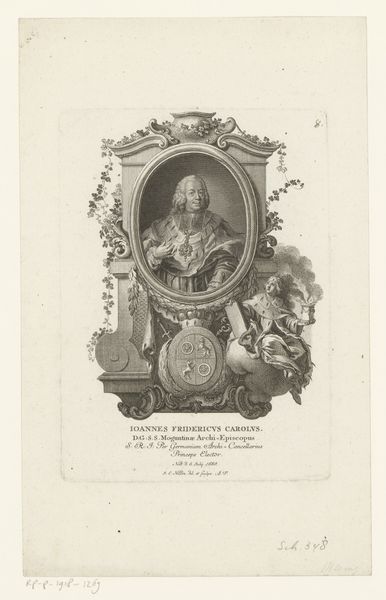
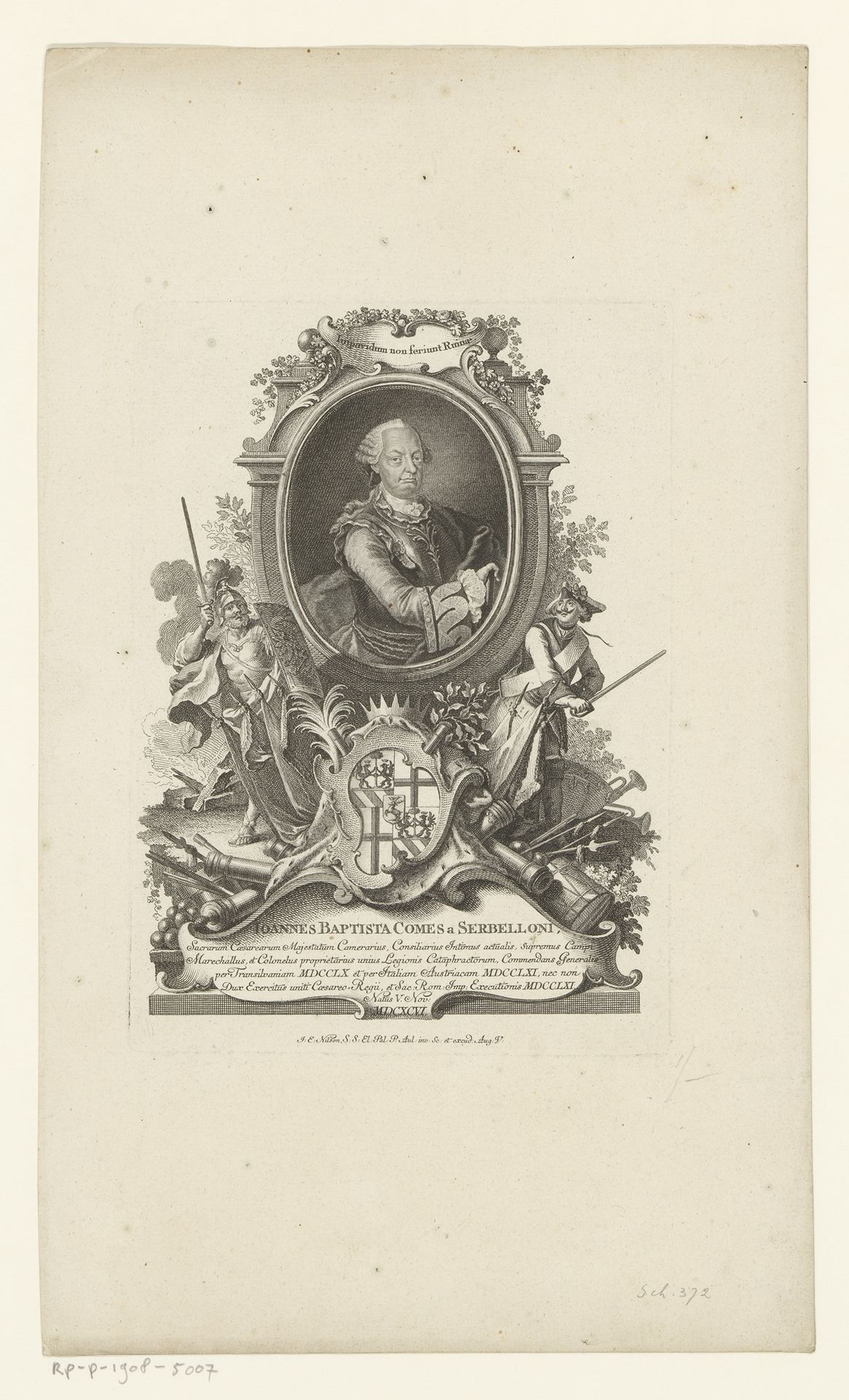
Editor: This engraving, *Portret van Giovanni Battista Serbelloni*, made between 1761 and 1788 by Johann Esaias Nilson, it's just… stately! The composition feels very formal, almost like a stage set. How do you interpret this work? Curator: The symbols employed here resonate across centuries. Note the laurel wreath, framing Serbelloni: an ancient signifier of triumph and status. Ask yourself: What power dynamics are at play? Editor: Power dynamics? Like how he’s being presented? Curator: Precisely! The figures flanking his portrait are allegorical. Their armour and weapons represent strength and protection, key virtues ascribed to nobility at the time. And consider the coat of arms: heraldry as condensed narrative, instantly conveying lineage, rights, and allegiances. How does this affect our understanding? Editor: It definitely elevates him…makes him seem almost divinely appointed to his position. So it's about the language of symbols defining legacy? Curator: Indeed. Nilson is crafting an image steeped in cultural memory, appealing to ingrained visual cues. Look at how even the lettering has that ceremonial calligraphic font. Editor: I never thought of calligraphy as symbolic, but now that you mention it...It makes the inscription more regal. I see so much more looking at this through your lens! Curator: It is the visual rhetoric, communicating power and belonging beyond words. We find echoes of such symbolic representation throughout history. Always remember symbols tell stories.
Portret van Giovanni Battista Serbelloni
1761 - 1788

Johann Esaias Nilson
1721 - 1788Location
RijksmuseumArtwork details
- Dimensions
- height 224 mm, width 159 mm
- Location
- Rijksmuseum
- Copyright
- Rijks Museum: Open Domain
Comments
Share your thoughts
About this artwork
Editor: This engraving, *Portret van Giovanni Battista Serbelloni*, made between 1761 and 1788 by Johann Esaias Nilson, it's just… stately! The composition feels very formal, almost like a stage set. How do you interpret this work? Curator: The symbols employed here resonate across centuries. Note the laurel wreath, framing Serbelloni: an ancient signifier of triumph and status. Ask yourself: What power dynamics are at play? Editor: Power dynamics? Like how he’s being presented? Curator: Precisely! The figures flanking his portrait are allegorical. Their armour and weapons represent strength and protection, key virtues ascribed to nobility at the time. And consider the coat of arms: heraldry as condensed narrative, instantly conveying lineage, rights, and allegiances. How does this affect our understanding? Editor: It definitely elevates him…makes him seem almost divinely appointed to his position. So it's about the language of symbols defining legacy? Curator: Indeed. Nilson is crafting an image steeped in cultural memory, appealing to ingrained visual cues. Look at how even the lettering has that ceremonial calligraphic font. Editor: I never thought of calligraphy as symbolic, but now that you mention it...It makes the inscription more regal. I see so much more looking at this through your lens! Curator: It is the visual rhetoric, communicating power and belonging beyond words. We find echoes of such symbolic representation throughout history. Always remember symbols tell stories.
Comments
Share your thoughts