About this artwork
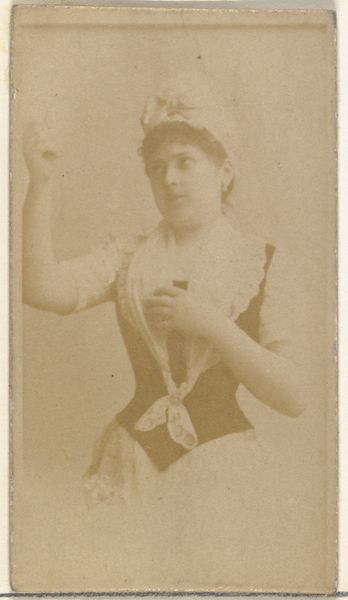
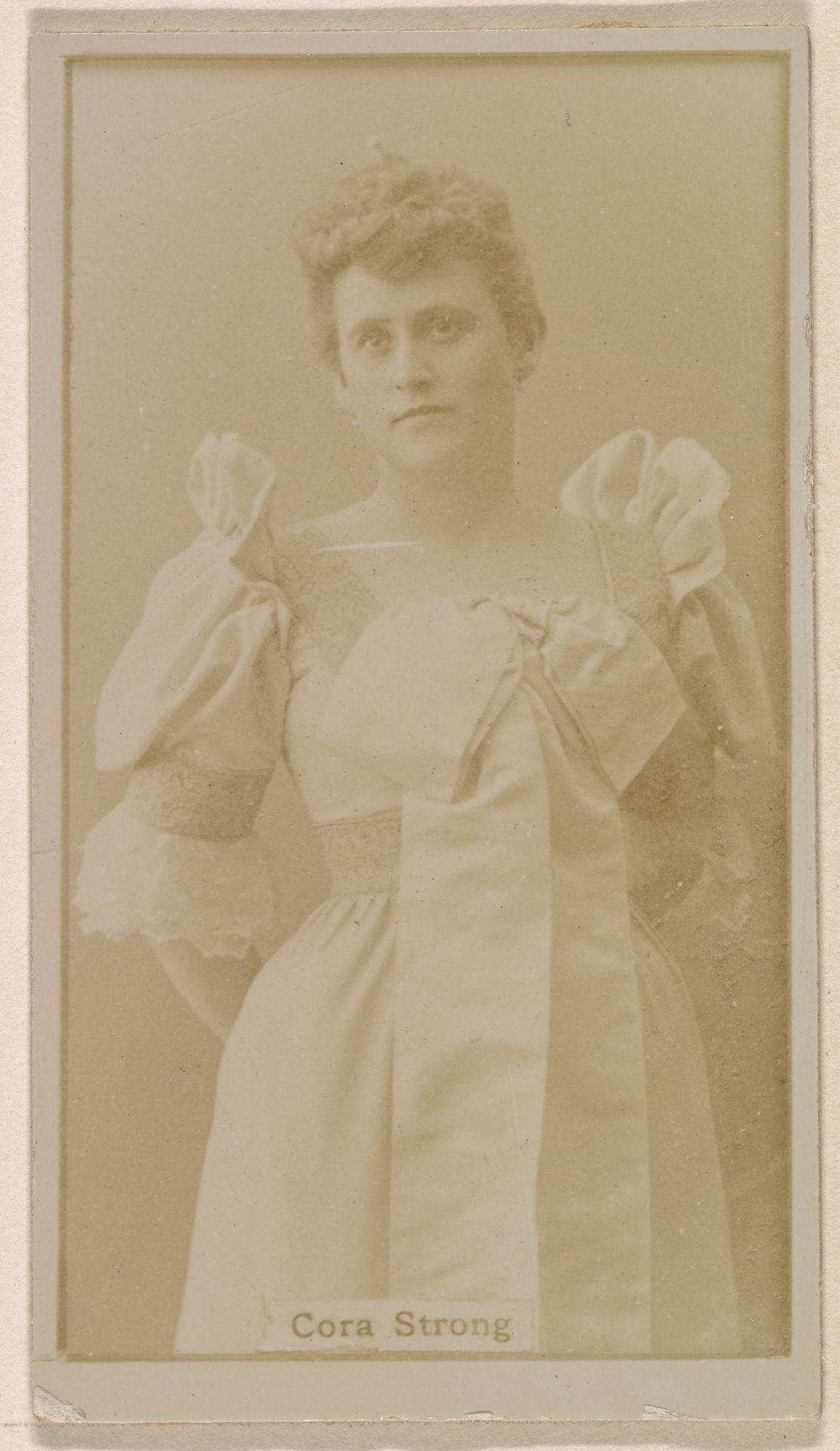
This photograph of Cora Strong comes from a series of actresses produced by Kinney Brothers to promote Sweet Caporal Cigarettes. Notice the prominent bow on her dress, a motif with roots stretching back through centuries of fashion and art. The bow, at once decorative and functional, has historically symbolized connection and adornment, yet here, it's imbued with a performative aspect, highlighting Strong's role as an actress, someone who presents herself to be seen and admired. Consider how the bow's symbolism has evolved. In earlier eras, it might have represented betrothal or a bond of commitment, while in Strong’s time, it emphasizes beauty and stage presence. This echoes through art history, from Renaissance portraits to Rococo paintings, where similar adornments signified status and allure. Such visual echoes reveal how collective memory shapes our interpretation. The bow, then, is not just a knot of fabric, but a potent signifier, tying Strong to a broader cultural narrative of beauty, performance, and the ever-evolving dance between appearance and identity. This cyclical progression reveals how symbols resurface and evolve with each passing age.
Cora Strong, from the Actresses series (N245) issued by Kinney Brothers to promote Sweet Caporal Cigarettes
1890

Kinney Brothers Tobacco Company
1869 - 2011
The Metropolitan Museum of Art
Metropolitan Museum of Art, New York, NYArtwork details
- Medium
- albumen-print, photography, albumen-print
- Dimensions
- Sheet: 2 1/2 × 1 7/16 in. (6.4 × 3.7 cm)
- Location
- Metropolitan Museum of Art, New York, NY
- Copyright
- Public Domain
Tags
Comments
Share your thoughts
About this artwork
This photograph of Cora Strong comes from a series of actresses produced by Kinney Brothers to promote Sweet Caporal Cigarettes. Notice the prominent bow on her dress, a motif with roots stretching back through centuries of fashion and art. The bow, at once decorative and functional, has historically symbolized connection and adornment, yet here, it's imbued with a performative aspect, highlighting Strong's role as an actress, someone who presents herself to be seen and admired. Consider how the bow's symbolism has evolved. In earlier eras, it might have represented betrothal or a bond of commitment, while in Strong’s time, it emphasizes beauty and stage presence. This echoes through art history, from Renaissance portraits to Rococo paintings, where similar adornments signified status and allure. Such visual echoes reveal how collective memory shapes our interpretation. The bow, then, is not just a knot of fabric, but a potent signifier, tying Strong to a broader cultural narrative of beauty, performance, and the ever-evolving dance between appearance and identity. This cyclical progression reveals how symbols resurface and evolve with each passing age.
Comments
Share your thoughts