About this artwork
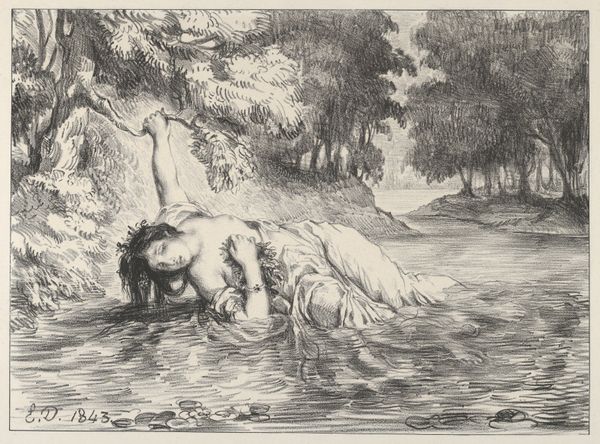
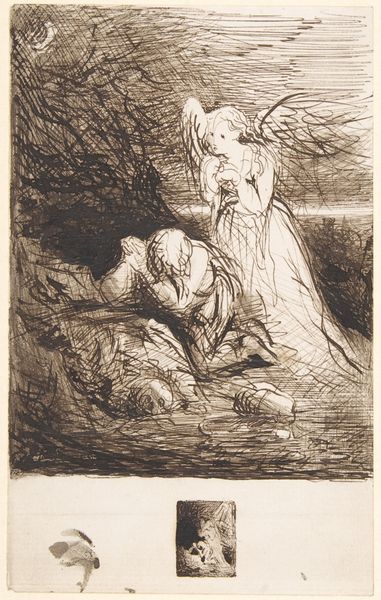
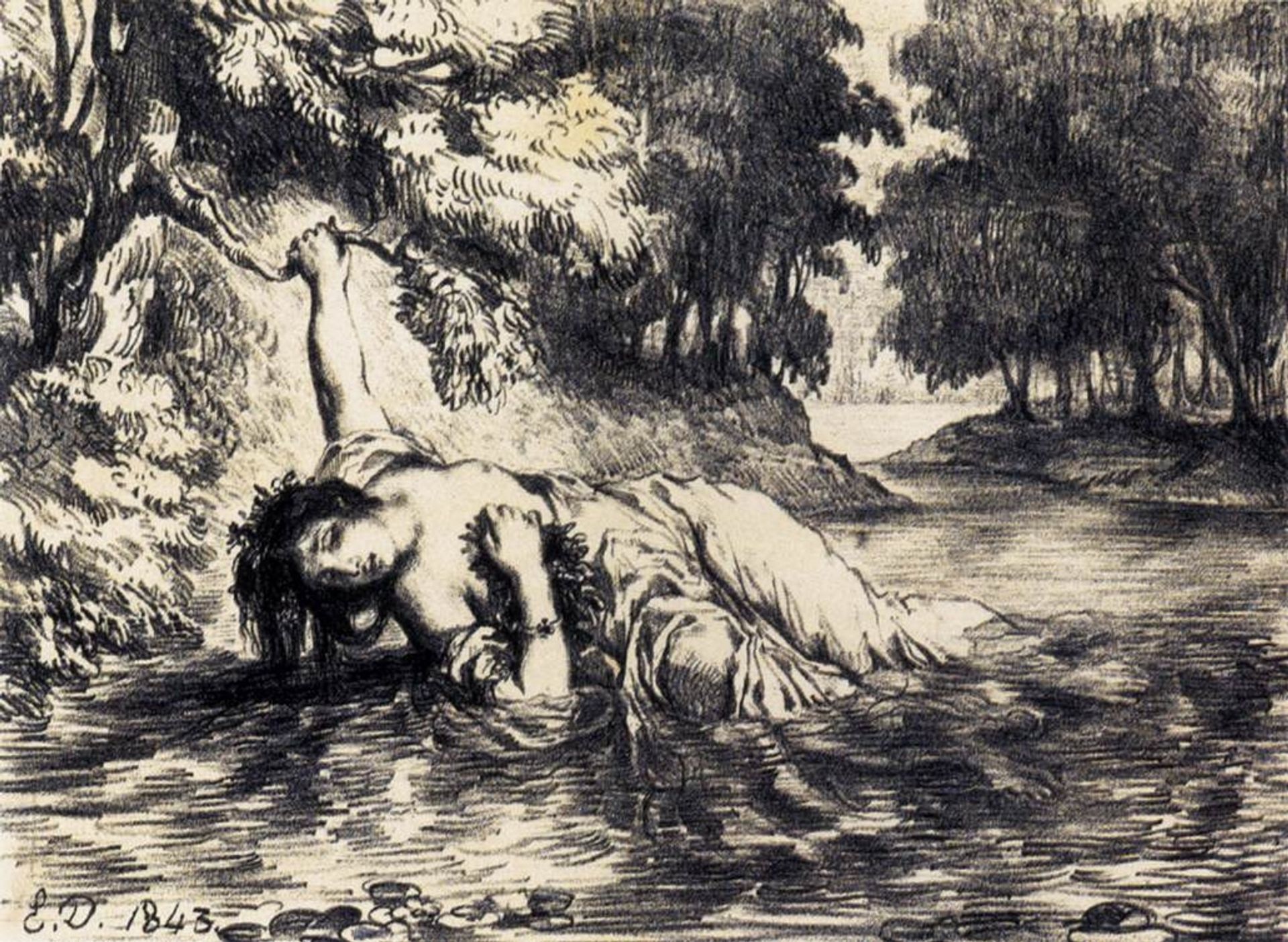
Eugène Delacroix made this drawing, The Death of Ophelia, in 1843. Delacroix lived through times of political upheaval and social change, a period marked by shifting gender roles and expectations. Here, Ophelia appears as a tragic figure. The drawing captures a moment of ultimate vulnerability, portraying Ophelia as a woman undone by love and circumstance. Delacroix seems to invite empathy, a space where we can consider the limited agency women possessed within the narratives of his time. Ophelia's death reflects society’s broader anxieties and expectations surrounding female identity, which is characterized by vulnerability, madness, and ultimately self-sacrifice. The image lingers in our minds, reminding us of the narratives we perpetuate and the silences we must acknowledge.

Artwork details
- Medium
- drawing, pencil, charcoal
- Copyright
- Public domain
Tags
Comments
Share your thoughts
About this artwork
Eugène Delacroix made this drawing, The Death of Ophelia, in 1843. Delacroix lived through times of political upheaval and social change, a period marked by shifting gender roles and expectations. Here, Ophelia appears as a tragic figure. The drawing captures a moment of ultimate vulnerability, portraying Ophelia as a woman undone by love and circumstance. Delacroix seems to invite empathy, a space where we can consider the limited agency women possessed within the narratives of his time. Ophelia's death reflects society’s broader anxieties and expectations surrounding female identity, which is characterized by vulnerability, madness, and ultimately self-sacrifice. The image lingers in our minds, reminding us of the narratives we perpetuate and the silences we must acknowledge.
Comments
Share your thoughts