About this artwork
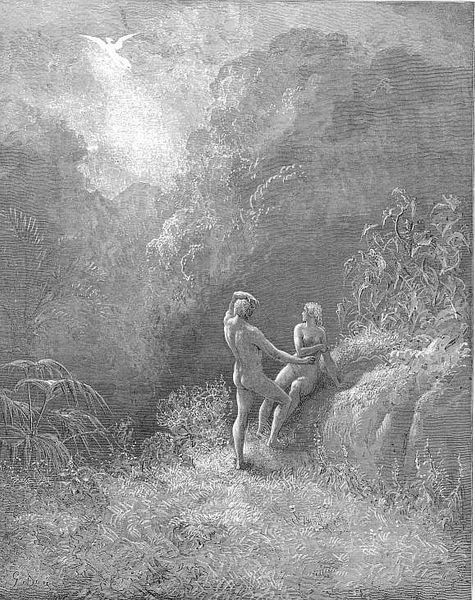
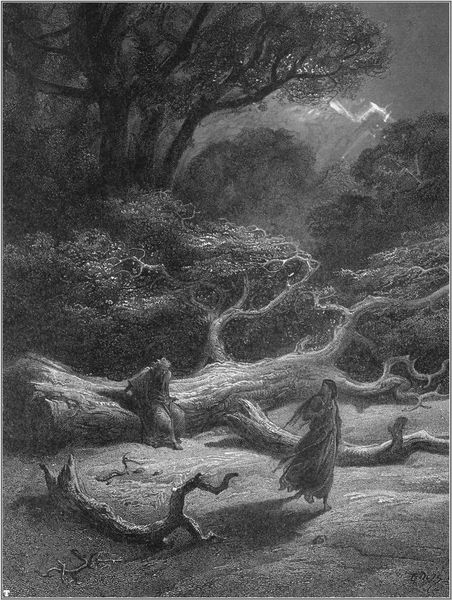
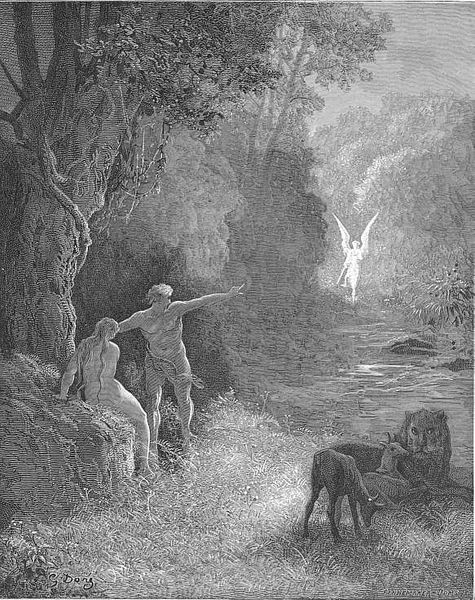
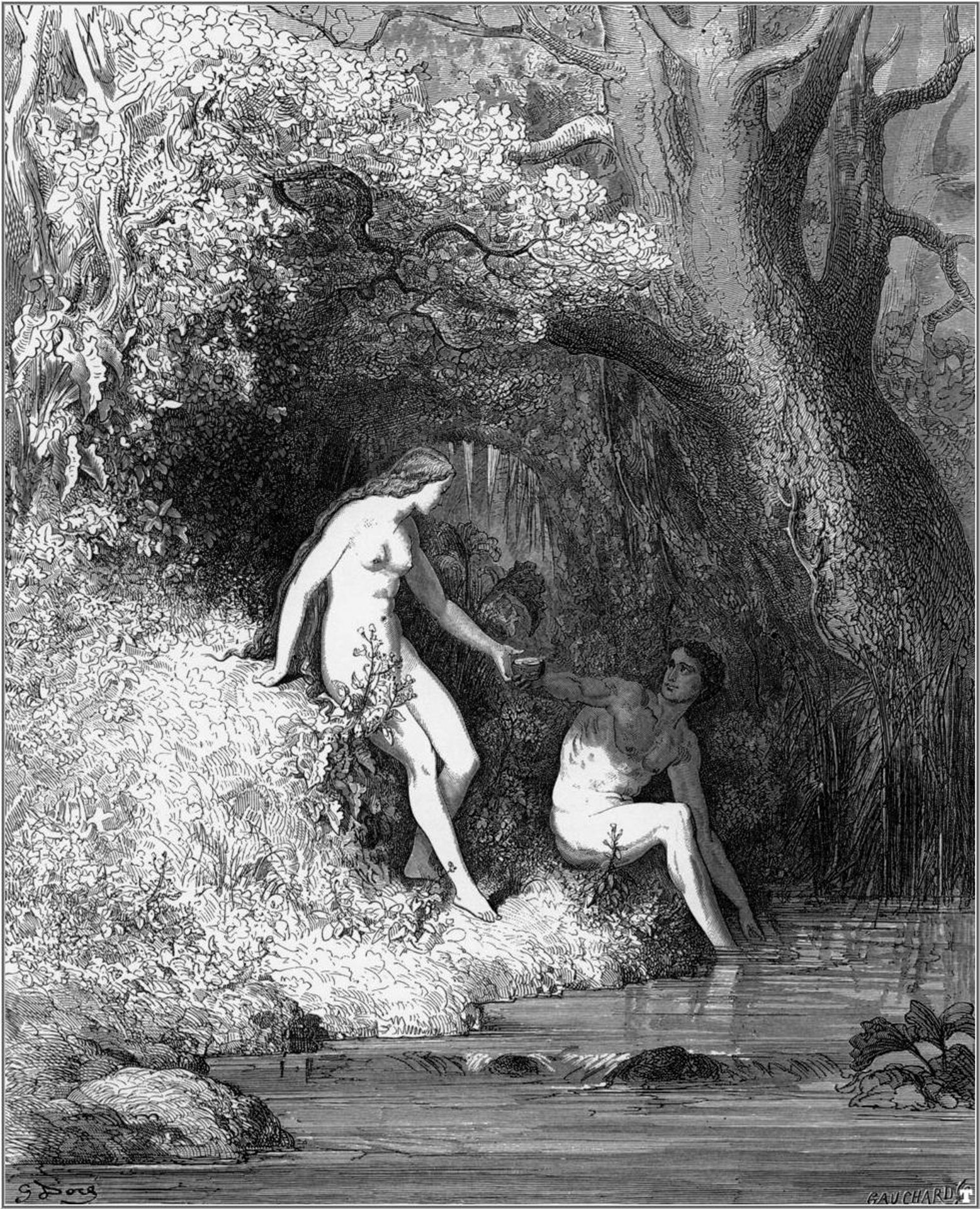
Editor: So this is “The savoury pulp they chew, and in the rind, Still as they thirsted, scoop the brimming” and it's attributed to Gustave Dore. I believe it's an etching or engraving, it definitely has that printmaking feel. The stark black and white contrast is so striking and theatrical! I’m immediately drawn to how the artist has depicted light and shadow. What compositional choices stand out to you? Art Historian: Indeed, a meticulous study reveals much. Note how the contrasting tones, meticulously rendered, don’t simply depict light, but structure the narrative. Observe the visual weight: the density of the foliage at the top versus the relative openness around the figures. Consider this binary; how might it speak to thematic concerns? Editor: Hmmm, thematic concerns...do you mean the story being told? The figures? They're quite classical, aren't they, almost idealized in their forms? Art Historian: Precisely. Reflect on the formal implications of that idealization in conjunction with the Romantic landscape. Is there a tension created by placing such idealized forms within an almost chaotic natural setting? How does that relationship shape our understanding? Editor: I see what you mean. The figures almost seem placed “on” the landscape, not part of it. That separation highlights the disruption or intrusion they represent within that space, right? Thanks, I'm definitely going to think more about that relationship between figure and ground and its symbolism in other artworks, too. Art Historian: An excellent exercise. Understanding the structural relationships within a work – the play of form against form – is key to unlocking deeper layers of meaning.
The savoury pulp they chew, and in the rind, Still as they thirsted, scoop the brimming

Artwork details
- Medium
- drawing, etching, engraving
- Copyright
- Public domain
Tags
drawing
narrative-art
etching
landscape
figuration
romanticism
black and white
history-painting
engraving
Comments
No comments
About this artwork
Editor: So this is “The savoury pulp they chew, and in the rind, Still as they thirsted, scoop the brimming” and it's attributed to Gustave Dore. I believe it's an etching or engraving, it definitely has that printmaking feel. The stark black and white contrast is so striking and theatrical! I’m immediately drawn to how the artist has depicted light and shadow. What compositional choices stand out to you? Art Historian: Indeed, a meticulous study reveals much. Note how the contrasting tones, meticulously rendered, don’t simply depict light, but structure the narrative. Observe the visual weight: the density of the foliage at the top versus the relative openness around the figures. Consider this binary; how might it speak to thematic concerns? Editor: Hmmm, thematic concerns...do you mean the story being told? The figures? They're quite classical, aren't they, almost idealized in their forms? Art Historian: Precisely. Reflect on the formal implications of that idealization in conjunction with the Romantic landscape. Is there a tension created by placing such idealized forms within an almost chaotic natural setting? How does that relationship shape our understanding? Editor: I see what you mean. The figures almost seem placed “on” the landscape, not part of it. That separation highlights the disruption or intrusion they represent within that space, right? Thanks, I'm definitely going to think more about that relationship between figure and ground and its symbolism in other artworks, too. Art Historian: An excellent exercise. Understanding the structural relationships within a work – the play of form against form – is key to unlocking deeper layers of meaning.
Comments
No comments