About this artwork
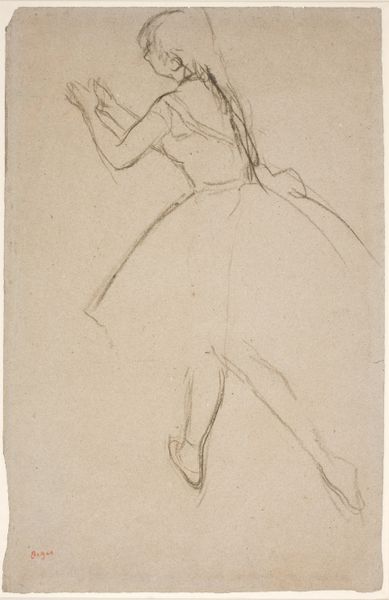
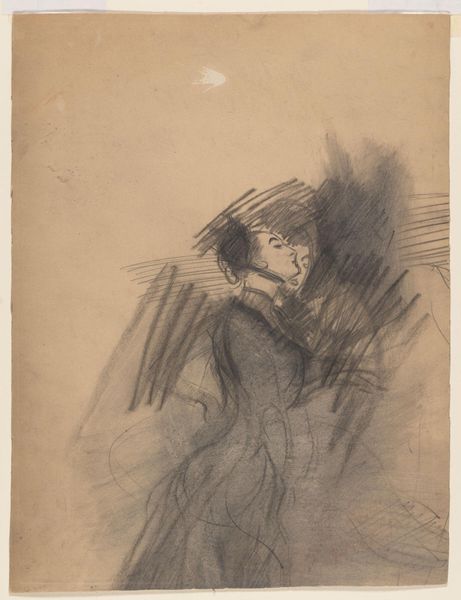
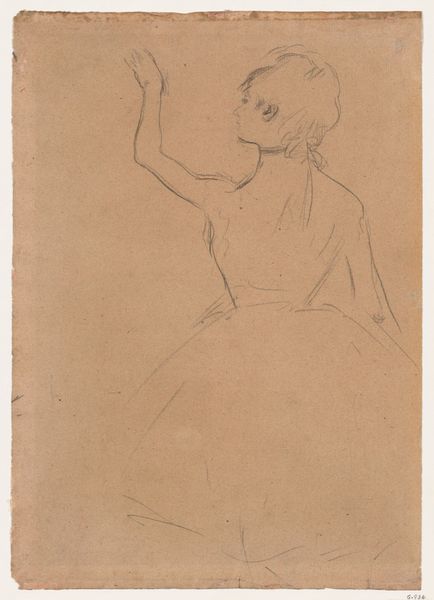
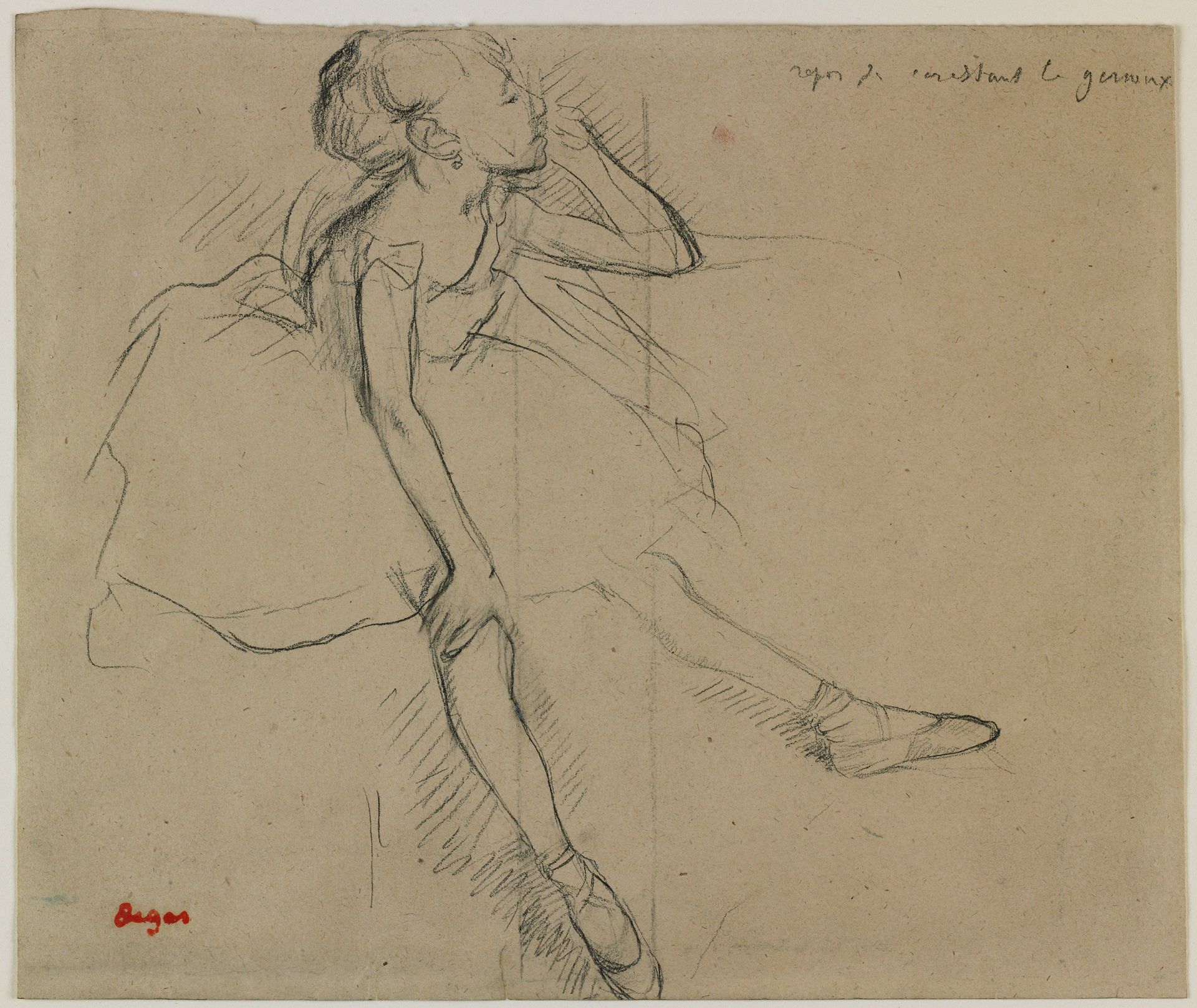
Edgar Degas made this drawing of a ballet dancer in repose using pencil on paper. Degas is celebrated for his images of dancers, but what I find compelling is how he reveals their labor. The soft, smudged lines of the pencil create a sense of immediacy, as though we are catching a fleeting moment backstage. Look closely at the dancer’s posture. She’s not in performance mode, but rather caught in a moment of quiet exhaustion. The textured grain of the paper adds a tactile quality to the work, emphasizing the physical presence of both the dancer and the drawing itself. It's easy to think of drawing as an inherently intimate medium, and the lightness of the marks on the paper reinforces that impression. But, by attending to the processes and conditions that make art possible, Degas invites us to consider the dancer's body as a site of intensive, sometimes alienating, work. This approach challenges conventional distinctions between fine art and the realities of labor.
Ballet Dancer in Repose
c. 1880 - 1882


Artwork details
- Medium
- drawing, pencil
- Dimensions
- 9 9/16 x 11 7/16 in. (24.29 x 29.05 cm) (irregular)15 3/4 x 19 3/4 x 1 1/8 in. (40.01 x 50.17 x 2.86 cm) (outer frame)
- Location
- Minneapolis Institute of Art
- Copyright
- Public Domain
Tags
portrait
drawing
impressionism
figuration
pencil
academic-art
Comments
Be the first to share your thoughts about this work.
About this artwork
Edgar Degas made this drawing of a ballet dancer in repose using pencil on paper. Degas is celebrated for his images of dancers, but what I find compelling is how he reveals their labor. The soft, smudged lines of the pencil create a sense of immediacy, as though we are catching a fleeting moment backstage. Look closely at the dancer’s posture. She’s not in performance mode, but rather caught in a moment of quiet exhaustion. The textured grain of the paper adds a tactile quality to the work, emphasizing the physical presence of both the dancer and the drawing itself. It's easy to think of drawing as an inherently intimate medium, and the lightness of the marks on the paper reinforces that impression. But, by attending to the processes and conditions that make art possible, Degas invites us to consider the dancer's body as a site of intensive, sometimes alienating, work. This approach challenges conventional distinctions between fine art and the realities of labor.
Comments
Be the first to share your thoughts about this work.