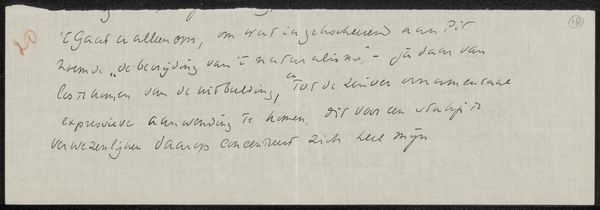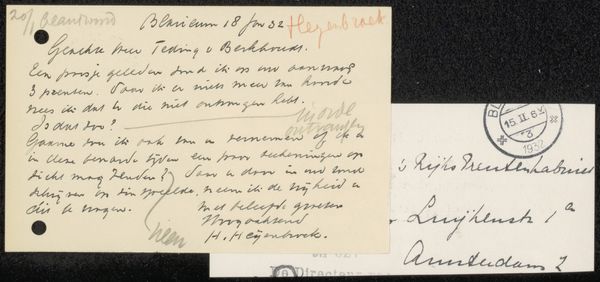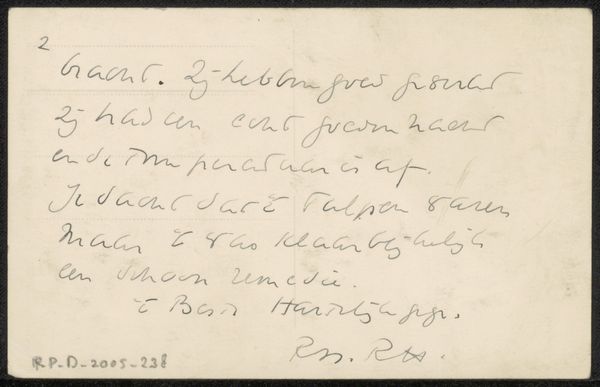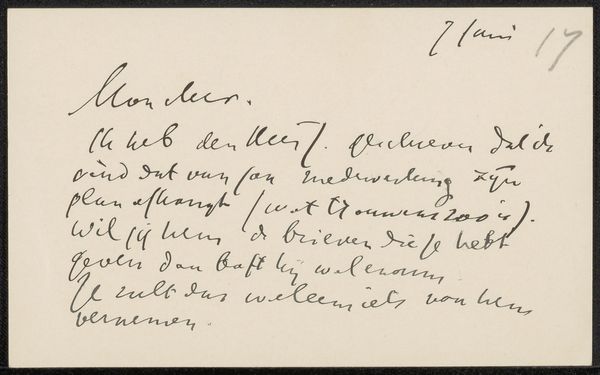
Possibly 1911
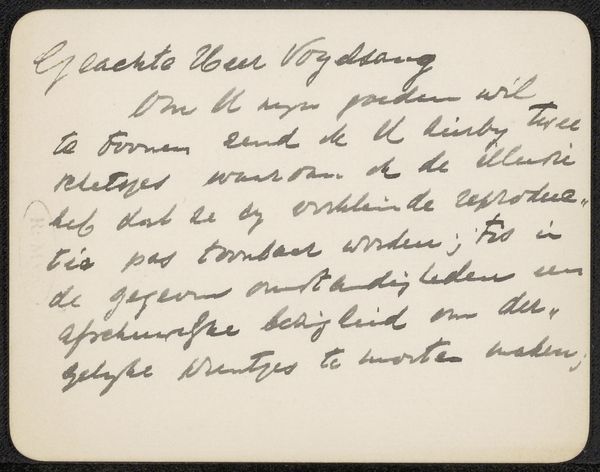
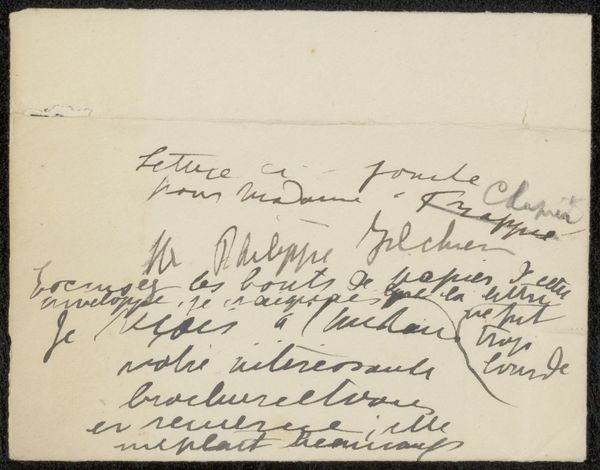
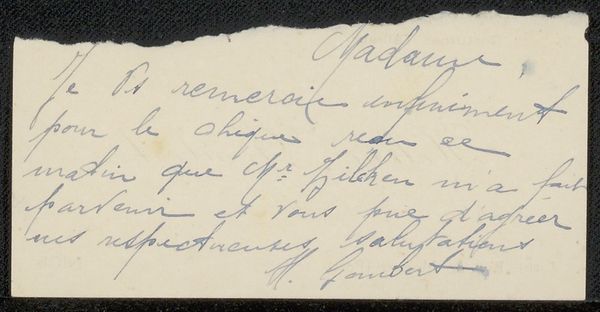
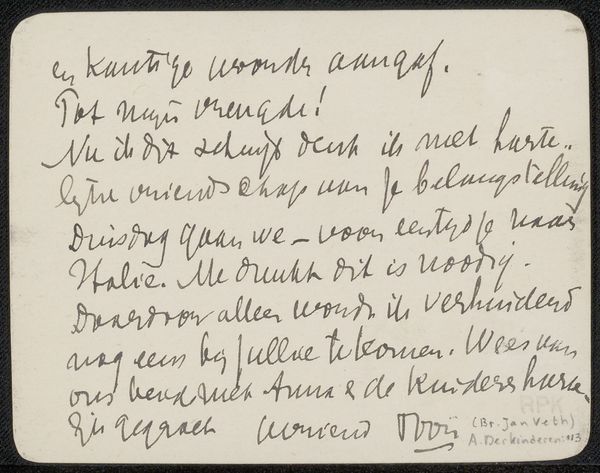
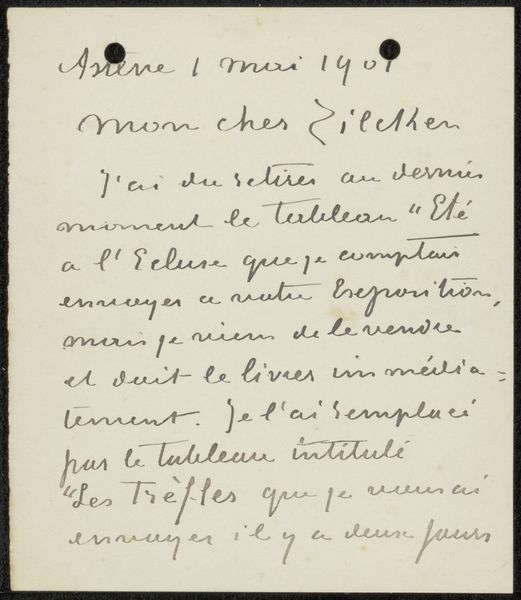
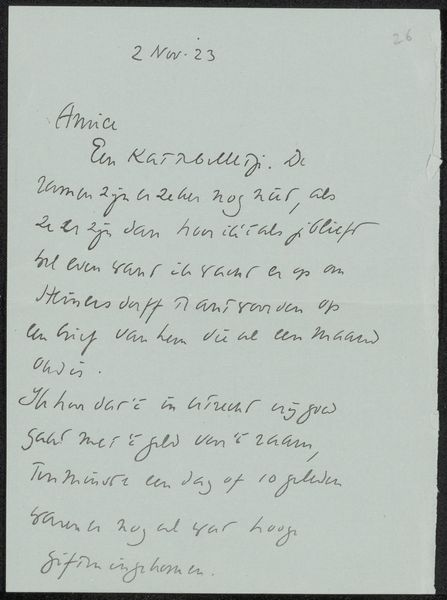
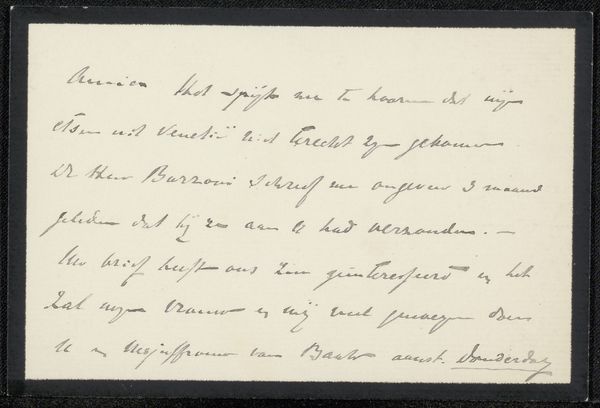
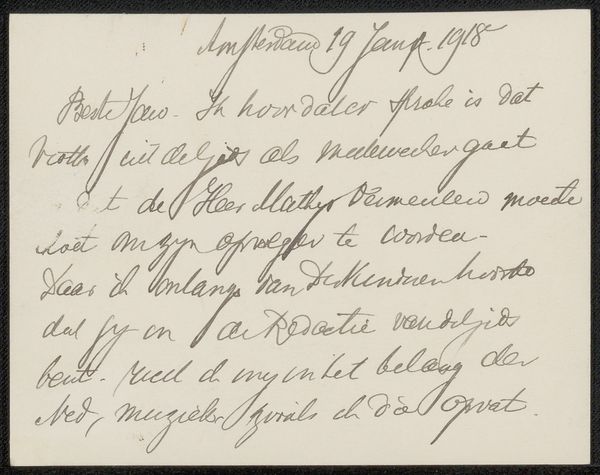
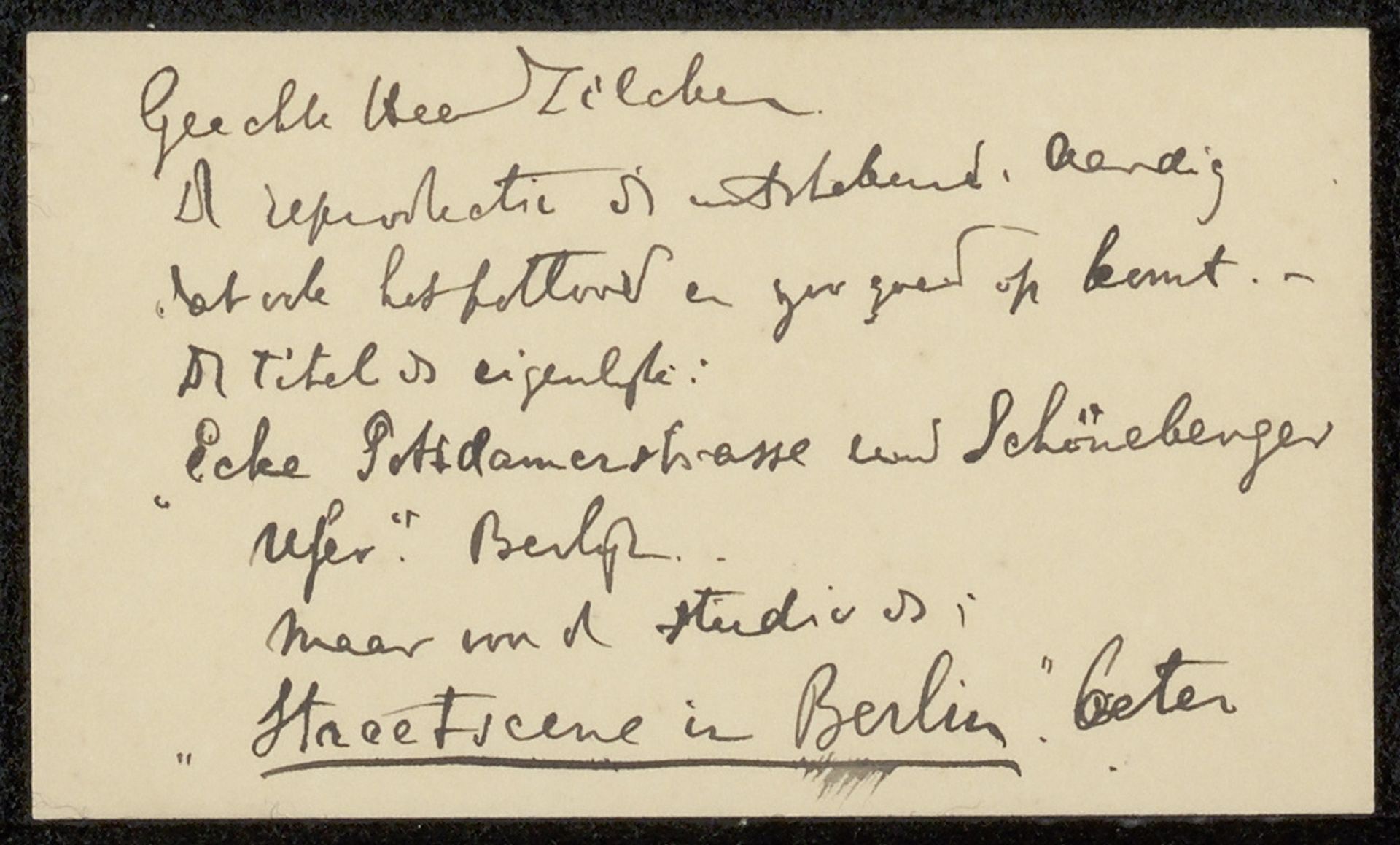
Visitekaartje aan Philip Zilcken

Listen to curator's interpretation
Curatorial notes
Editor: This is “Visitekaartje aan Philip Zilcken” by Jan Hoynck van Papendrecht, possibly from 1911. It's an ink drawing on paper. The artist has written on a small card in what looks like a personal note. I’m struck by the intimate nature of it, like glimpsing a private exchange. What can you tell me about this kind of work? Art Historian: It’s intriguing, isn’t it? We see here what appears to be more than just a simple business card, it hints at the artist's social network and perhaps a collaboration or exchange with Philip Zilcken. Think of the cultural role these cards played. They weren't just contact information; they were little emissaries representing social standing, artistic circles, and professional relationships. Editor: So it was part of a bigger picture, socially? Art Historian: Exactly. Hoynck van Papendrecht using his artistic skills to create something functional but still personal, speaks to the role of artists in shaping cultural communication. The "hand-drawn typeface" becomes significant here, it moves past a simple typeface as another extension of the artistic creation. How might the act of hand-lettering, rather than printing, reflect artistic values of the time? Editor: It's much more individual than just a printed card, perhaps conveying the worth of the person. Art Historian: Precisely. The aesthetic and the function intertwine. This little piece reveals a web of social connections, artistic intent, and even the values placed on handcrafted versus mass-produced items. Editor: I never considered the social importance of something as small as a calling card. Art Historian: These artifacts allow us to look into the dynamics between artists, their patrons, and the institutions that supported them. Next time you view art, ask yourself about the relationships *behind* the images themselves. Editor: It's like detective work with aesthetics. Thank you!