About this artwork
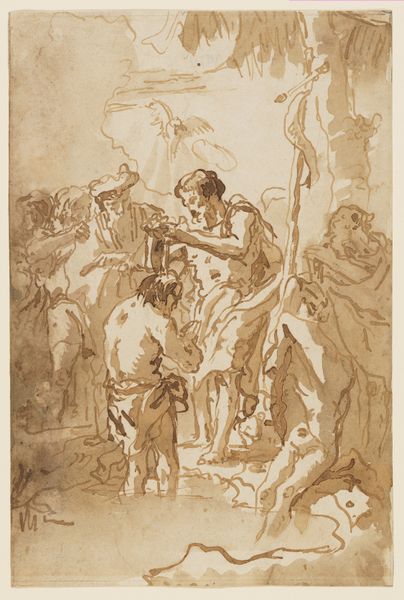
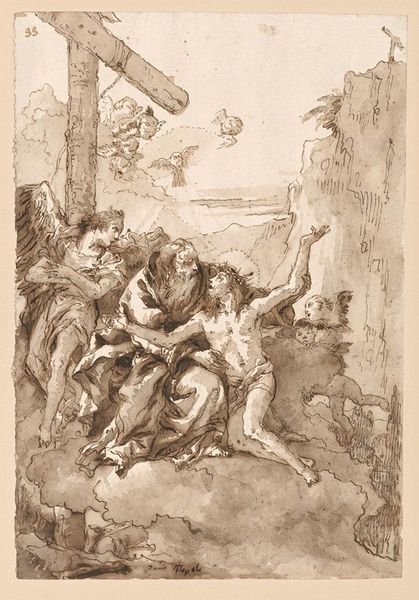
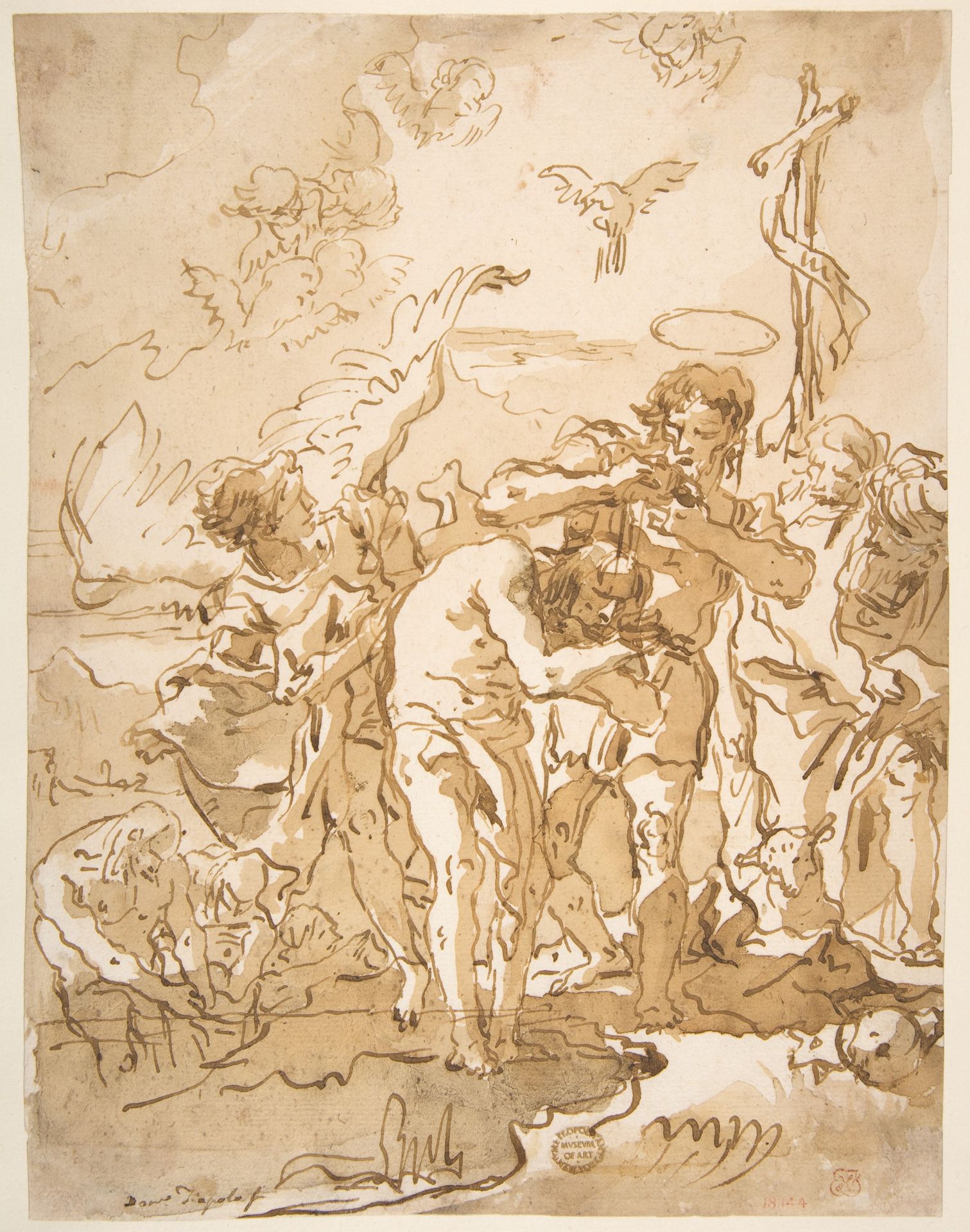
Giovanni Domenico Tiepolo created this pen and wash drawing, "The Baptism of Christ," in 18th-century Italy, a time when the Catholic Church was a major patron of the arts. Religious imagery in the 1700s served a vital public function, reinforcing social norms and conveying moral lessons. In this context, Tiepolo's image presents a complex vision of religious tradition. The presence of angels, the Holy Spirit as a dove, and the cross offer the standard symbols of Christ's baptism. Yet, the off-center composition, busy scene and brown wash suggest a vision of the sacred that is more intimate than dogmatic. To fully understand Tiepolo's artistic choices, we can investigate the history of religious art, the patronage system in Venice, and the role of the Tiepolo family in shaping Venetian art. Art history invites us to explore the fascinating intersection of artistic expression, social values, and institutional power.
The Baptism of Christ
1727 - 1804

Giovanni Domenico Tiepolo
1727 - 1804
The Metropolitan Museum of Art
Metropolitan Museum of Art, New York, NYArtwork details
- Dimensions
- 10 1/8 x 7 13/16in. (25.7 x 19.8cm)
- Location
- Metropolitan Museum of Art, New York, NY
- Copyright
- Public Domain
Comments
Share your thoughts
About this artwork
Giovanni Domenico Tiepolo created this pen and wash drawing, "The Baptism of Christ," in 18th-century Italy, a time when the Catholic Church was a major patron of the arts. Religious imagery in the 1700s served a vital public function, reinforcing social norms and conveying moral lessons. In this context, Tiepolo's image presents a complex vision of religious tradition. The presence of angels, the Holy Spirit as a dove, and the cross offer the standard symbols of Christ's baptism. Yet, the off-center composition, busy scene and brown wash suggest a vision of the sacred that is more intimate than dogmatic. To fully understand Tiepolo's artistic choices, we can investigate the history of religious art, the patronage system in Venice, and the role of the Tiepolo family in shaping Venetian art. Art history invites us to explore the fascinating intersection of artistic expression, social values, and institutional power.
Comments
Share your thoughts