About this artwork
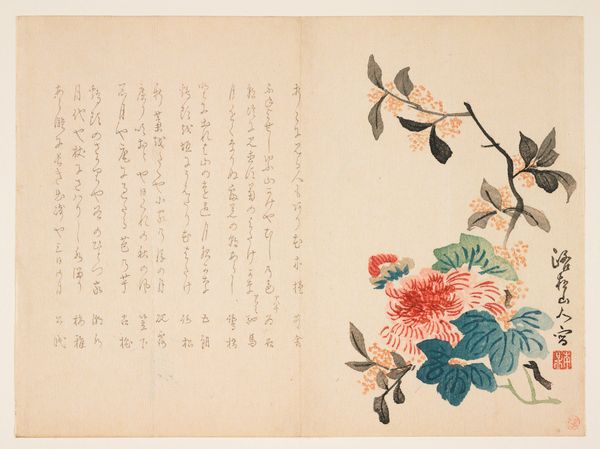
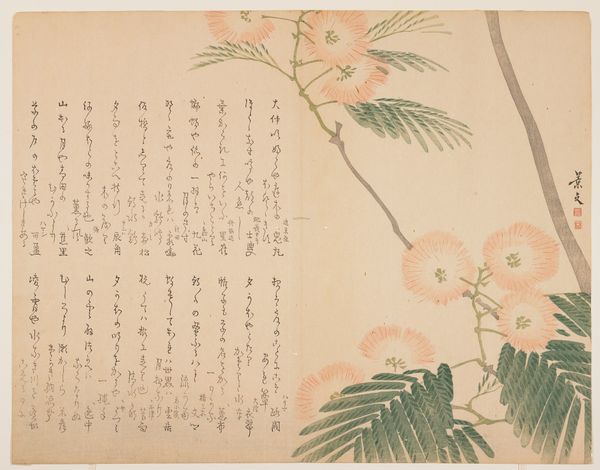
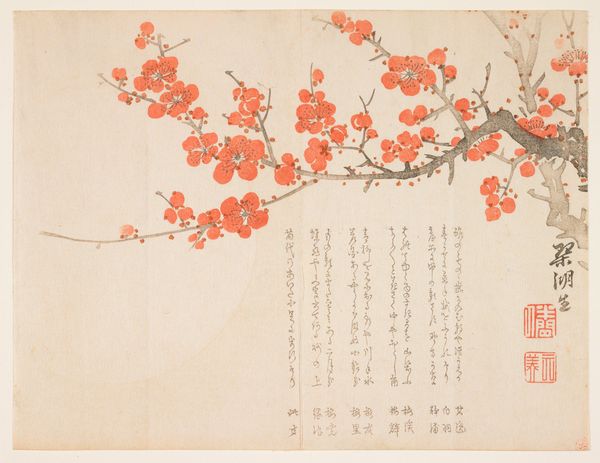
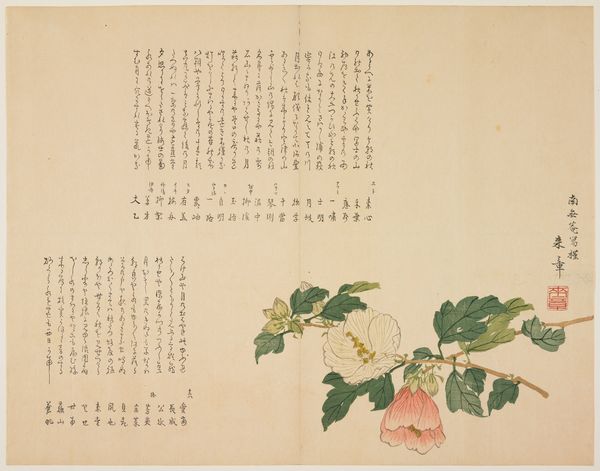
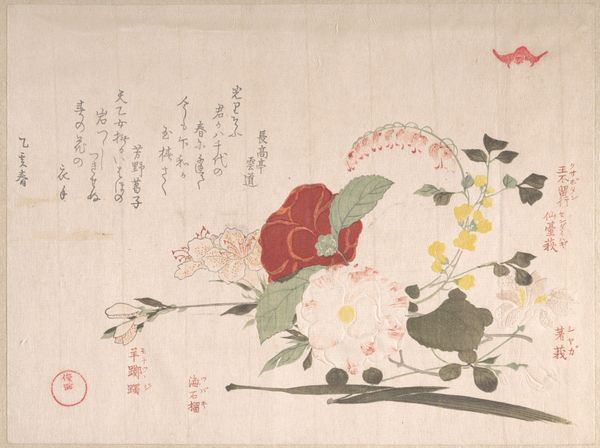
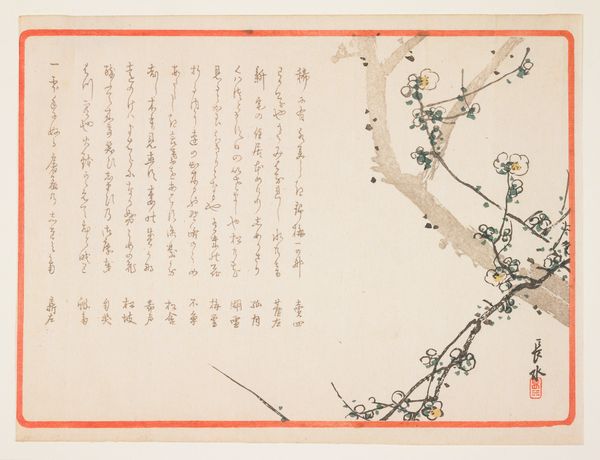
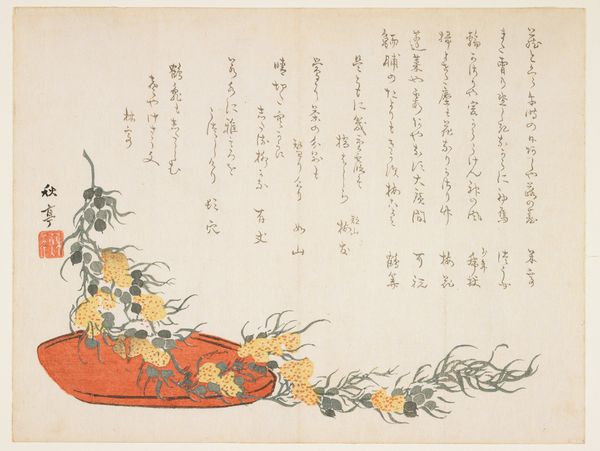
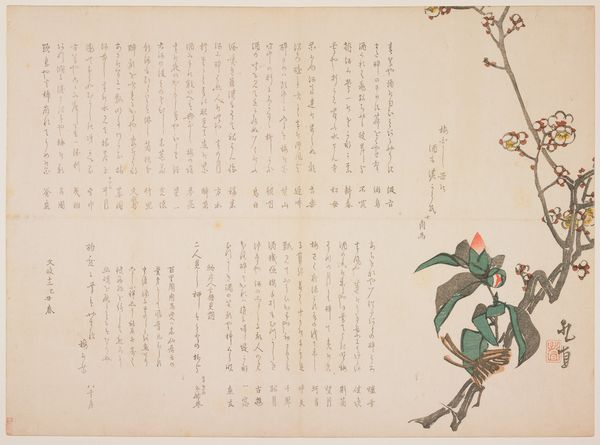
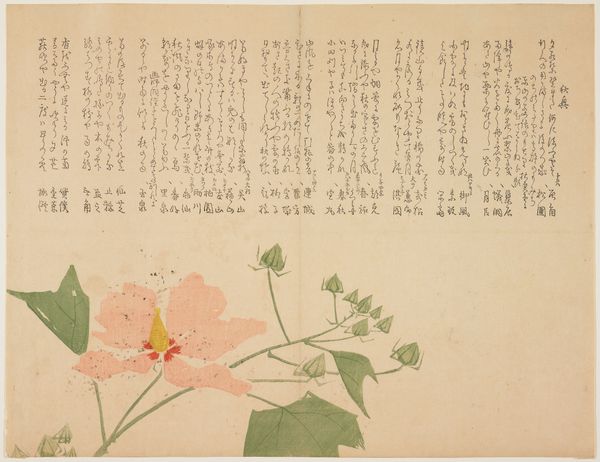
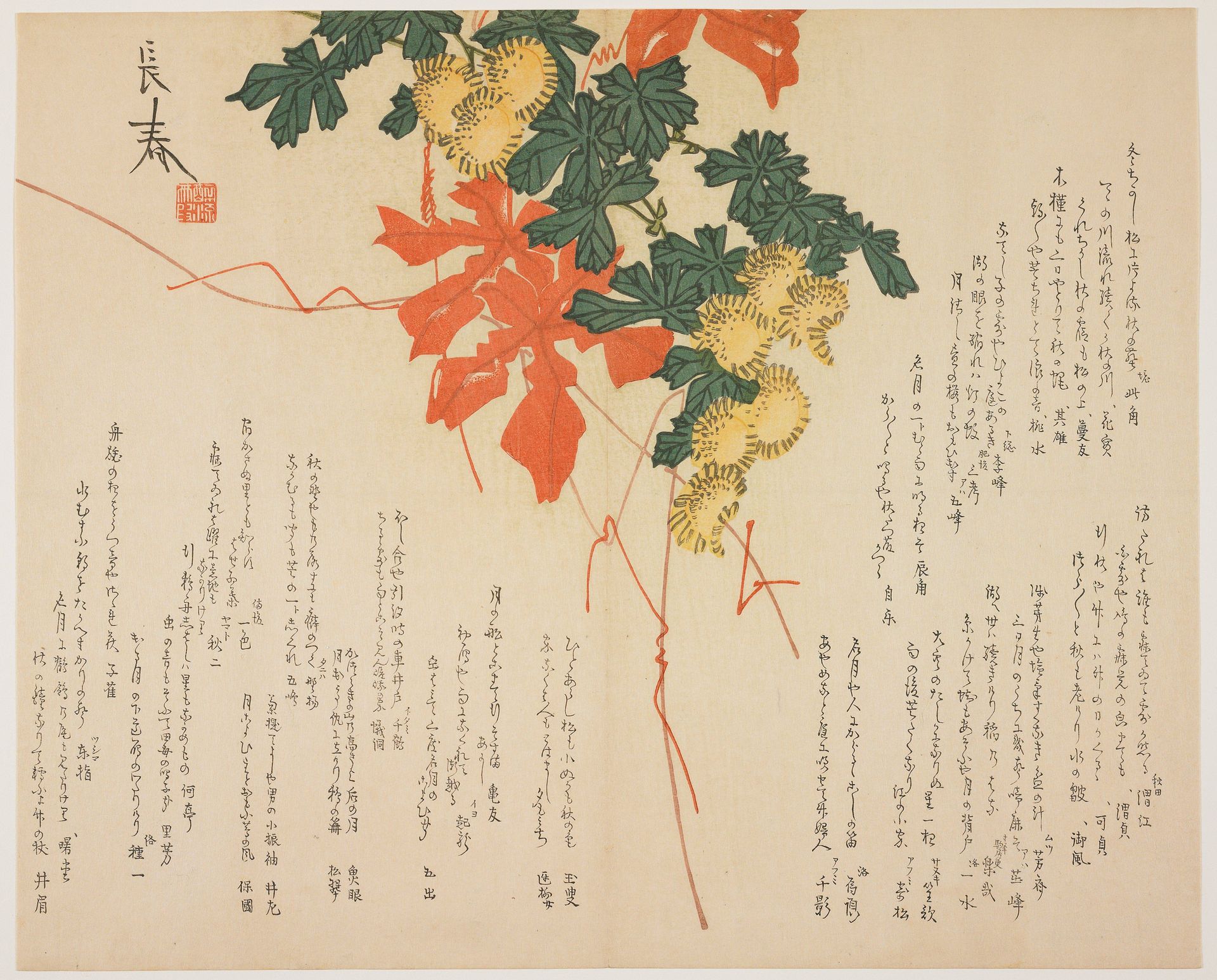
Nakamura Nagaharu crafted this woodblock print of asters and red leaves, capturing a transient moment in nature. Here, the aster, often associated with autumn, symbolizes love and delicacy, while the red leaves invoke the fleeting beauty of life, a concept deeply rooted in Japanese aesthetics. Consider how floral motifs, like the aster, recur across cultures. In ancient Greece, asters were offered to the gods, while in Victorian England, they conveyed sentiments of patience and elegance. This enduring symbolism reveals a collective human impulse to imbue flowers with emotional significance. The ephemeral nature of the red leaves might remind us of memento mori in European art, prompting reflection on mortality. These natural symbols carry profound emotional weight, engaging viewers in a subconscious contemplation of life’s cyclical patterns.
Asters and Red Leaves c. 1810s


Artwork details
- Medium
- print, paper, ink, woodblock-print, woodcut
- Dimensions
- 15 x 18 1/2 in. (38.1 x 47 cm) (image, sheet)
- Location
- Minneapolis Institute of Art
- Copyright
- Public Domain
Tags
water colours
ink paper printed
asian-art
ukiyo-e
japan
paper
ink
linocut print
woodblock-print
botanical drawing
woodcut
botanical art
watercolor
Comments
No comments
About this artwork
Nakamura Nagaharu crafted this woodblock print of asters and red leaves, capturing a transient moment in nature. Here, the aster, often associated with autumn, symbolizes love and delicacy, while the red leaves invoke the fleeting beauty of life, a concept deeply rooted in Japanese aesthetics. Consider how floral motifs, like the aster, recur across cultures. In ancient Greece, asters were offered to the gods, while in Victorian England, they conveyed sentiments of patience and elegance. This enduring symbolism reveals a collective human impulse to imbue flowers with emotional significance. The ephemeral nature of the red leaves might remind us of memento mori in European art, prompting reflection on mortality. These natural symbols carry profound emotional weight, engaging viewers in a subconscious contemplation of life’s cyclical patterns.
Comments
No comments