About this artwork
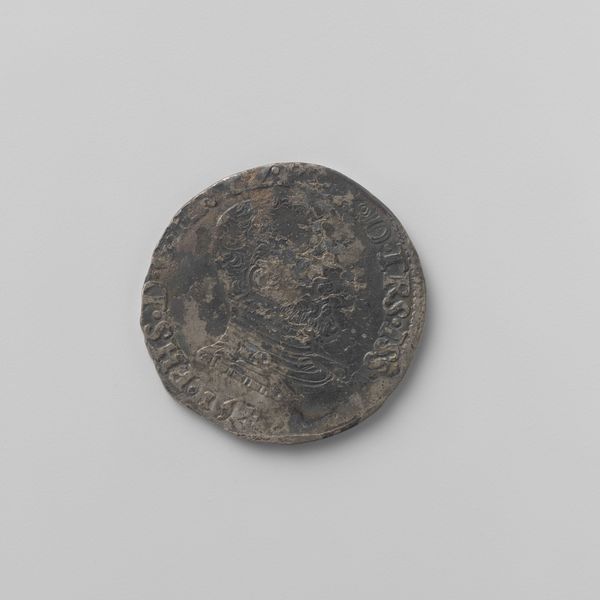
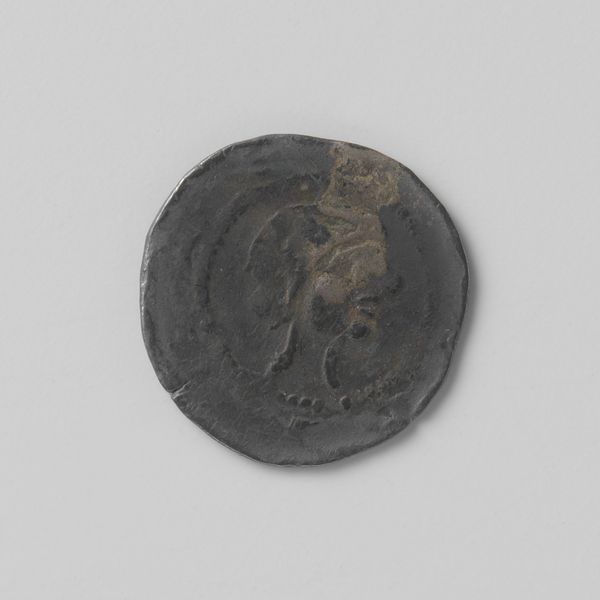
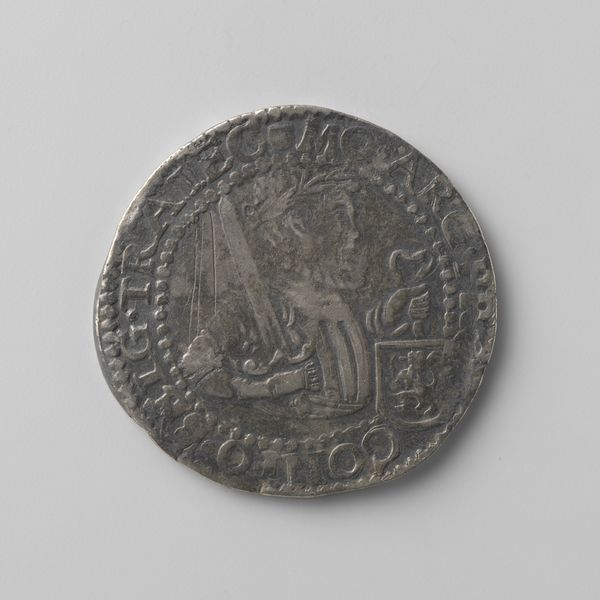
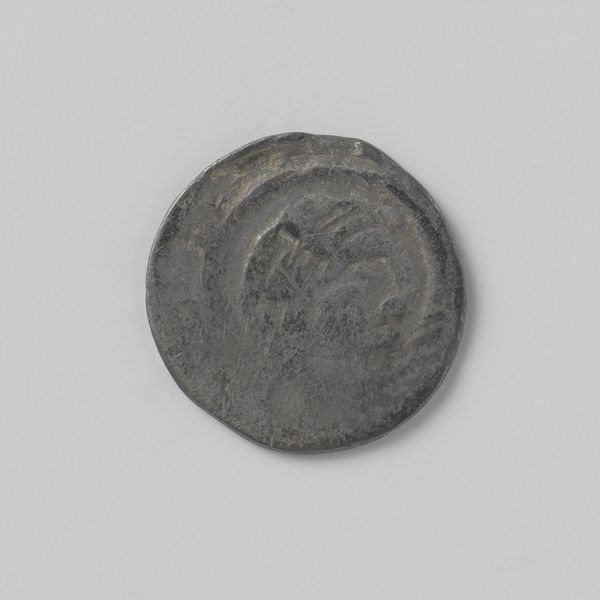
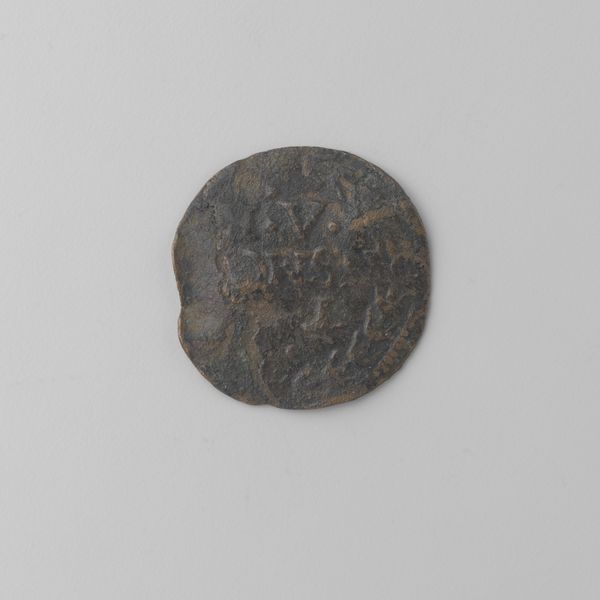
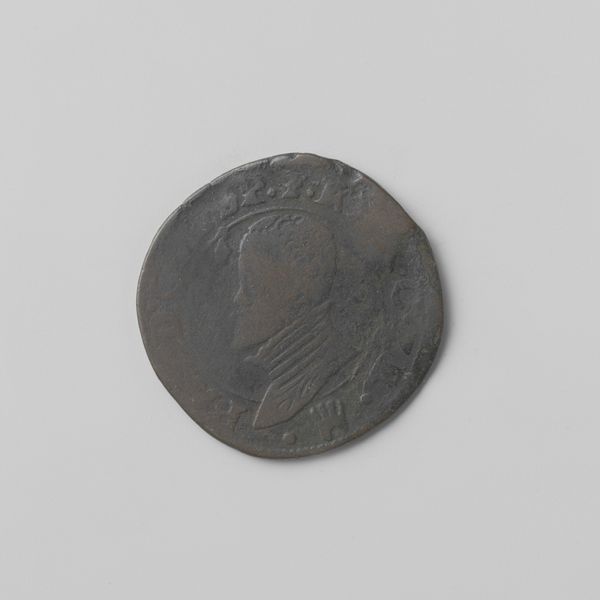
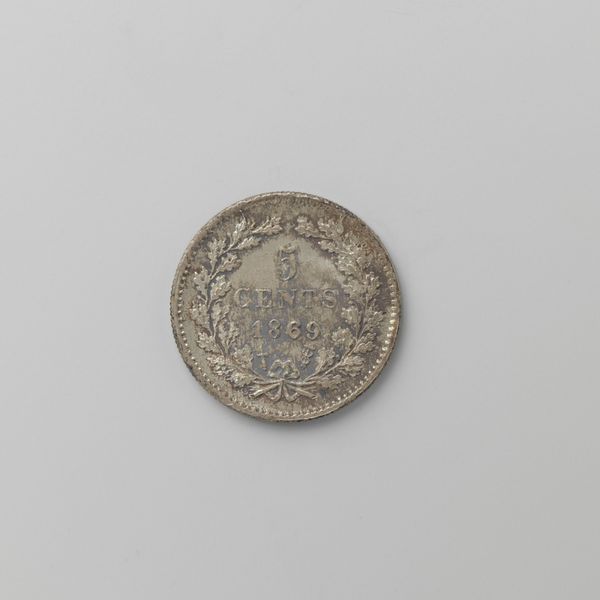
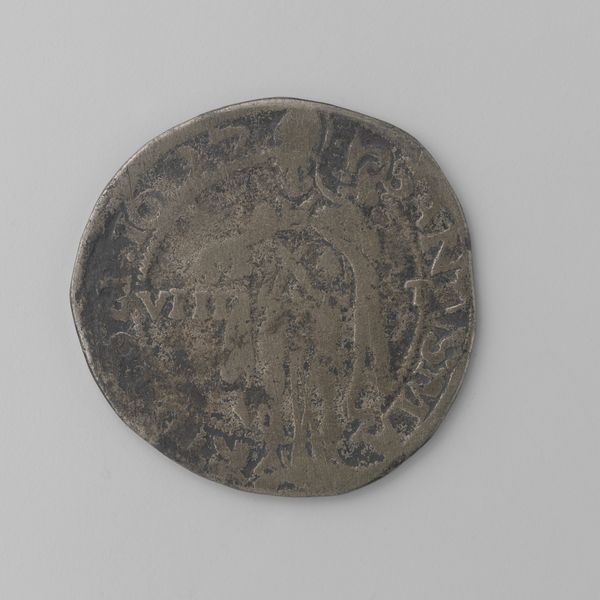
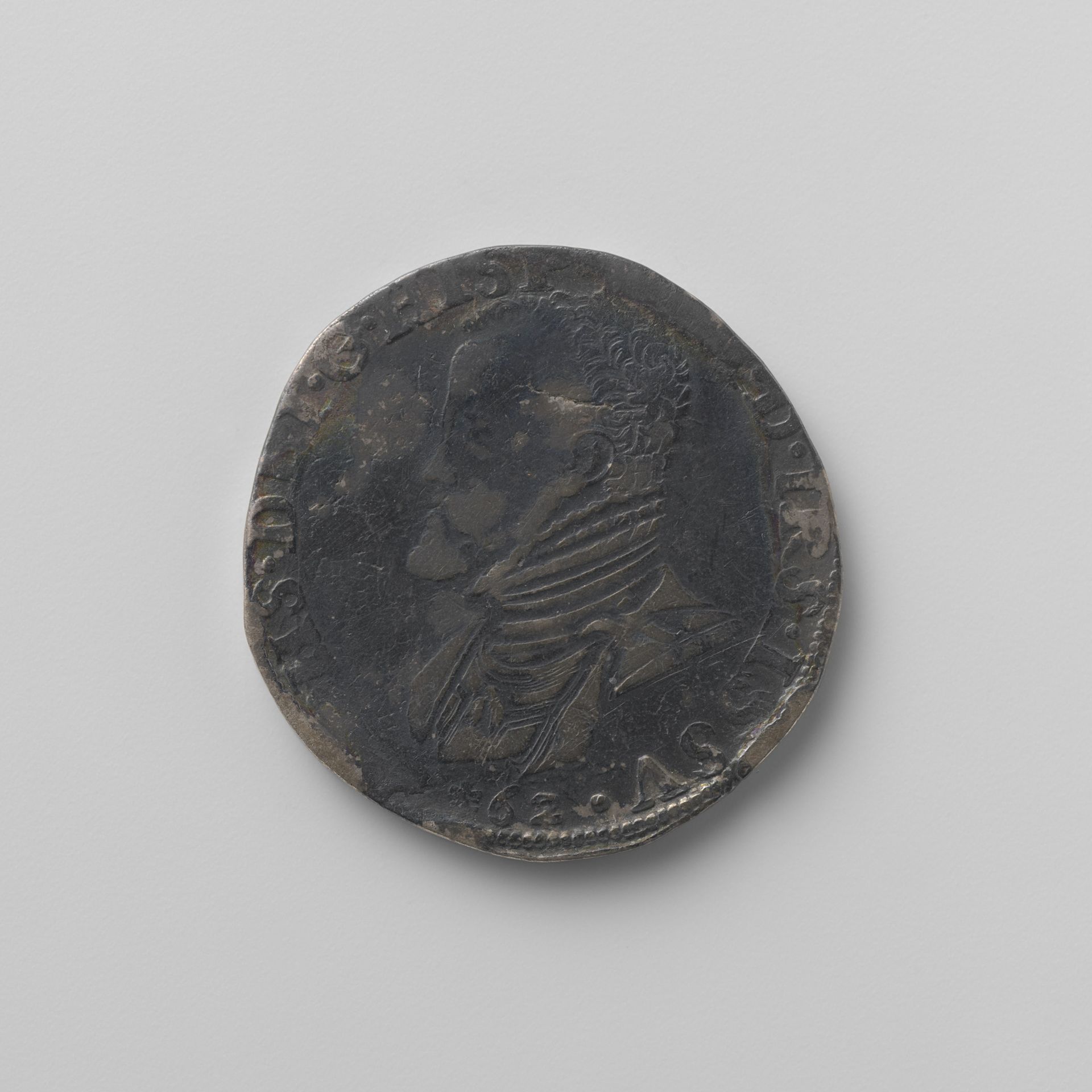
Curator: Here we have an artifact, not created as art, but an artwork, nonetheless. This is an Overijsselse ½ philipsdaalder, or half philips thaler, portraying Philip II of Spain, and it dates back to 1562. It is, of course, metal. Editor: It's austere, isn't it? Somber even. The metal is darkened with age, and the king's portrait has a severe, almost unforgiving profile. Curator: Indeed. That image was powerful and purposefully circulated. Coinage like this served as propaganda, asserting not just monetary value but royal authority. The portrait style is significant. Consider the symbolism of the half thaler featuring King Phillip's bust—a visual symbol that circulated widely, embodying power and dynastic legacy. Editor: Right. This wasn't just money. It was a constant reminder of who was in charge. Each time it changed hands, it was an acknowledgement of his power. I can imagine that many in the Dutch region chafed at having his image literally in their hands. Curator: Precisely. And if we dive into cultural memory here, think about what Philip II represented to the Dutch during this era. It would spark complex emotions and political tensions still alive through visual symbolism and power dynamics embedded within these coins. Every transaction becomes a small, perhaps unconscious, assertion of or resistance to his reign. Editor: So the symbolism connects to deeper collective emotions—power, resentment, even fear. What started as currency is a political declaration in material form, constantly consumed. The darkened silver now is an even stronger comment on that complex past. Curator: Yes, these coins help us understand that every object has a narrative. By examining them we consider political climates and lasting impacts in art. Editor: What I appreciate about this humble coin is that it embodies social messaging; the politics of imagery compressed onto such a small, everyday thing. I won’t ever look at money the same way!
Overijsselse ½ philipsdaalder van Philips II, 1562
1562

Filips II (koning van Spanje)
1527 - 1598Location
RijksmuseumArtwork details
- Medium
- print, metal
- Dimensions
- diameter 3.4 cm, weight 15.44 gr
- Location
- Rijksmuseum
- Copyright
- Rijks Museum: Open Domain
Tags
Comments
Share your thoughts
About this artwork
Curator: Here we have an artifact, not created as art, but an artwork, nonetheless. This is an Overijsselse ½ philipsdaalder, or half philips thaler, portraying Philip II of Spain, and it dates back to 1562. It is, of course, metal. Editor: It's austere, isn't it? Somber even. The metal is darkened with age, and the king's portrait has a severe, almost unforgiving profile. Curator: Indeed. That image was powerful and purposefully circulated. Coinage like this served as propaganda, asserting not just monetary value but royal authority. The portrait style is significant. Consider the symbolism of the half thaler featuring King Phillip's bust—a visual symbol that circulated widely, embodying power and dynastic legacy. Editor: Right. This wasn't just money. It was a constant reminder of who was in charge. Each time it changed hands, it was an acknowledgement of his power. I can imagine that many in the Dutch region chafed at having his image literally in their hands. Curator: Precisely. And if we dive into cultural memory here, think about what Philip II represented to the Dutch during this era. It would spark complex emotions and political tensions still alive through visual symbolism and power dynamics embedded within these coins. Every transaction becomes a small, perhaps unconscious, assertion of or resistance to his reign. Editor: So the symbolism connects to deeper collective emotions—power, resentment, even fear. What started as currency is a political declaration in material form, constantly consumed. The darkened silver now is an even stronger comment on that complex past. Curator: Yes, these coins help us understand that every object has a narrative. By examining them we consider political climates and lasting impacts in art. Editor: What I appreciate about this humble coin is that it embodies social messaging; the politics of imagery compressed onto such a small, everyday thing. I won’t ever look at money the same way!
Comments
Share your thoughts