About this artwork
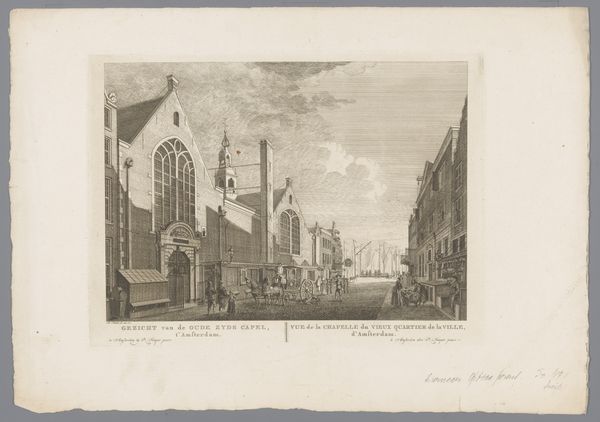
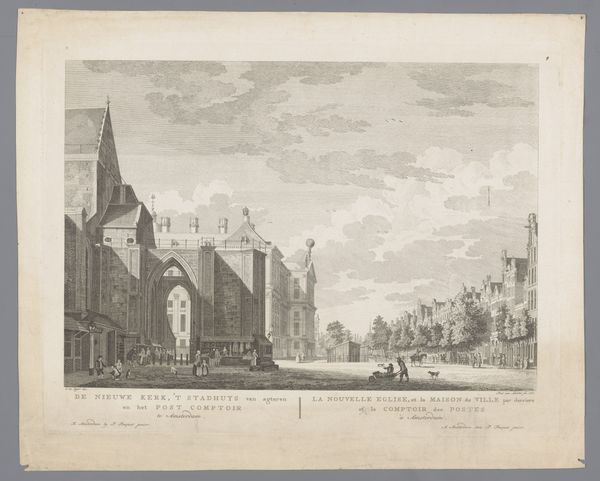
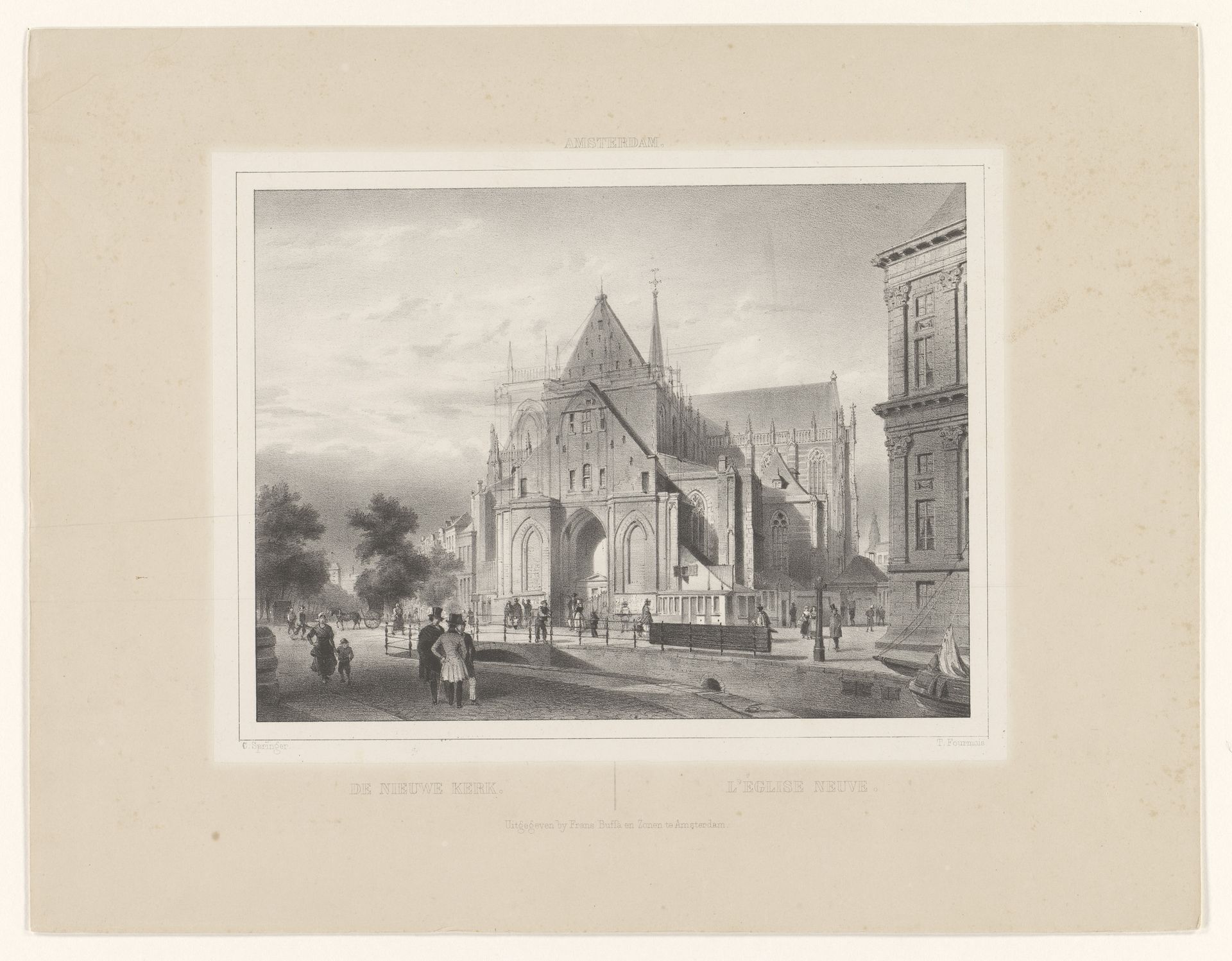
Théodore Fourmois made this print of the Nieuwe Kerk in Amsterdam sometime in the mid-19th century, using lithography. The print captures not just the architecture of the church but also the bustling social life around it. Fourmois, working in Belgium, was part of a broader artistic trend that saw urban landscapes as reflections of a city's social fabric. Amsterdam, during this period, was a hub of commerce and culture, and the Nieuwe Kerk was a central institution in this context. Prints like these played a crucial role in shaping public perception, both reinforcing and questioning the institutions depicted. The level of detail and the inclusion of everyday people suggest an interest in representing Amsterdam as a modern, thriving city. To fully understand the print, research into Amsterdam’s urban development and the role of the Nieuwe Kerk is essential. This image then becomes an artifact that reveals much about the social, cultural, and institutional dynamics of its time.
Gezicht op de Nieuwe Kerk te Amsterdam c. 1850

Théodore Fourmois
1814 - 1871Location
RijksmuseumArtwork details
- Medium
- Dimensions
- height 280 mm, width 360 mm
- Location
- Rijksmuseum
- Copyright
- Rijks Museum: Open Domain
Tags
aged paper
neoclassicism
landscape
19th century
cityscape
Comments
No comments
About this artwork
Théodore Fourmois made this print of the Nieuwe Kerk in Amsterdam sometime in the mid-19th century, using lithography. The print captures not just the architecture of the church but also the bustling social life around it. Fourmois, working in Belgium, was part of a broader artistic trend that saw urban landscapes as reflections of a city's social fabric. Amsterdam, during this period, was a hub of commerce and culture, and the Nieuwe Kerk was a central institution in this context. Prints like these played a crucial role in shaping public perception, both reinforcing and questioning the institutions depicted. The level of detail and the inclusion of everyday people suggest an interest in representing Amsterdam as a modern, thriving city. To fully understand the print, research into Amsterdam’s urban development and the role of the Nieuwe Kerk is essential. This image then becomes an artifact that reveals much about the social, cultural, and institutional dynamics of its time.
Comments
No comments