About this artwork
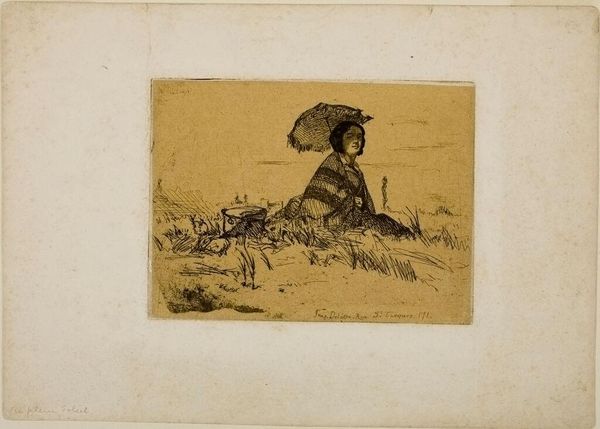
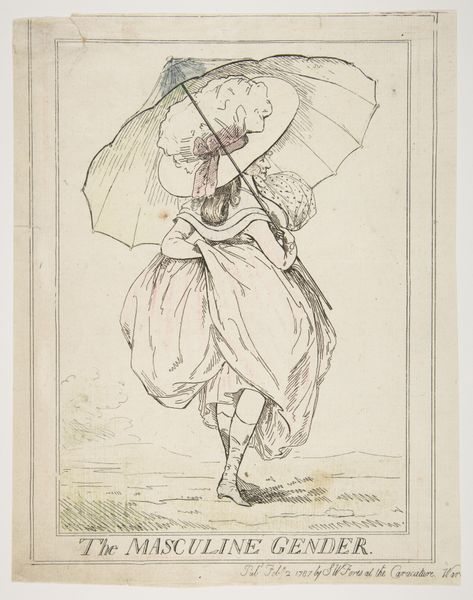
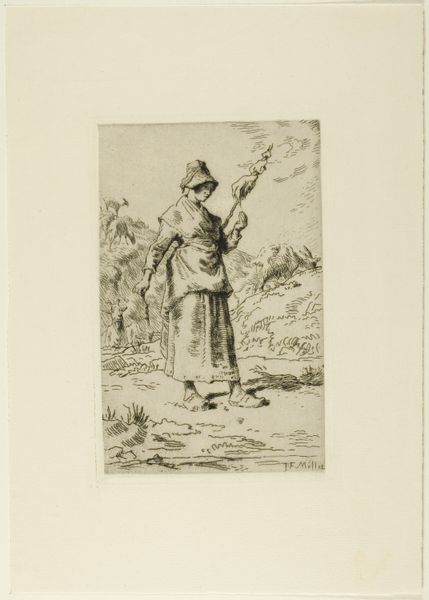
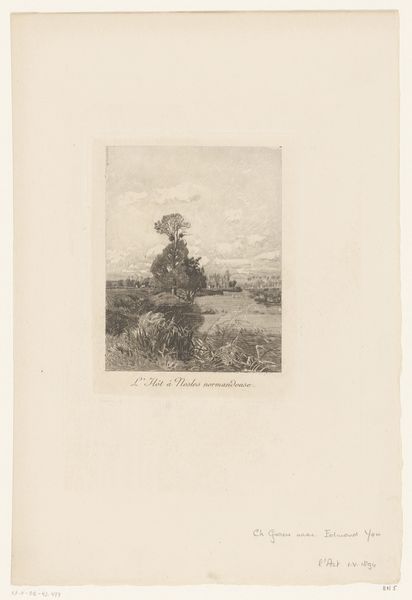
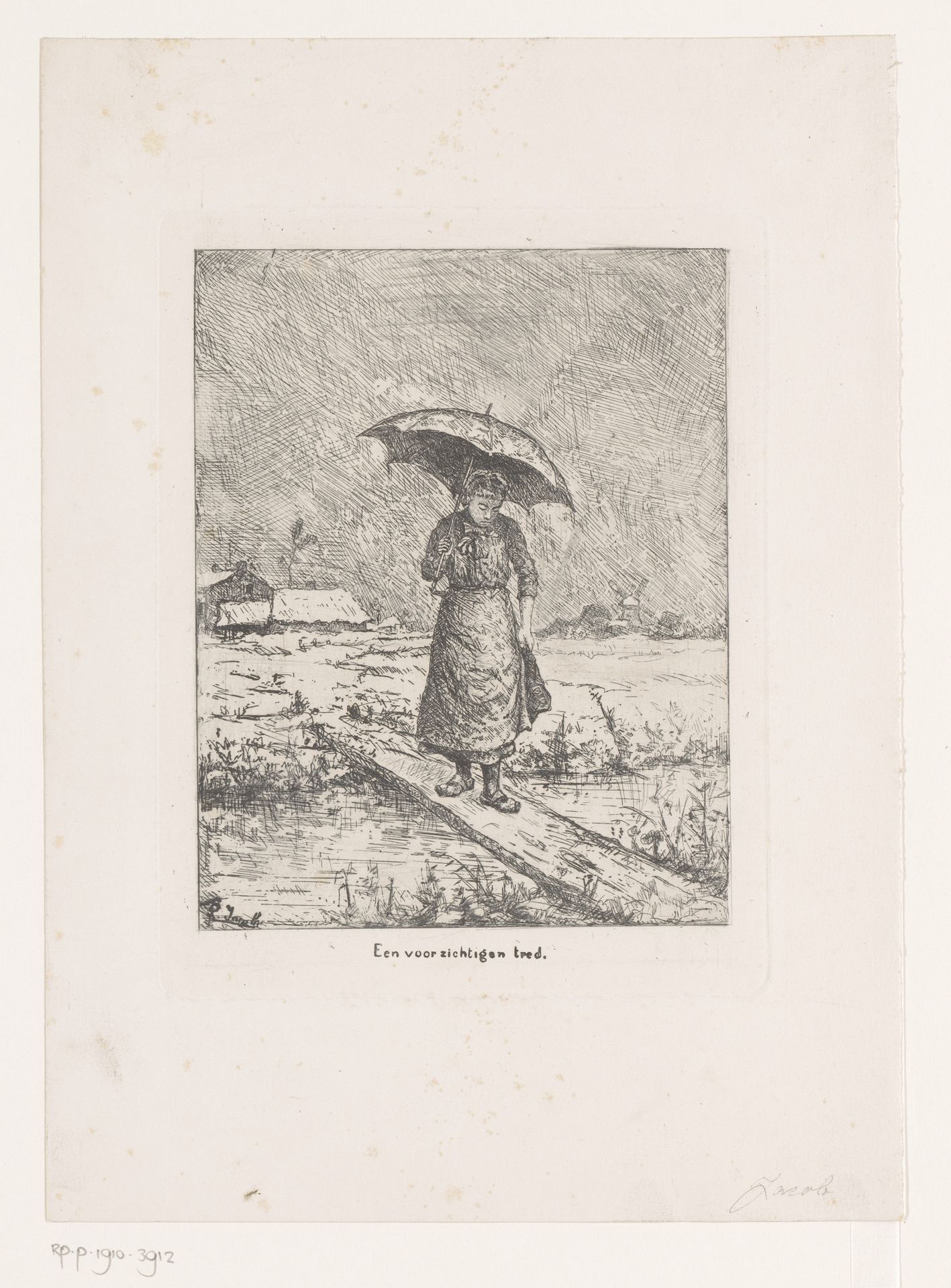
Louis Adolphe Jacobs created this print of a young woman crossing a bridge in the Netherlands, sometime between 1870 and 1929. In Jacobs’s time, the Netherlands was undergoing rapid industrialization and urbanization, which transformed traditional social structures. Prints like this one, accessible to a wide audience, offer glimpses into the lives of ordinary people amidst these changes. Note how Jacobs focuses on a solitary figure navigating a precarious path. The etching technique creates a sense of immediacy, reminiscent of the Realist movement's focus on everyday life. The woman's clothing and umbrella point to her social class and the constraints of her environment. The Dutch landscape, with its flat terrain and overcast skies, often symbolizes resilience in the face of adversity. Understanding this artwork requires delving into Dutch social history, exploring the impact of industrialization on rural communities, and analyzing the visual codes that define social identity in this period.
Jonge vrouw met een paraplu steekt een smalle brug over
1865 - 1910

Louis Adolphe Jacobs
1855 - 1929Location
RijksmuseumArtwork details
- Medium
- print, etching
- Dimensions
- height 214 mm, width 165 mm
- Location
- Rijksmuseum
- Copyright
- Rijks Museum: Open Domain
Tags
Comments
Share your thoughts
About this artwork
Louis Adolphe Jacobs created this print of a young woman crossing a bridge in the Netherlands, sometime between 1870 and 1929. In Jacobs’s time, the Netherlands was undergoing rapid industrialization and urbanization, which transformed traditional social structures. Prints like this one, accessible to a wide audience, offer glimpses into the lives of ordinary people amidst these changes. Note how Jacobs focuses on a solitary figure navigating a precarious path. The etching technique creates a sense of immediacy, reminiscent of the Realist movement's focus on everyday life. The woman's clothing and umbrella point to her social class and the constraints of her environment. The Dutch landscape, with its flat terrain and overcast skies, often symbolizes resilience in the face of adversity. Understanding this artwork requires delving into Dutch social history, exploring the impact of industrialization on rural communities, and analyzing the visual codes that define social identity in this period.
Comments
Share your thoughts