About this artwork
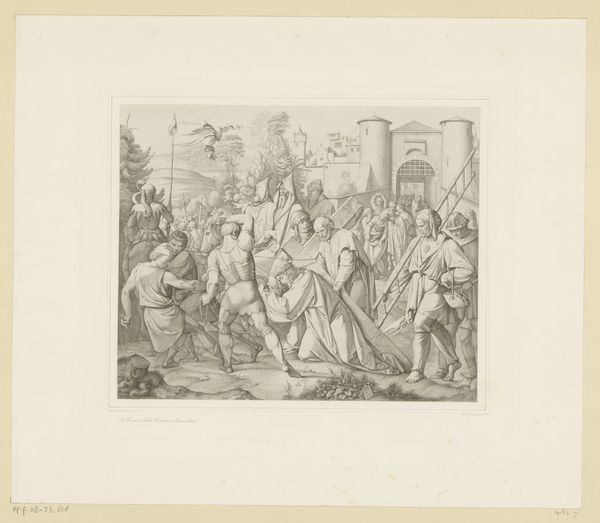
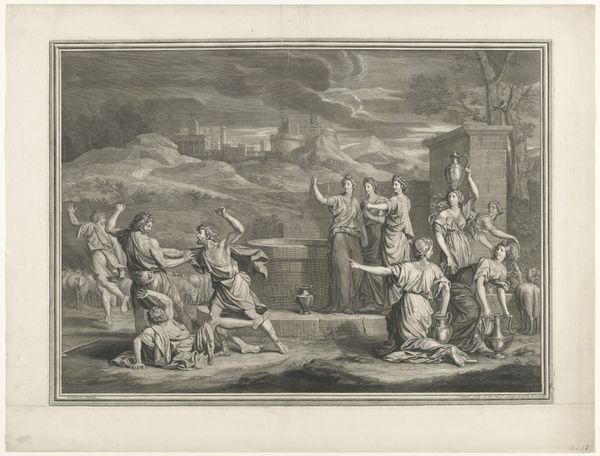
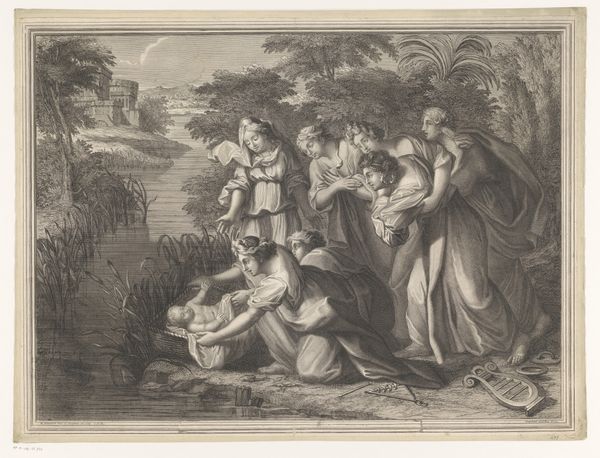
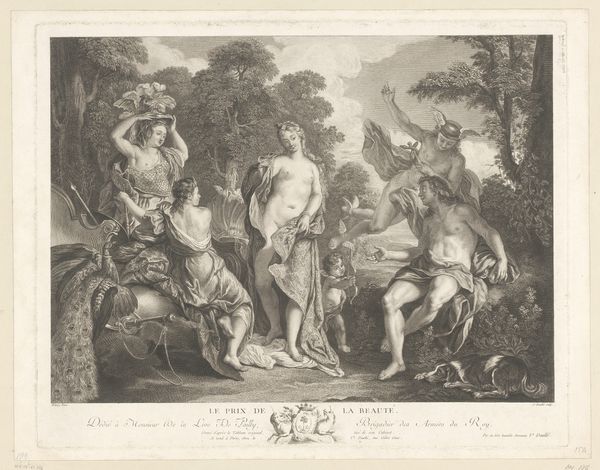
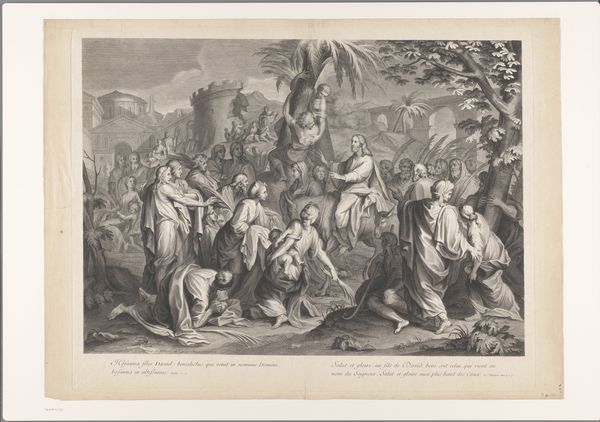
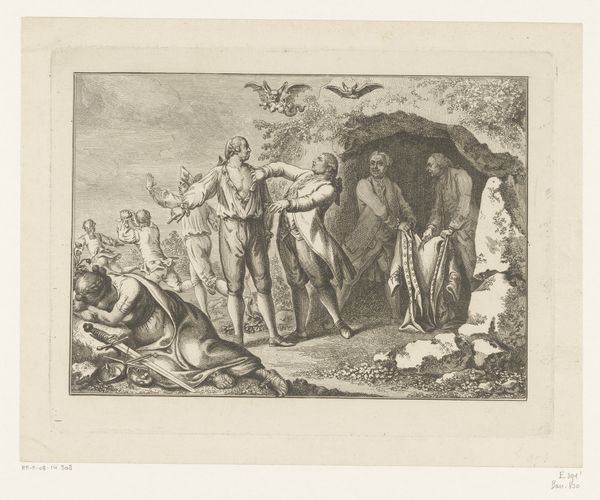
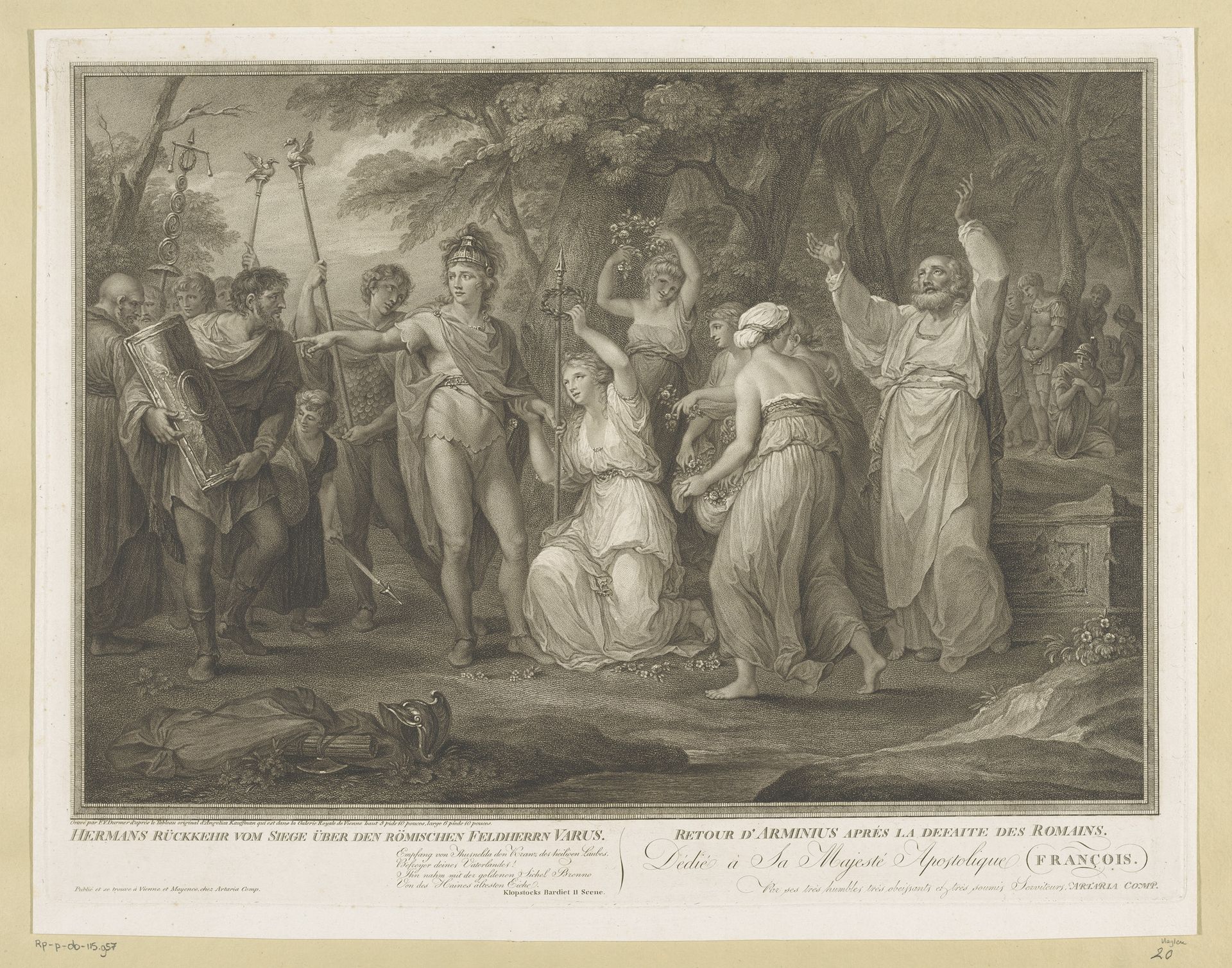
This print, "Return of Arminius After the Defeat of the Romans," was created by Franz Valentin Durmer, sometime between the late 18th and early 19th centuries, using etching or engraving techniques. The image is made up of tiny, precise lines incised into a metal plate, then inked and pressed onto paper. This process, requiring painstaking labor, mirrors the intensive work of the Germanic warriors depicted, who resisted Roman imperial power. Note the way the fine lines create a dramatic, almost theatrical scene, highlighting the clash between civilization and so-called barbarism. The print, therefore, is not just a picture, but an artifact of its own historical moment, reflecting the era's fascination with antiquity and its complex relationship to ideas of nationhood and resistance. By focusing on the material and the means of production, we see how this print embodies both artistic skill and political meaning. The labor-intensive process of its making resonates with the themes of struggle and triumph it portrays.
Terugkeer van Arminius na de nederlaag van de Romeinen
1776 - 1835

Artwork details
- Dimensions
- height 371 mm, width 485 mm
- Copyright
- Rijks Museum: Open Domain
Tags
Comments
Share your thoughts
About this artwork
This print, "Return of Arminius After the Defeat of the Romans," was created by Franz Valentin Durmer, sometime between the late 18th and early 19th centuries, using etching or engraving techniques. The image is made up of tiny, precise lines incised into a metal plate, then inked and pressed onto paper. This process, requiring painstaking labor, mirrors the intensive work of the Germanic warriors depicted, who resisted Roman imperial power. Note the way the fine lines create a dramatic, almost theatrical scene, highlighting the clash between civilization and so-called barbarism. The print, therefore, is not just a picture, but an artifact of its own historical moment, reflecting the era's fascination with antiquity and its complex relationship to ideas of nationhood and resistance. By focusing on the material and the means of production, we see how this print embodies both artistic skill and political meaning. The labor-intensive process of its making resonates with the themes of struggle and triumph it portrays.
Comments
Share your thoughts