drawing, pencil
#
drawing
#
pencil sketch
#
figuration
#
sketch
#
romanticism
#
pencil
#
christianity
#
human
#
line
#
crucifixion
#
history-painting
#
arm
#
christ
Copyright: Public domain
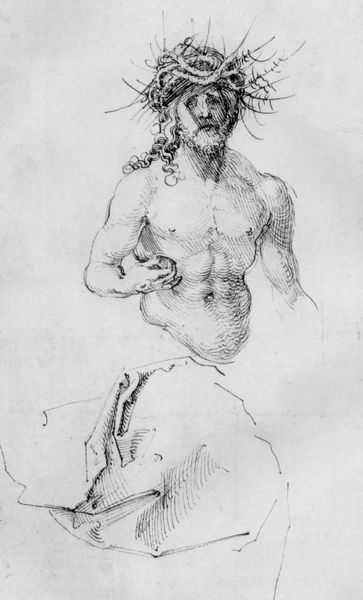
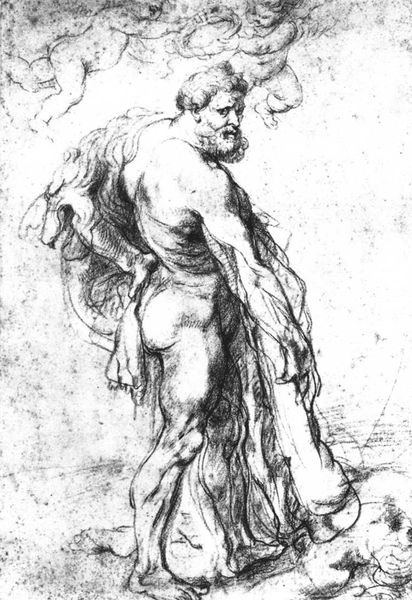
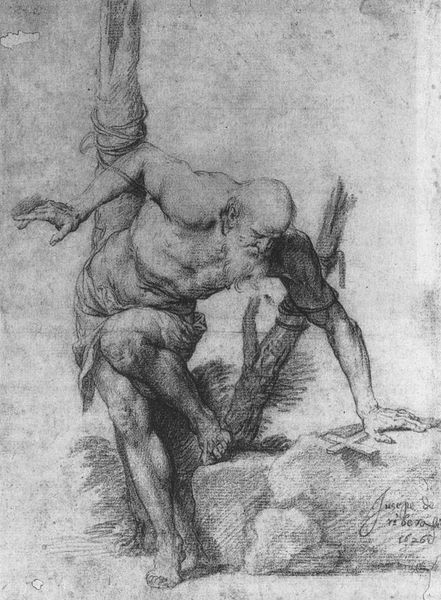
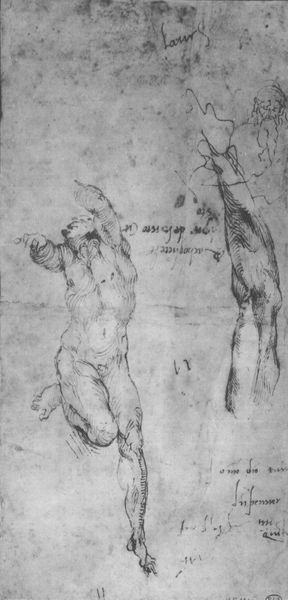
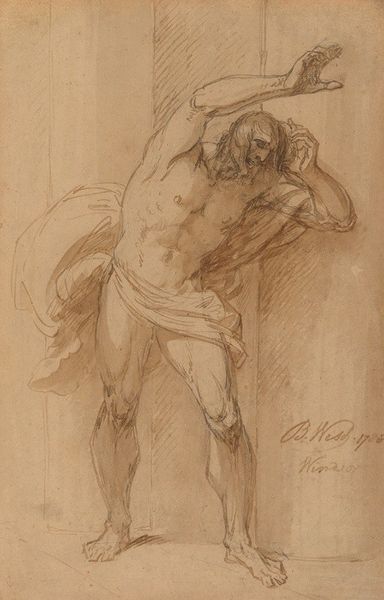
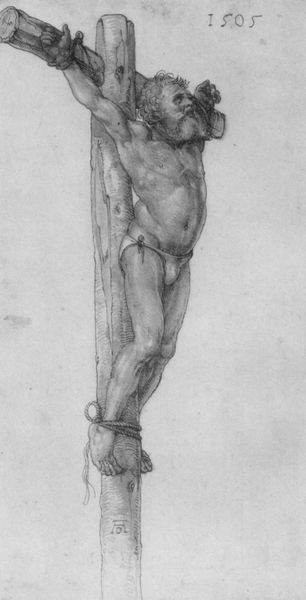
Editor: Here we have Eugène Delacroix’s "Christ on the Cross," a pencil drawing from 1839. It’s a pretty stark image. The quick lines give it a raw, almost unfinished feel. What can you tell me about this work? Curator: This drawing provides an intimate view of Delacroix grappling with power, suffering, and faith. But what power dynamics are truly at play here? Christ's crucifixion has been used to justify various forms of oppression throughout history. How might Delacroix, living in a post-revolutionary France grappling with its own legacies of violence and social inequalities, be interrogating the complex relationship between religious narratives, suffering, and authority? Does the medium, pencil on paper, lend itself to a feeling of immediacy? Editor: It definitely feels immediate, like a snapshot of a deeply personal reflection. The starkness emphasizes the suffering. Curator: Yes, and considering Delacroix's historical context, this image speaks to more than religious piety. It compels us to think about those whose suffering has been historically overlooked. Think about colonialism, poverty... the systematic violence enacted against marginalized communities. Where does "religious" art intersect with the historical realities of power? Is it about offering comfort, or forcing a reckoning? Editor: So, you're saying it's less about glorifying faith and more about questioning power structures that use suffering as a tool? Curator: Exactly. And Delacroix, with his Romantic sensibility, was very interested in pushing back against established norms. How can a piece like this force a re-evaluation of existing conditions, especially around race and gender? It pushes us beyond a simplistic understanding of faith to recognize that images like these carry weight that may perpetuate systems of oppression, no? Editor: That gives me a lot to consider, how artistic representations of faith intersect with real-world social justice issues. Thank you. Curator: My pleasure. It's a reminder that we must always challenge what seems "sacred" when it contributes to injustice.
Comments
No comments
Be the first to comment and join the conversation on the ultimate creative platform.
 Collect
 React
React Comment
More like this