drawing, pencil, charcoal
#
portrait
#
drawing
#
neoclacissism
#
pencil sketch
#
charcoal drawing
#
figuration
#
form
#
pencil drawing
#
underpainting
#
pencil
#
portrait drawing
#
charcoal
#
history-painting
#
academic-art
Copyright: Public Domain: Artvee
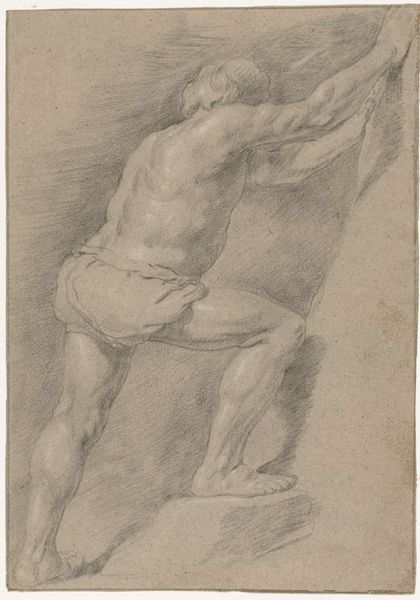
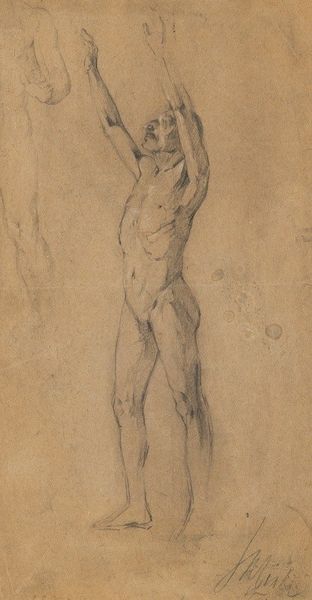
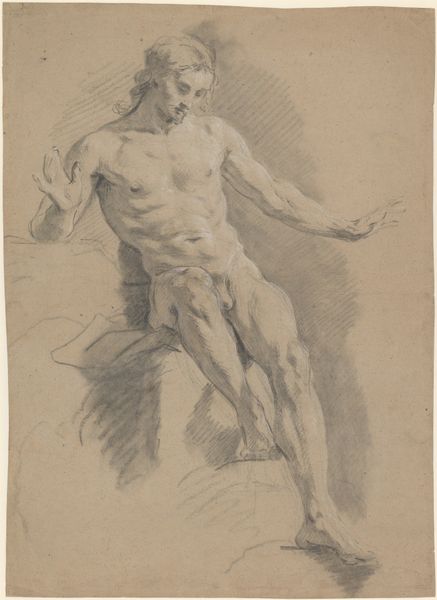
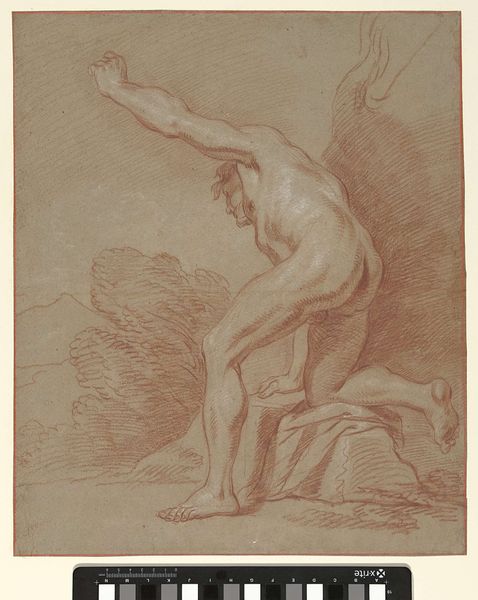
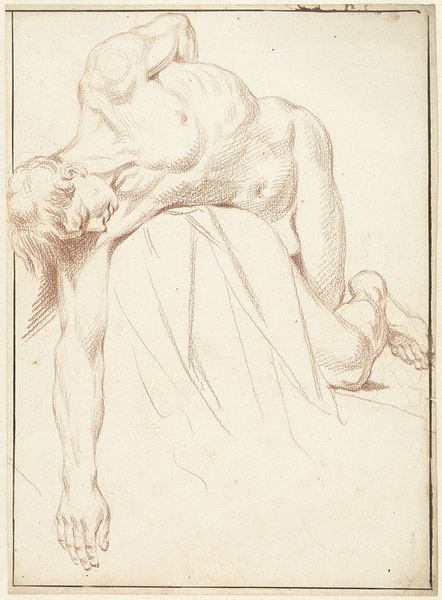
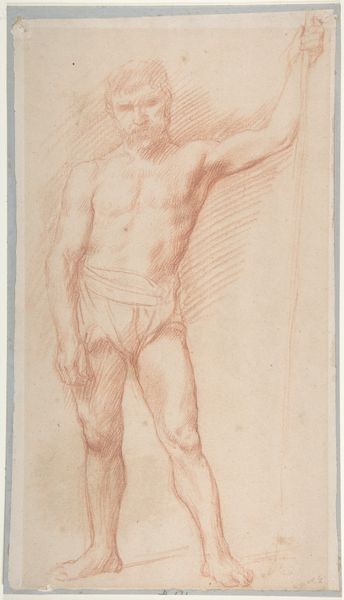
Editor: This is Benjamin West’s “Study for the Crucifixion,” a drawing in pencil and charcoal from 1788. The figure is so dynamic; there's an urgency to his gesture as he braces himself against the column. How do you interpret the significance of this study within its historical moment? Curator: Considering its context, we should consider West’s position as historical painter to the court. He would have been thinking about how to represent religious subjects in a way that was both emotionally resonant and appropriate for a public, potentially even royal, audience. Does the Neoclassical style contribute to this effect, would you say? Editor: I think the Neoclassical influence gives the figure a sense of idealized strength even in what seems like a moment of extreme stress. I can imagine this translated to a monumental canvas meant to convey moral fortitude. Curator: Exactly. Think about how West uses the figure's body – its musculature and posture – to convey not just suffering but also resistance, perhaps even a challenge to the social or political structures of his time. Is there something subtly subversive in that tension? Editor: The idea of resistance makes me see the drawing in a new light. It transforms from a religious scene into a symbol of challenging power, especially given West’s context within the British establishment. I suppose that tension gives the piece its continued relevance. Curator: Precisely. Seeing how art interacts with the socio-political dynamics can profoundly shift our interpretation of its subject, allowing us to appreciate not just its aesthetic qualities, but its active role in society. Editor: Thanks, I now recognize it's not only the beauty of the drawing that is worth cherishing, but its capacity to address important social issues through aesthetic codes. Curator: My pleasure, appreciating this interconnection really helps deepen our engagement with historical art.
Comments
No comments
Be the first to comment and join the conversation on the ultimate creative platform.
 Collect
 React
React Comment
More like this