About this artwork
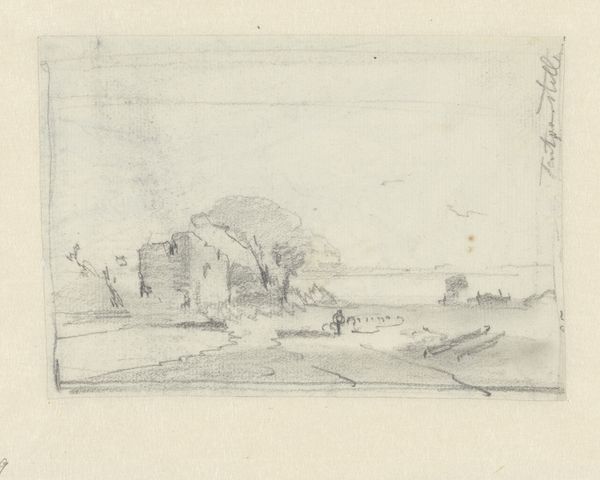
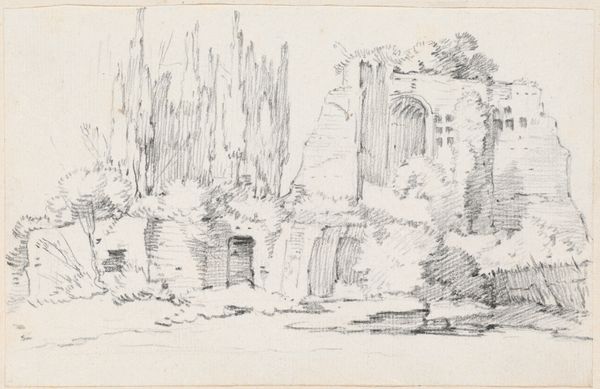
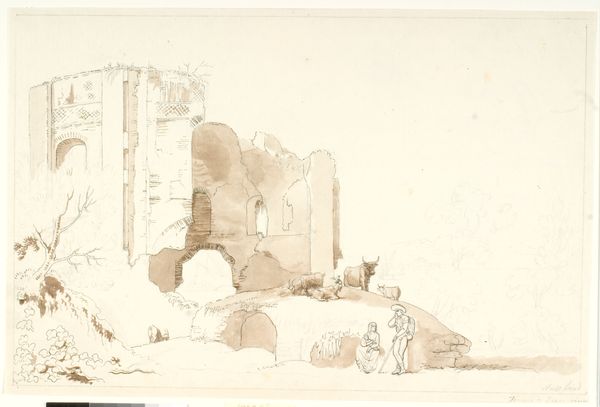
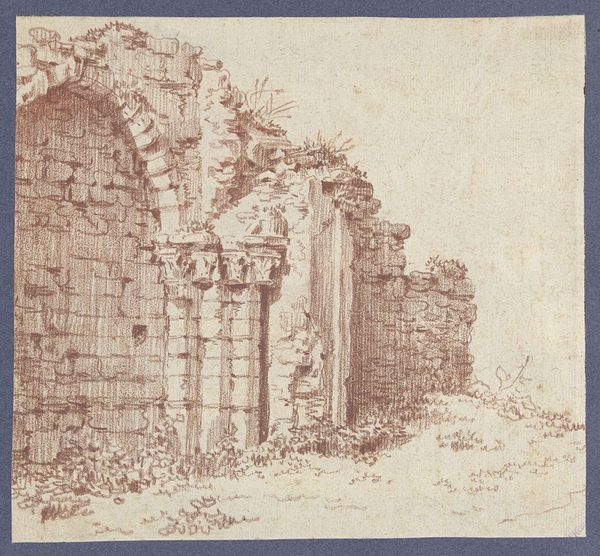
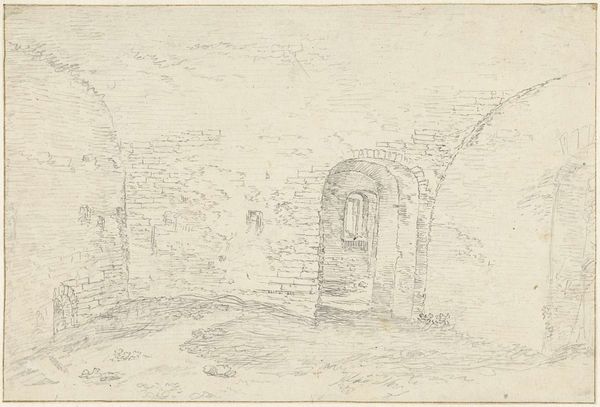
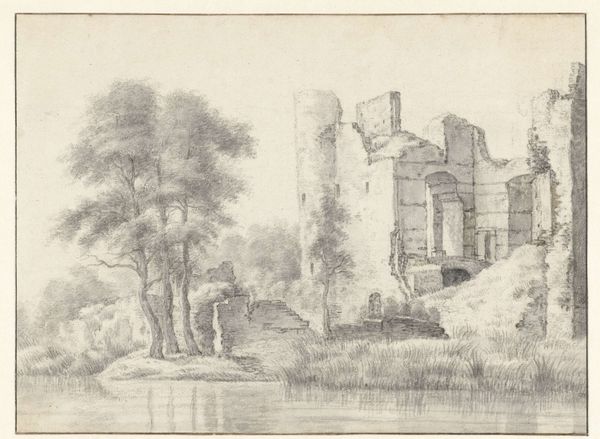
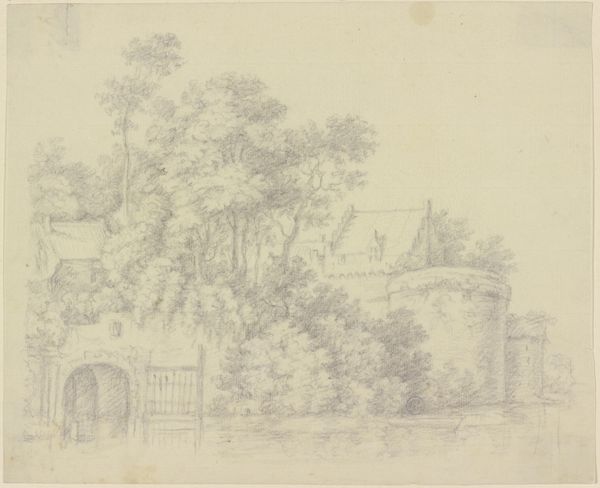
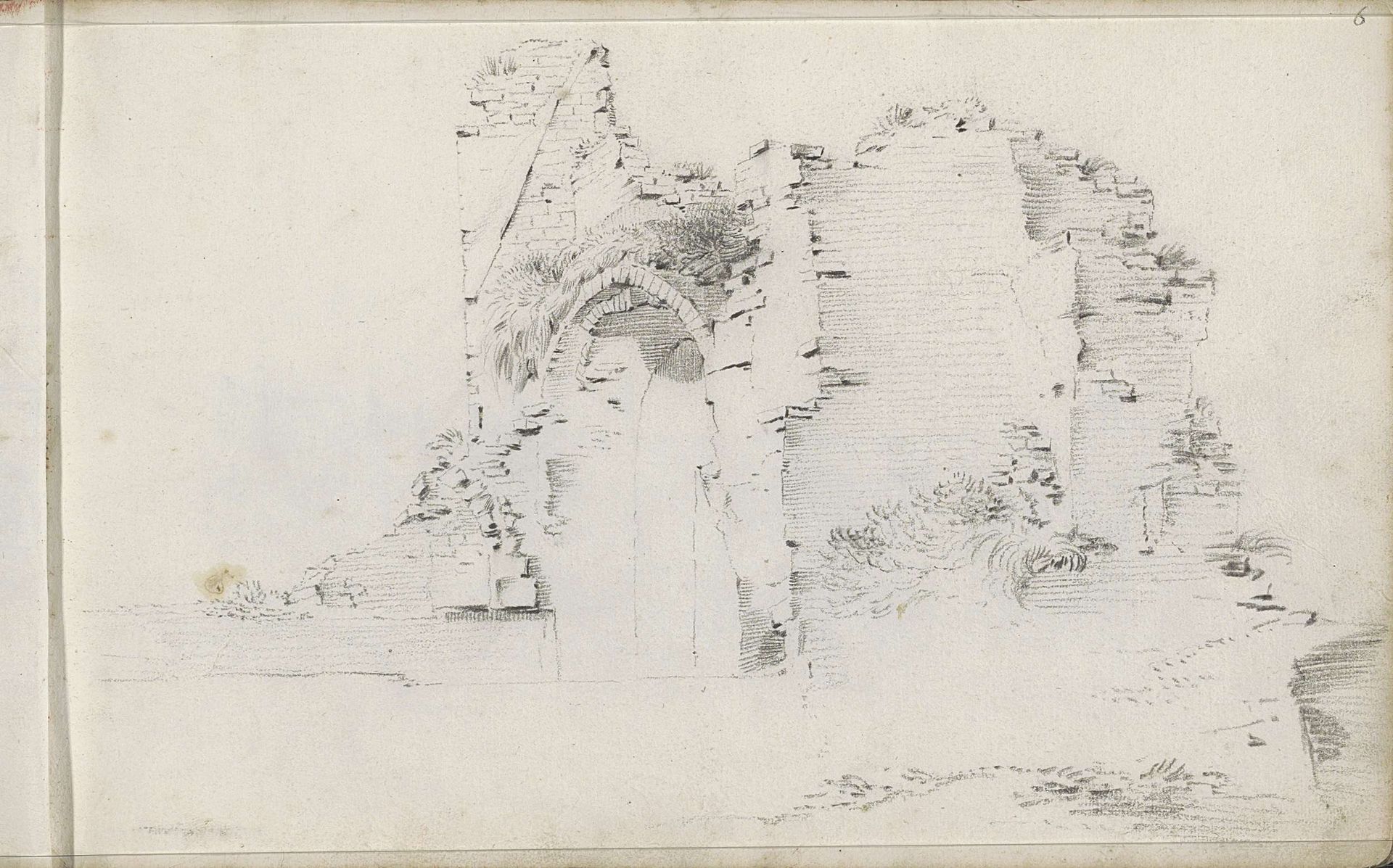
Pieter Moninckx sketched this ruined gatehouse with graphite, capturing not just its physical decay but also a deeper symbolic resonance. The archway, once a symbol of passage and power, is now fractured, a skeleton of its former self. Consider the arch—a motif stretching back to Roman triumphal arches, symbols of victory and imperial might. Here, however, the arch is incomplete. It’s a visual metaphor for the transient nature of human achievement. We see nature reclaiming what was once defined and structured by man. This reclaiming is not a destructive force; it suggests a continuous cycle of growth, decay, and renewal. The psychological pull of ruins lies in their ability to evoke a sense of melancholy, a meditation on the passage of time. It reminds us of our own mortality, and the inevitable decline that awaits all things. Yet, within this somber reflection, we find a strange beauty, a poignant reminder of the enduring power of nature. This dialogue between ruin and growth reflects the cyclical nature of history.

Artwork details
- Medium
- drawing, pencil
- Copyright
- Rijks Museum: Open Domain
Tags
drawing
dutch-golden-age
pencil sketch
landscape
pencil
realism
Comments
No comments
About this artwork
Pieter Moninckx sketched this ruined gatehouse with graphite, capturing not just its physical decay but also a deeper symbolic resonance. The archway, once a symbol of passage and power, is now fractured, a skeleton of its former self. Consider the arch—a motif stretching back to Roman triumphal arches, symbols of victory and imperial might. Here, however, the arch is incomplete. It’s a visual metaphor for the transient nature of human achievement. We see nature reclaiming what was once defined and structured by man. This reclaiming is not a destructive force; it suggests a continuous cycle of growth, decay, and renewal. The psychological pull of ruins lies in their ability to evoke a sense of melancholy, a meditation on the passage of time. It reminds us of our own mortality, and the inevitable decline that awaits all things. Yet, within this somber reflection, we find a strange beauty, a poignant reminder of the enduring power of nature. This dialogue between ruin and growth reflects the cyclical nature of history.
Comments
No comments