About this artwork
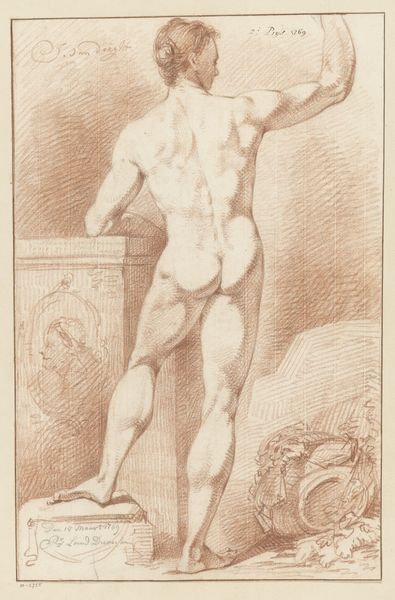
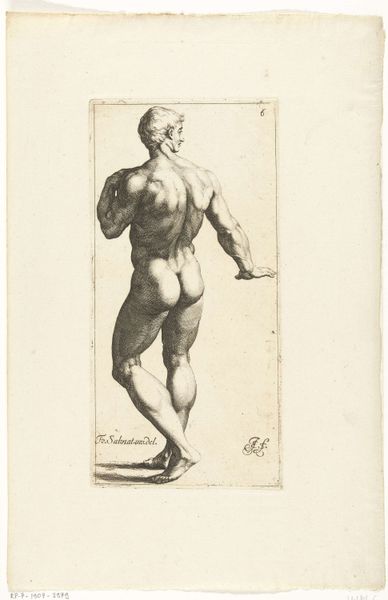
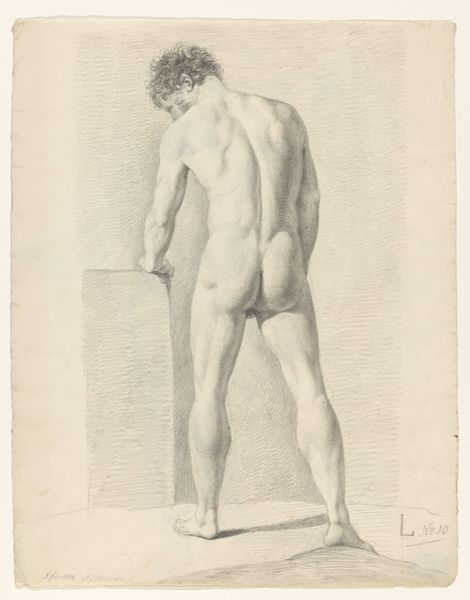
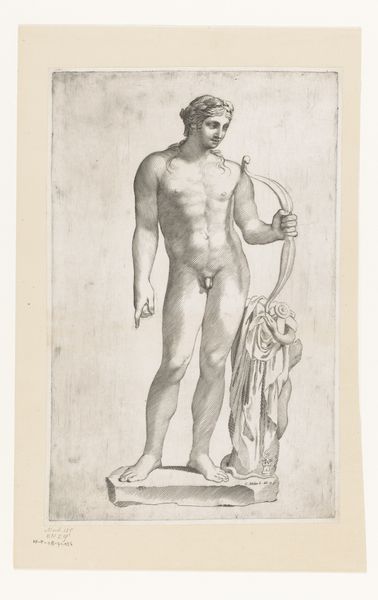
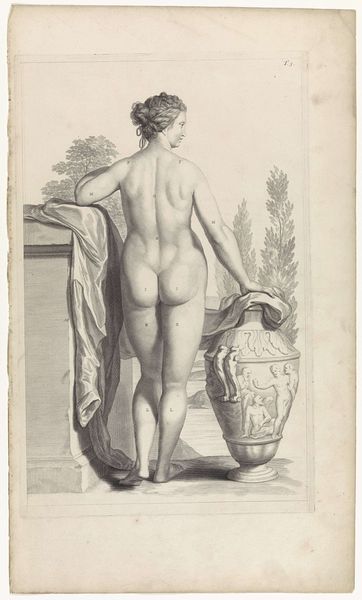
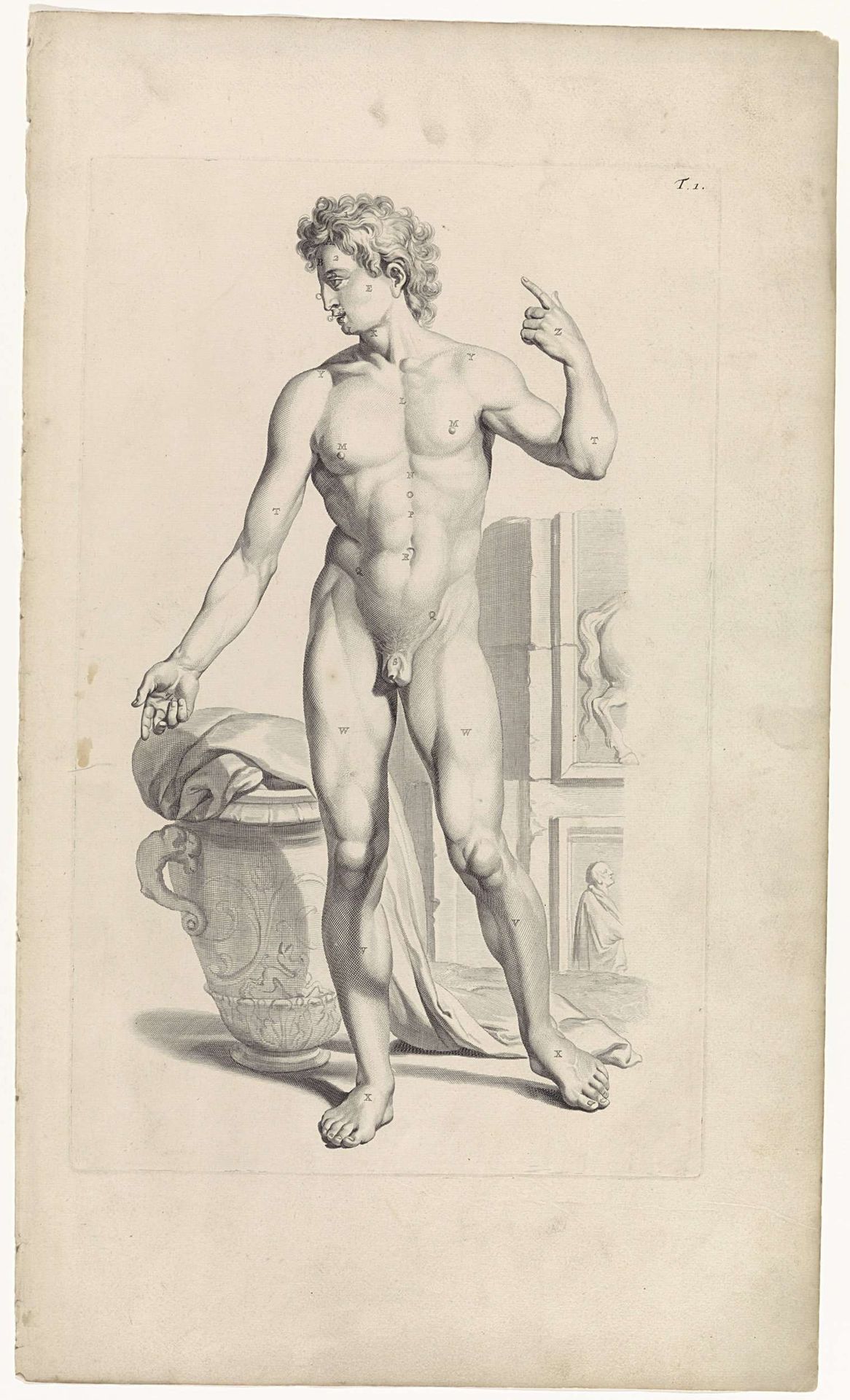
Pieter van Gunst created this male nude study using etching and engraving, techniques that demand meticulous labor and skill. The image emerges from a dense network of precisely incised lines. Look closely, and you can see how the varying density and direction of these lines create subtle tonal gradations, bringing volume and texture to the figure's skin and musculature. The contrast between the smooth planes of the body and the intricate details of the hair and drapery showcase van Gunst's mastery of these demanding methods. Engraving and etching were central to the printmaking industry of the 17th and 18th centuries. Though valued for their aesthetic qualities, prints were also commodities, produced and circulated in large numbers to meet the growing demand for visual imagery. Van Gunst's technical virtuosity thus served both artistic and commercial ends, demonstrating the complex relationship between skill, labor, and the burgeoning market economy of his time. Appreciating the artistry of this image involves understanding the social and economic conditions of its making, and its place within a broader culture of reproduction.

Artwork details
- Medium
- drawing, paper, pencil
- Dimensions
- width 278 mm, height 446 mm
- Location
- Rijksmuseum
- Copyright
- Rijks Museum: Open Domain
Tags
Comments
Share your thoughts
About this artwork
Pieter van Gunst created this male nude study using etching and engraving, techniques that demand meticulous labor and skill. The image emerges from a dense network of precisely incised lines. Look closely, and you can see how the varying density and direction of these lines create subtle tonal gradations, bringing volume and texture to the figure's skin and musculature. The contrast between the smooth planes of the body and the intricate details of the hair and drapery showcase van Gunst's mastery of these demanding methods. Engraving and etching were central to the printmaking industry of the 17th and 18th centuries. Though valued for their aesthetic qualities, prints were also commodities, produced and circulated in large numbers to meet the growing demand for visual imagery. Van Gunst's technical virtuosity thus served both artistic and commercial ends, demonstrating the complex relationship between skill, labor, and the burgeoning market economy of his time. Appreciating the artistry of this image involves understanding the social and economic conditions of its making, and its place within a broader culture of reproduction.
Comments
Share your thoughts