About this artwork
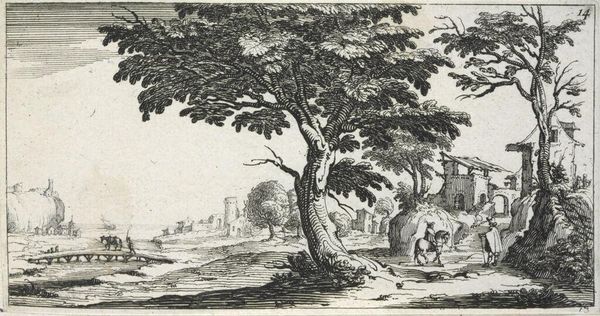
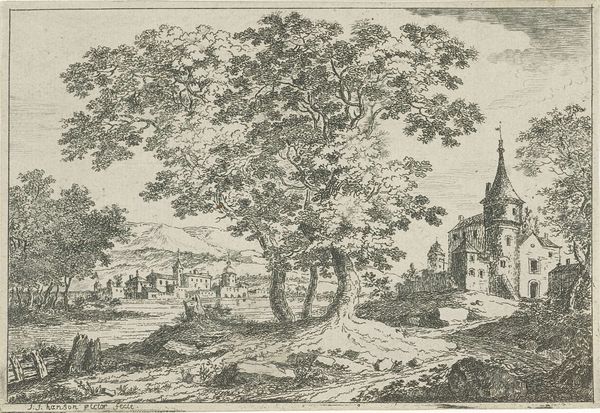
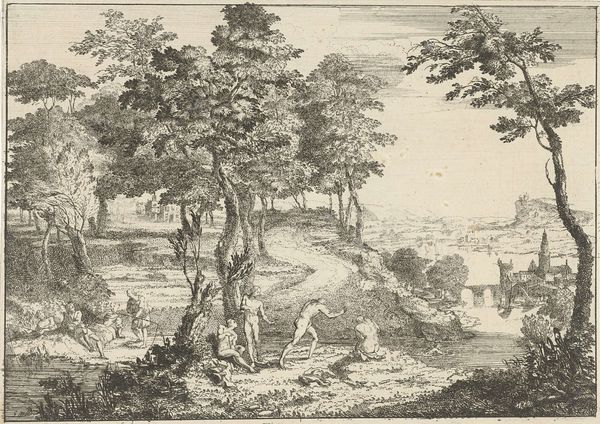
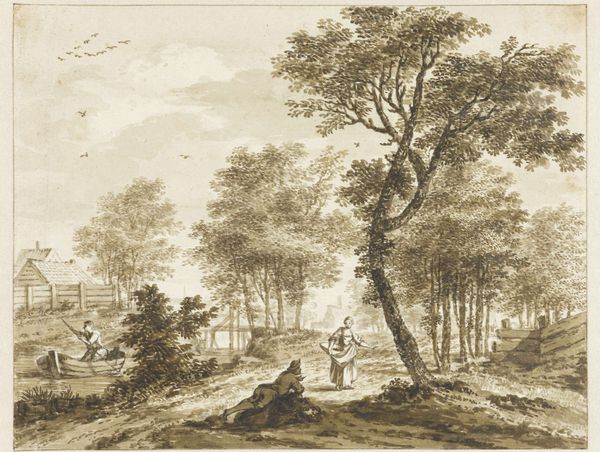
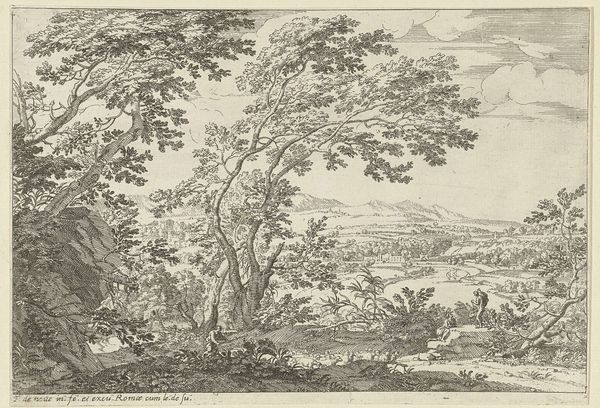
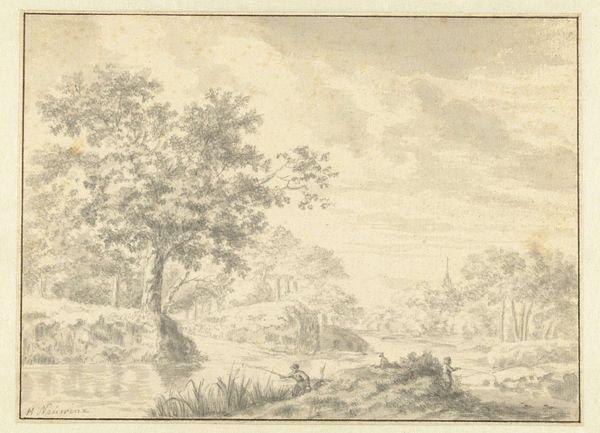
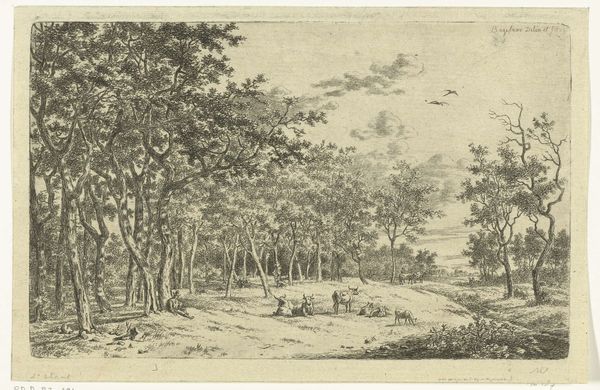
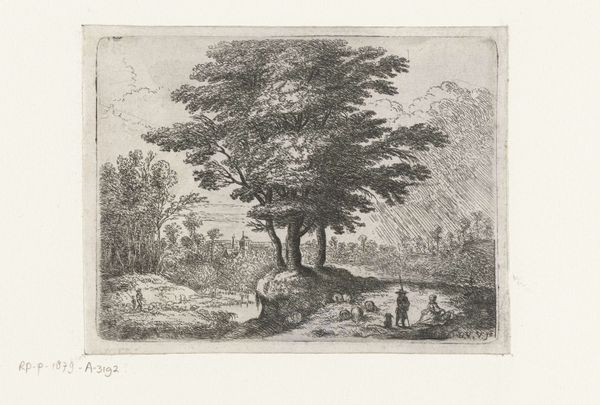
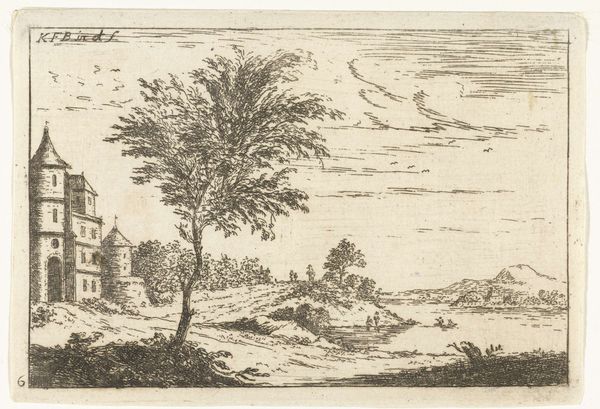
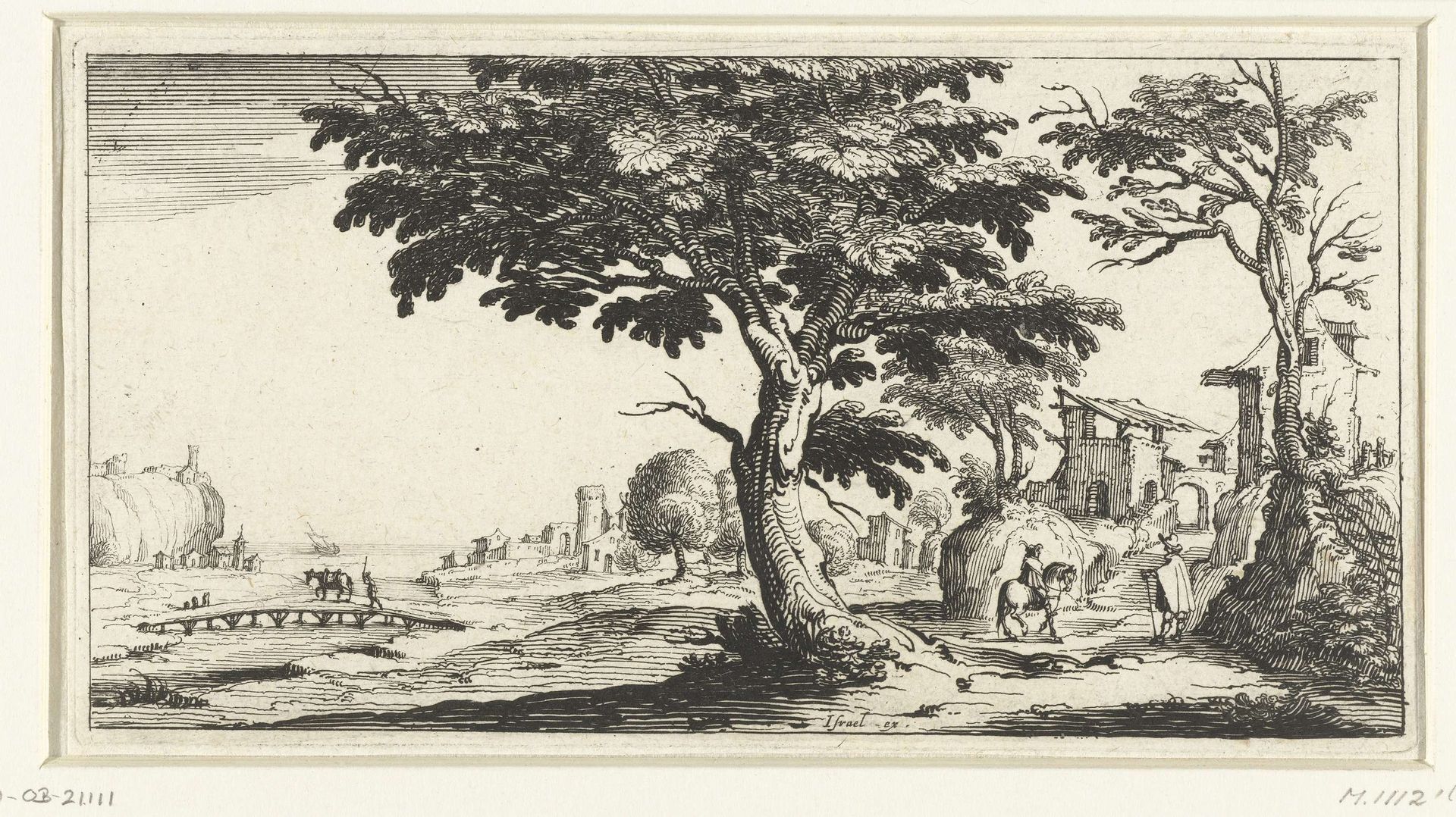
François Collignon's landscape etching presents us with a large tree, a verdant symbol of life, anchoring the scene. Trees, in art across epochs, often represent growth, connection to nature, and the passage of time. Consider the tree here, its roots clinging to the earth, its branches reaching skyward. We see a similar motif echoed in medieval tapestries, where the tree signifies the Tree of Life, bridging the earthly and divine. The presence of ruins in the landscape carries a certain emotional weight, a melancholic beauty. Ruins evoke reflection on past civilisations and empires, a reminder of mortality, and a recognition of the cyclical nature of history. This is a common sentiment in art as far back as Ancient Greece. The rider, a recurring symbol of journey and transition, suggests movement, a seeking, or an escape. This motif, ubiquitous in art, invites the viewer to join in contemplating their path and destiny.
Landschap met een grote boom en een ruiter 1630 - 1660

François Collignon
1605 - 1687Location
RijksmuseumArtwork details
- Medium
- drawing, etching, ink, engraving
- Dimensions
- height 84 mm, width 159 mm
- Location
- Rijksmuseum
- Copyright
- Rijks Museum: Open Domain
Tags
drawing
baroque
pen drawing
etching
landscape
ink
engraving
Comments
No comments
About this artwork
François Collignon's landscape etching presents us with a large tree, a verdant symbol of life, anchoring the scene. Trees, in art across epochs, often represent growth, connection to nature, and the passage of time. Consider the tree here, its roots clinging to the earth, its branches reaching skyward. We see a similar motif echoed in medieval tapestries, where the tree signifies the Tree of Life, bridging the earthly and divine. The presence of ruins in the landscape carries a certain emotional weight, a melancholic beauty. Ruins evoke reflection on past civilisations and empires, a reminder of mortality, and a recognition of the cyclical nature of history. This is a common sentiment in art as far back as Ancient Greece. The rider, a recurring symbol of journey and transition, suggests movement, a seeking, or an escape. This motif, ubiquitous in art, invites the viewer to join in contemplating their path and destiny.
Comments
No comments