About this artwork
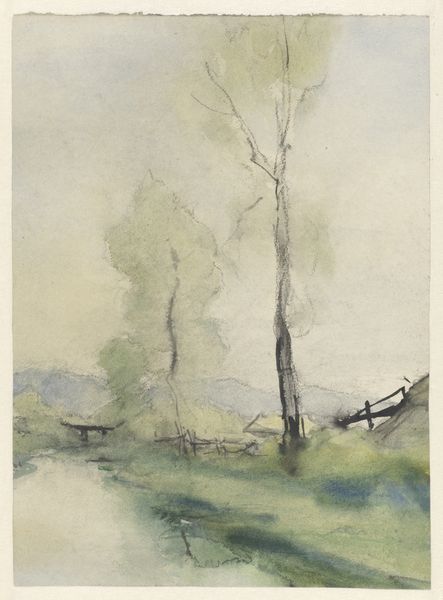
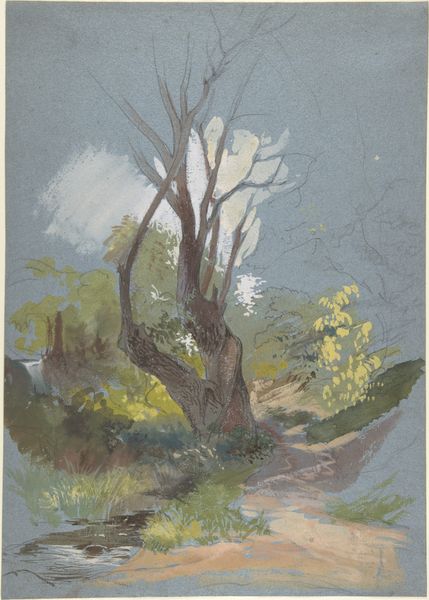
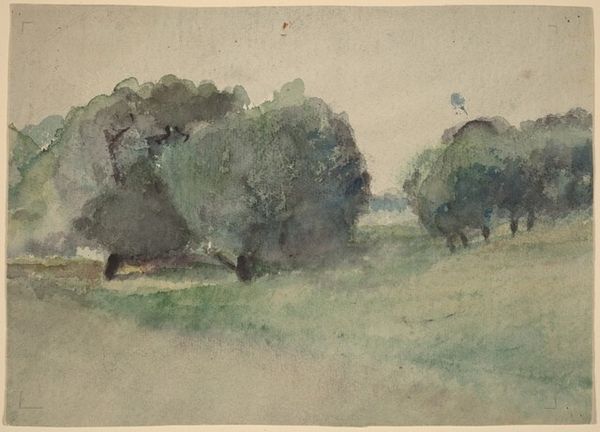
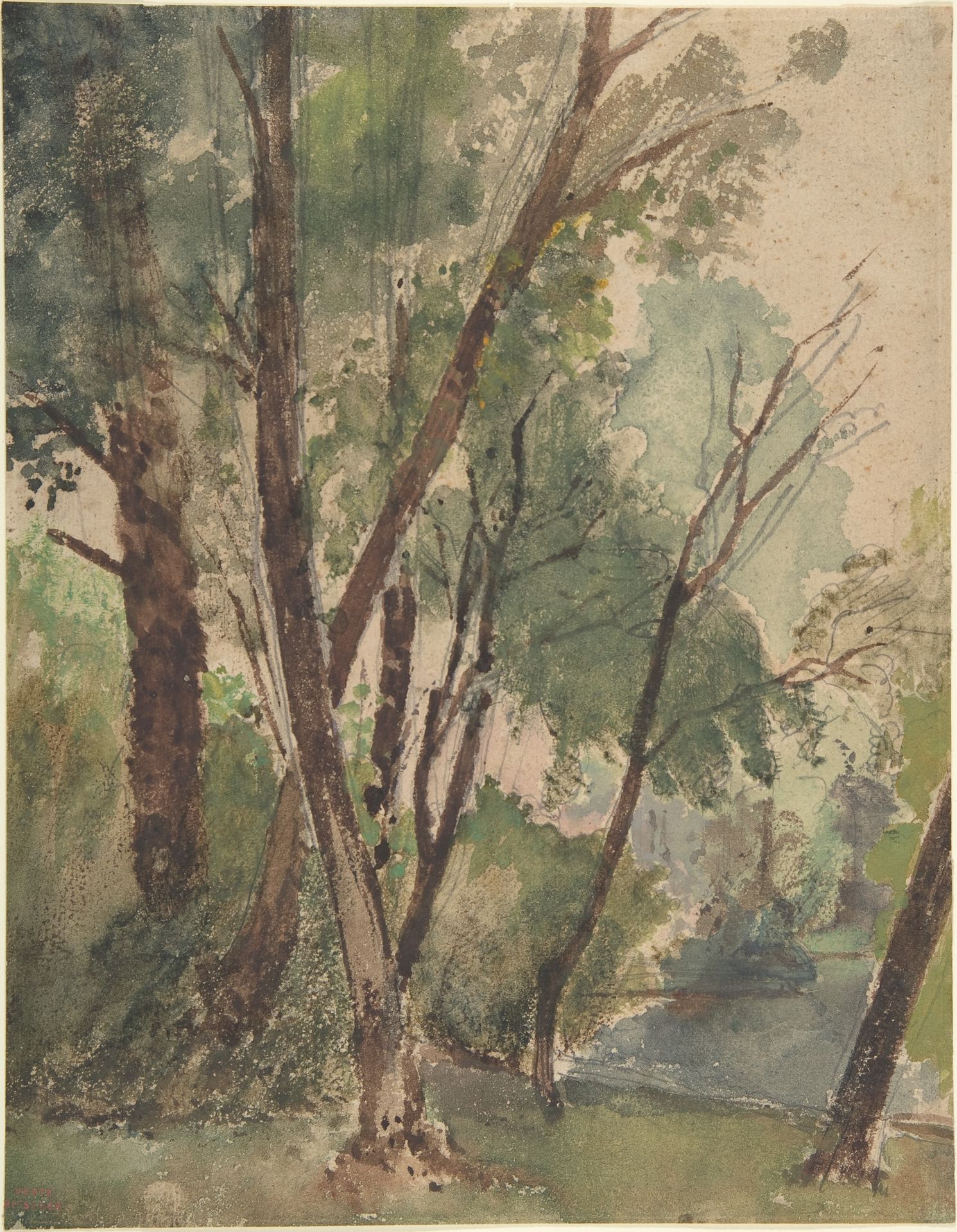
Louis-Antoine-Léon Riesener made this watercolor painting called 'Trees Beside a Pond' sometime in the 19th century in France. Looking at this work, it’s interesting to consider the changing role of landscape painting in French art institutions like the Salon. For centuries, landscapes were considered secondary to historical or mythological scenes. But by the 19th century, with the rise of Romanticism and a growing interest in the natural world, landscapes gained more prominence. Riesener’s choice of watercolor, a medium often associated with spontaneity and direct observation, suggests a desire to capture the immediate experience of nature. We can see this artwork as part of a broader cultural shift, where nature was increasingly valued as a source of inspiration, spiritual renewal, and even national identity. To further understand this artwork, we might consult exhibition reviews from the period, writings by art critics, and even travel guides, all of which can provide insight into the cultural values and institutional structures that shaped both the production and reception of art.
Trees Beside a Pond 1853 - 1878

Louis-Antoine-Léon Riesener
1808 - 1878
The Metropolitan Museum of Art
Metropolitan Museum of Art, New York, NYArtwork details
- Dimensions
- 10 x 7 3/4 in. (25.5 x 19.6 cm)
- Location
- Metropolitan Museum of Art, New York, NY
- Copyright
- Public Domain
Comments
No comments
About this artwork
Louis-Antoine-Léon Riesener made this watercolor painting called 'Trees Beside a Pond' sometime in the 19th century in France. Looking at this work, it’s interesting to consider the changing role of landscape painting in French art institutions like the Salon. For centuries, landscapes were considered secondary to historical or mythological scenes. But by the 19th century, with the rise of Romanticism and a growing interest in the natural world, landscapes gained more prominence. Riesener’s choice of watercolor, a medium often associated with spontaneity and direct observation, suggests a desire to capture the immediate experience of nature. We can see this artwork as part of a broader cultural shift, where nature was increasingly valued as a source of inspiration, spiritual renewal, and even national identity. To further understand this artwork, we might consult exhibition reviews from the period, writings by art critics, and even travel guides, all of which can provide insight into the cultural values and institutional structures that shaped both the production and reception of art.
Comments
No comments