About this artwork
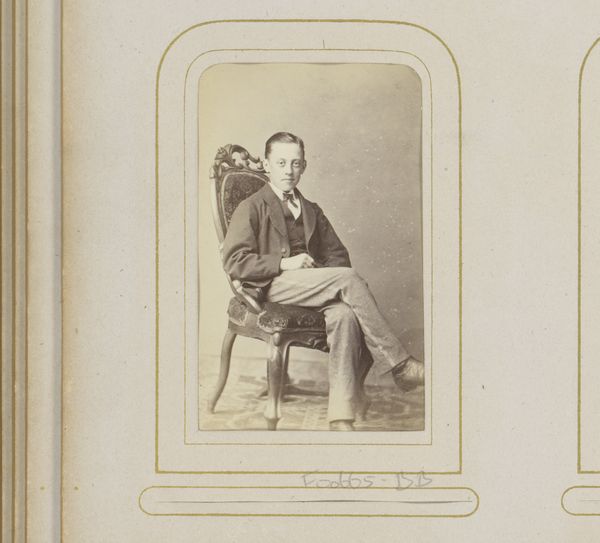
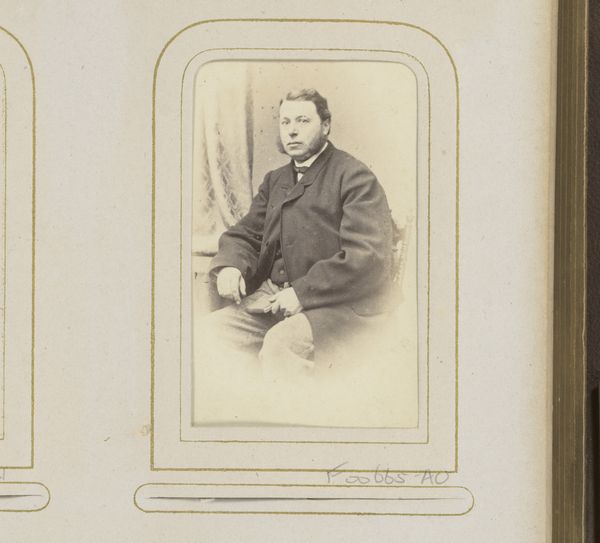
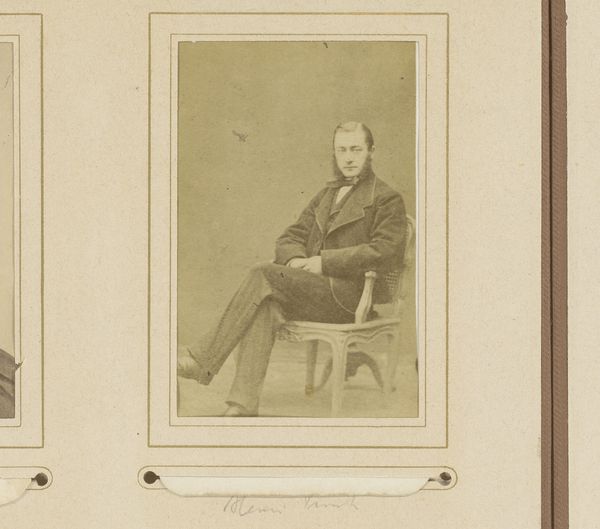
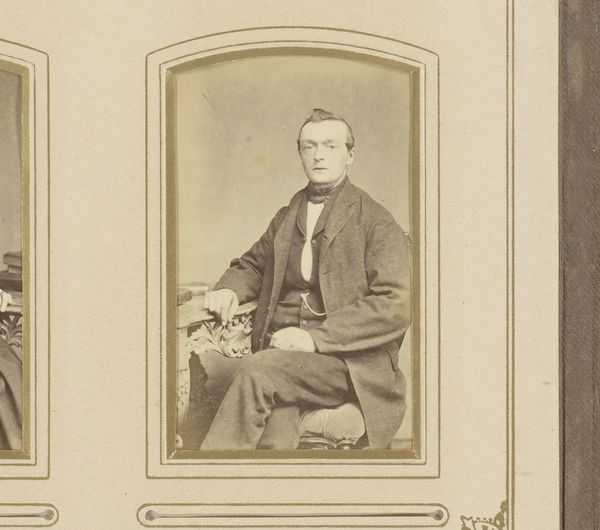
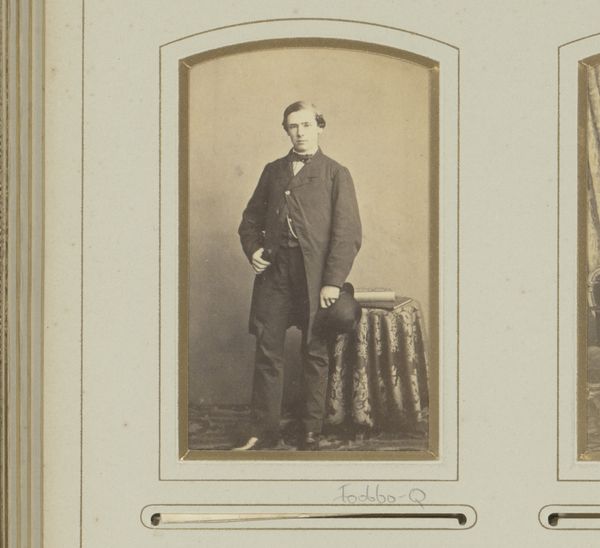
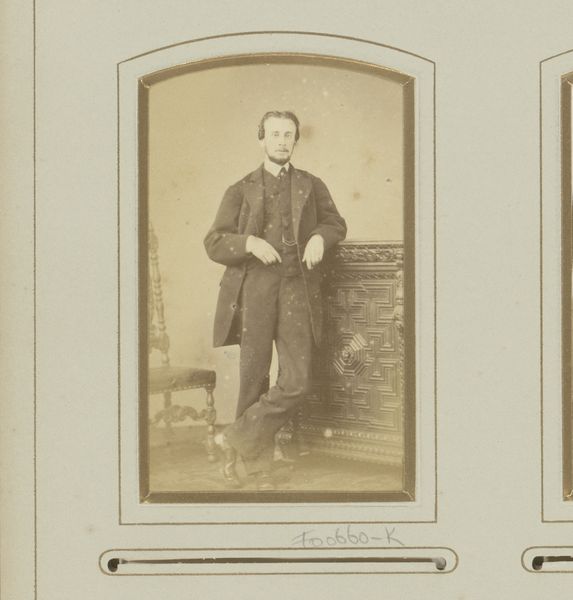
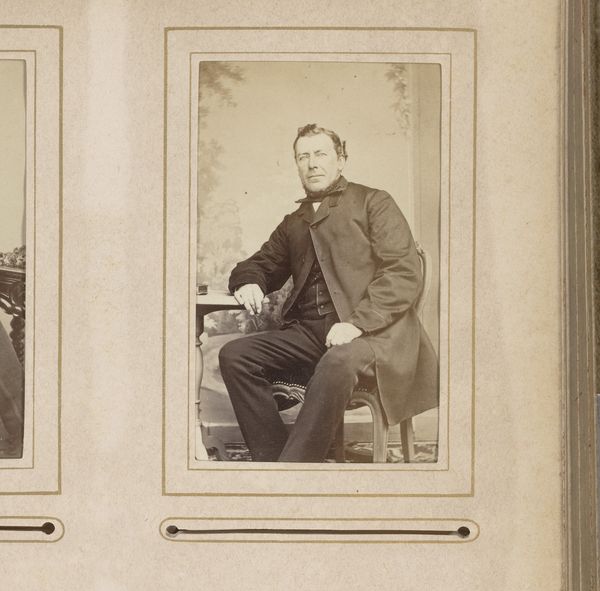
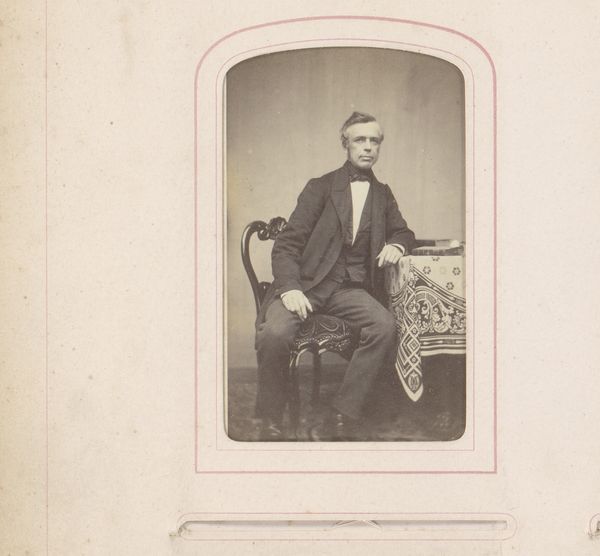
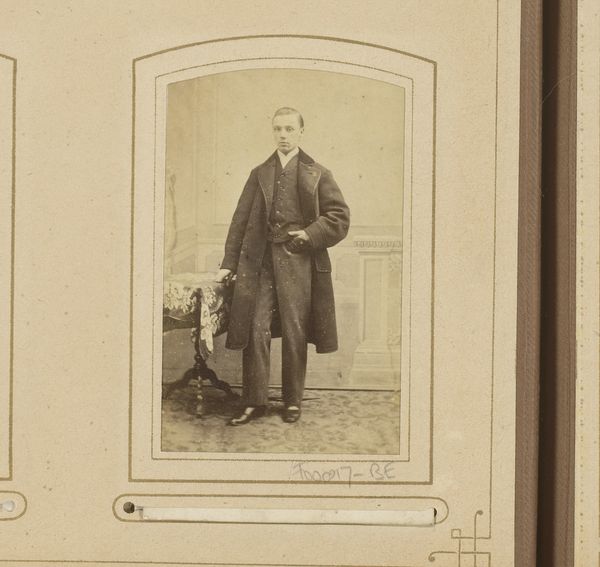
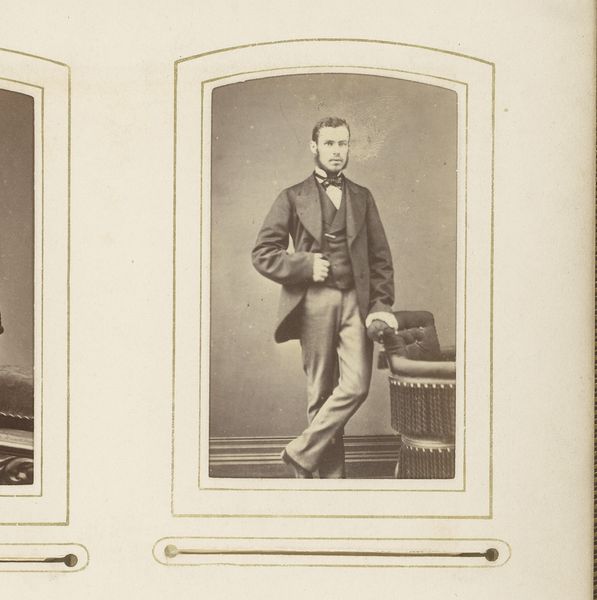
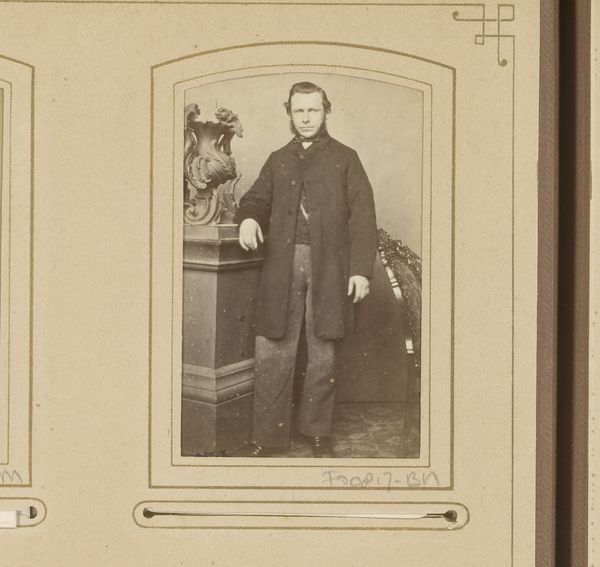
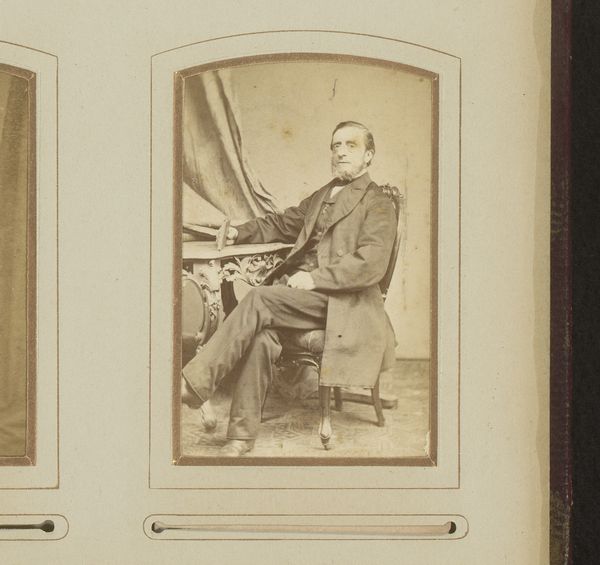
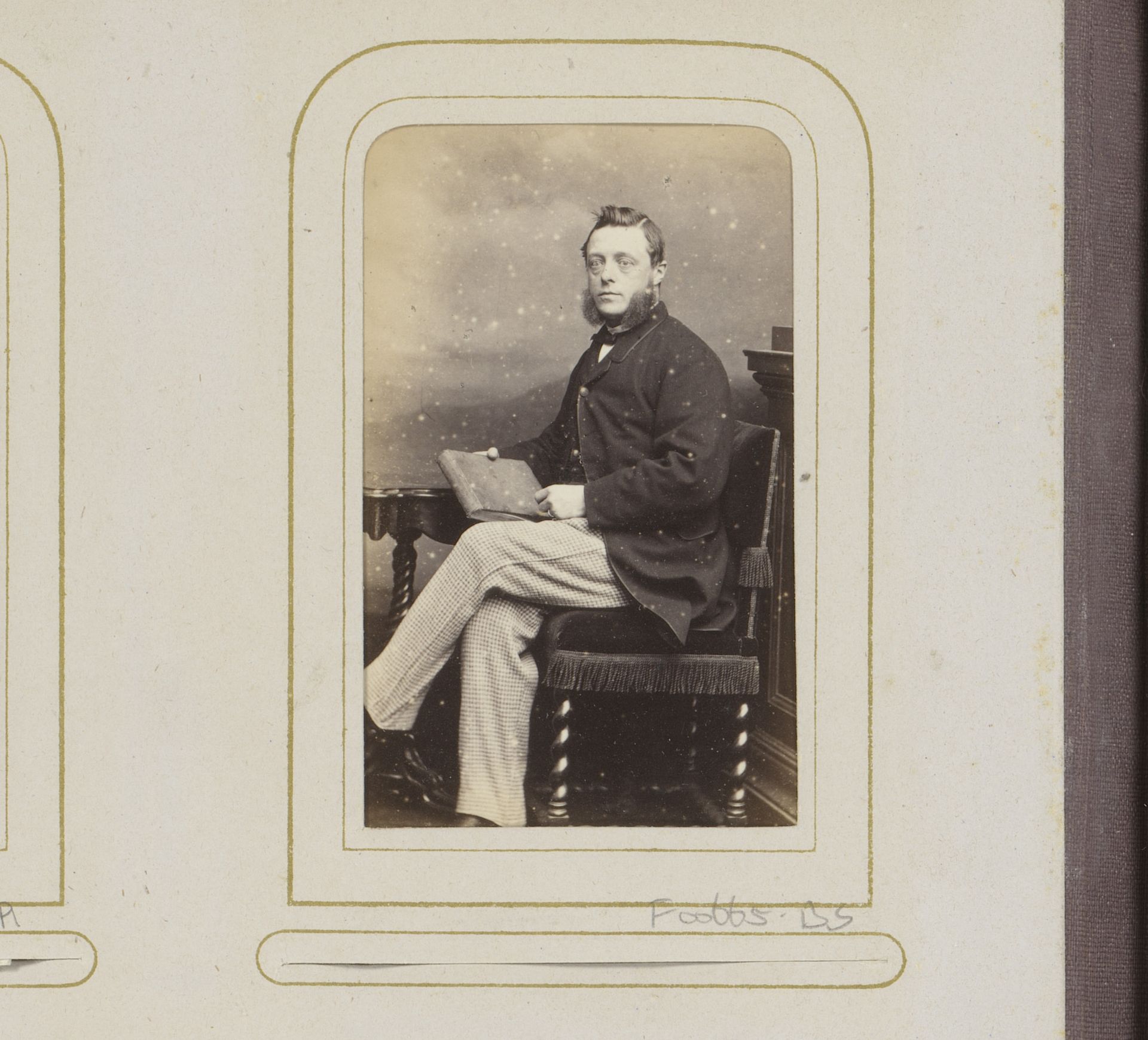
Editor: This is *Portret van een man met boek*, or *Portrait of a Man with Book*, a photograph from between 1865 and 1890, likely an albumen or gelatin silver print by Wegner & Mottu. It has a very formal, staged feel to it. What's your take on this image? Curator: It's easy to see this as a simple, almost banal portrait. But what does it mean to portray someone with a book in this period? Think about literacy rates, class divisions, and access to knowledge. Who had the privilege to be seen reading, to be associated with intellectual pursuits? Editor: So you're saying the book becomes a symbol? Curator: Exactly. It signifies status and education. Photography itself was also becoming more accessible during this time, but commissioning a portrait like this still represented a certain level of affluence. How might gender also play into this? Do you see something significant about how the sitter in the portrait represents masculinity? Editor: Hmm, he does seem posed, almost…delicate. Curator: Consider the prevailing gender norms. The act of reading, intellectualism, these weren’t always encouraged for women. The photograph may have intended to present intellect, a supposed male domain. Also think about the gaze—what does it communicate? And how does that fit with broader social expectations of men at the time? Editor: I hadn’t considered all those layers of meaning embedded within the image. It makes you wonder about his story. Curator: Right. This photograph invites us to look critically at the intersections of class, gender, and access to knowledge in the 19th century, a period of vast societal change. We are able to think of the image now as not just a simple portrait, but also as an encapsulation of power structures and social identity. Editor: This reminds us that even a seemingly simple portrait holds so much historical and cultural weight! Thank you.

Artwork details
- Medium
- photography, gelatin-silver-print, albumen-print
- Dimensions
- height 82 mm, width 50 mm
- Location
- Rijksmuseum
- Copyright
- Rijks Museum: Open Domain
Tags
Comments
Share your thoughts
About this artwork
Editor: This is *Portret van een man met boek*, or *Portrait of a Man with Book*, a photograph from between 1865 and 1890, likely an albumen or gelatin silver print by Wegner & Mottu. It has a very formal, staged feel to it. What's your take on this image? Curator: It's easy to see this as a simple, almost banal portrait. But what does it mean to portray someone with a book in this period? Think about literacy rates, class divisions, and access to knowledge. Who had the privilege to be seen reading, to be associated with intellectual pursuits? Editor: So you're saying the book becomes a symbol? Curator: Exactly. It signifies status and education. Photography itself was also becoming more accessible during this time, but commissioning a portrait like this still represented a certain level of affluence. How might gender also play into this? Do you see something significant about how the sitter in the portrait represents masculinity? Editor: Hmm, he does seem posed, almost…delicate. Curator: Consider the prevailing gender norms. The act of reading, intellectualism, these weren’t always encouraged for women. The photograph may have intended to present intellect, a supposed male domain. Also think about the gaze—what does it communicate? And how does that fit with broader social expectations of men at the time? Editor: I hadn’t considered all those layers of meaning embedded within the image. It makes you wonder about his story. Curator: Right. This photograph invites us to look critically at the intersections of class, gender, and access to knowledge in the 19th century, a period of vast societal change. We are able to think of the image now as not just a simple portrait, but also as an encapsulation of power structures and social identity. Editor: This reminds us that even a seemingly simple portrait holds so much historical and cultural weight! Thank you.
Comments
Share your thoughts