About this artwork
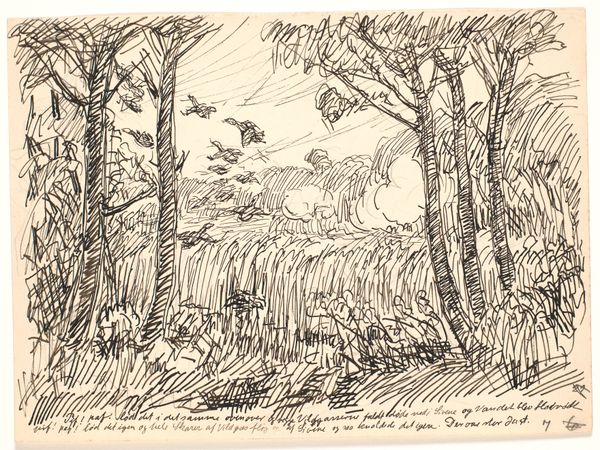
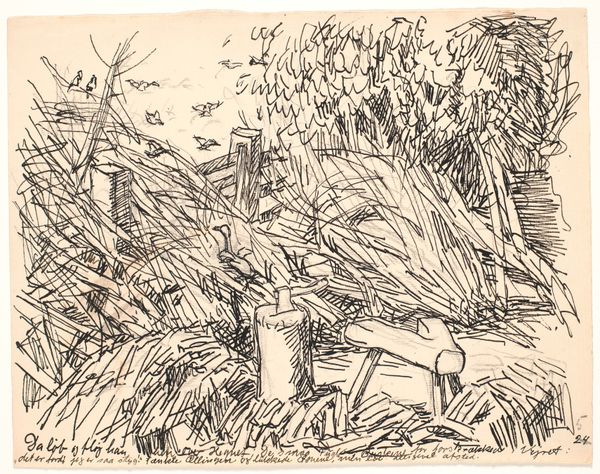
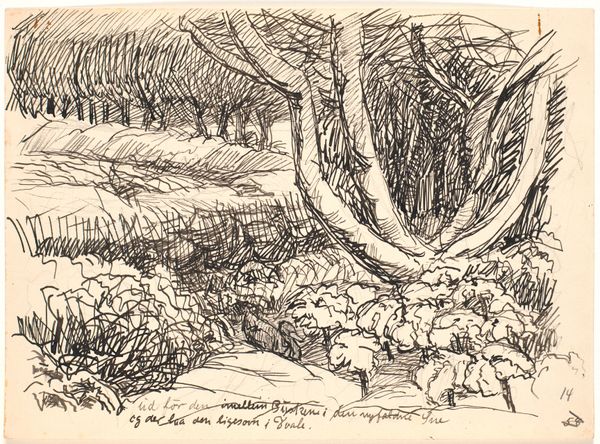
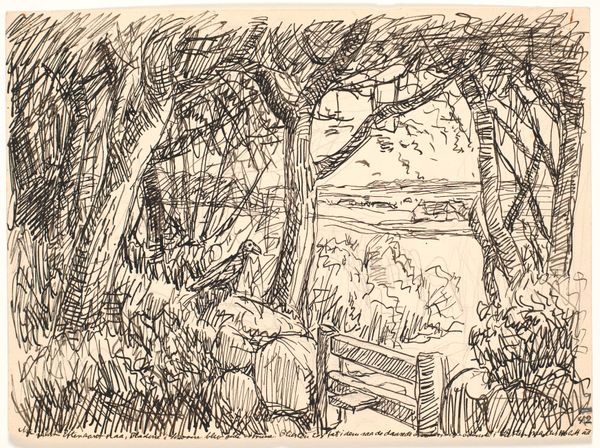
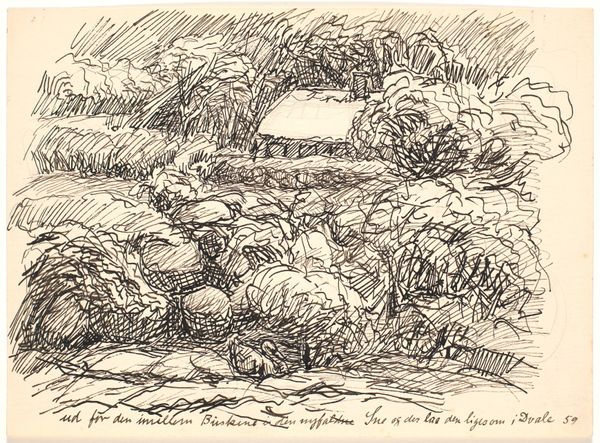
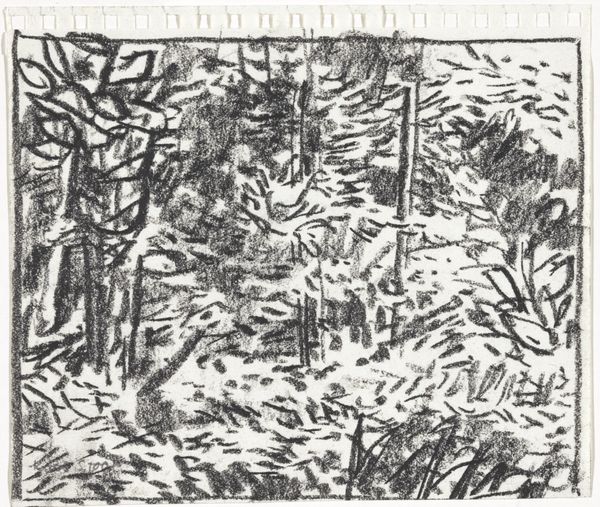
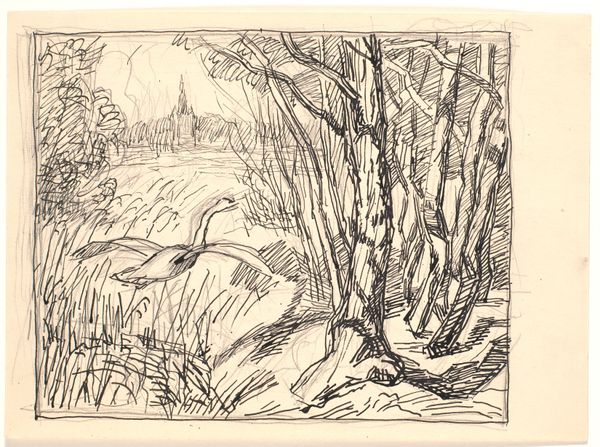
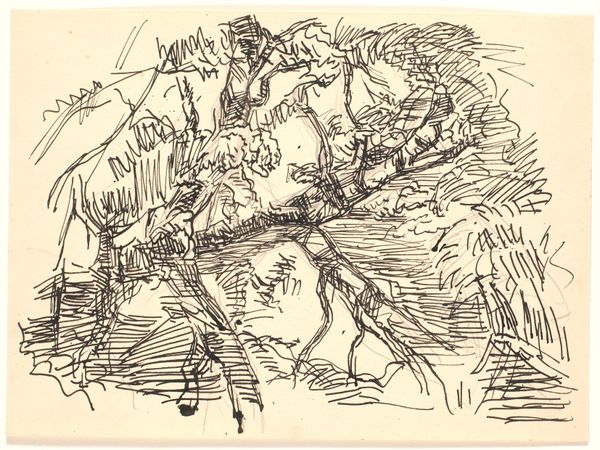
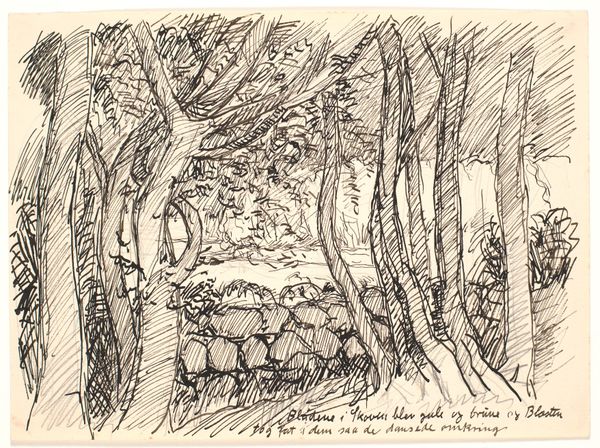
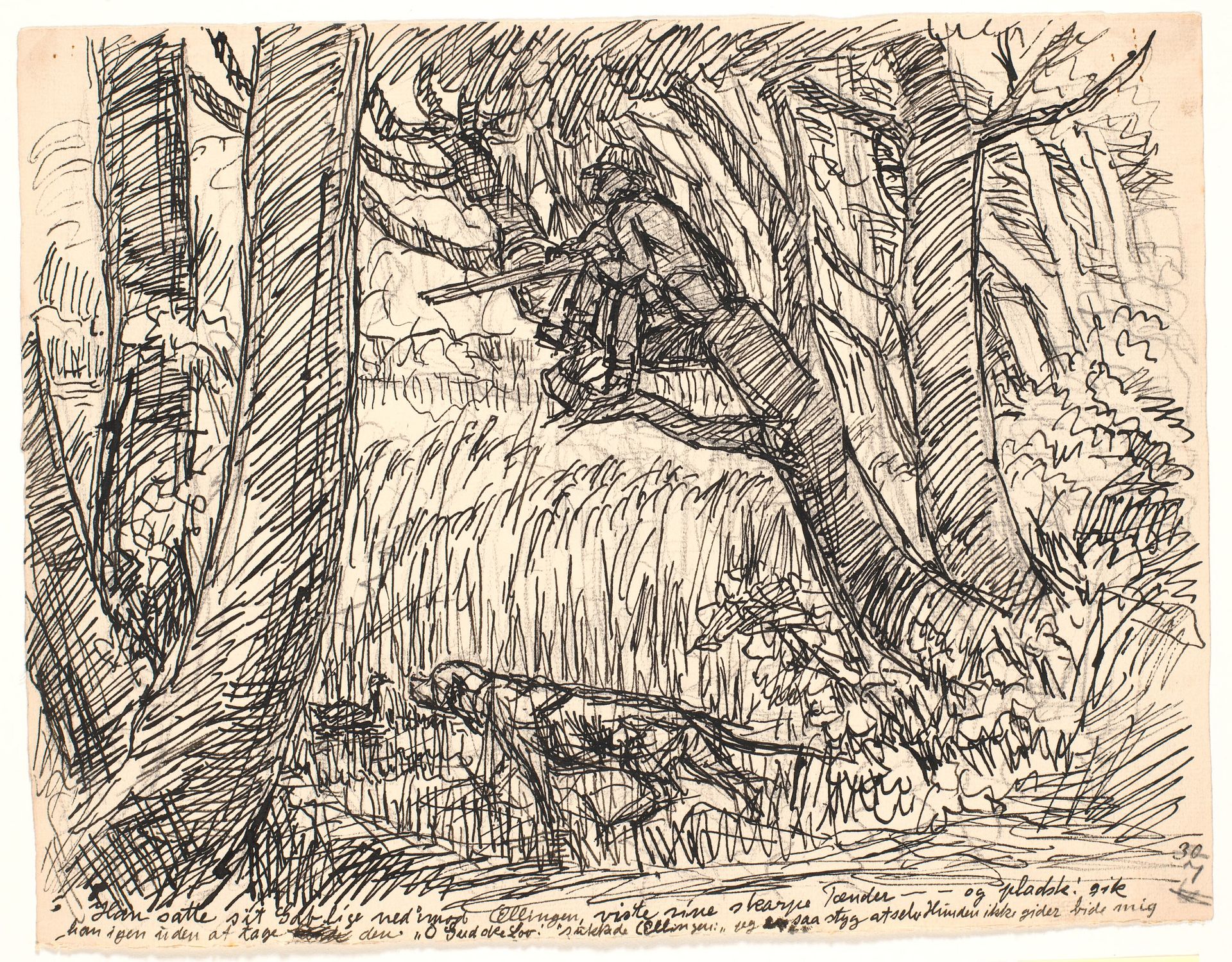
Fritz Syberg sketched "Han satte sit Gab..." with pen and ink on paper, capturing a hunting scene. The composition, dominated by stark, angular lines, creates a sense of immediacy and raw energy. Notice how the density of the lines varies across the scene. Thick, bold strokes define the foreground elements—the trees and the hunting dog—giving them weight and presence. In contrast, finer, sparser lines suggest the background, creating depth without diminishing the overall intensity. This technique mirrors the shift from tangible reality to the conceptualization of space. Syberg’s use of line is not merely descriptive; it's expressive. The jagged, broken lines evoke a sense of tension and anticipation, reflecting the hunter's focused gaze. This destabilizes the traditional landscape, infusing it with psychological depth. The drawing invites us to question the boundaries between observation, representation, and subjective experience. The sketch is a dynamic interplay of form and feeling, where the act of seeing is as important as what is seen.
Han satte sit Gab...
1928


Artwork details
- Medium
- drawing, ink, pen
- Dimensions
- 258 mm (height) x 330 mm (width) (bladmaal)
- Location
- SMK - Statens Museum for Kunst
Tags
Comments
Share your thoughts
About this artwork
Fritz Syberg sketched "Han satte sit Gab..." with pen and ink on paper, capturing a hunting scene. The composition, dominated by stark, angular lines, creates a sense of immediacy and raw energy. Notice how the density of the lines varies across the scene. Thick, bold strokes define the foreground elements—the trees and the hunting dog—giving them weight and presence. In contrast, finer, sparser lines suggest the background, creating depth without diminishing the overall intensity. This technique mirrors the shift from tangible reality to the conceptualization of space. Syberg’s use of line is not merely descriptive; it's expressive. The jagged, broken lines evoke a sense of tension and anticipation, reflecting the hunter's focused gaze. This destabilizes the traditional landscape, infusing it with psychological depth. The drawing invites us to question the boundaries between observation, representation, and subjective experience. The sketch is a dynamic interplay of form and feeling, where the act of seeing is as important as what is seen.
Comments
Share your thoughts