About this artwork
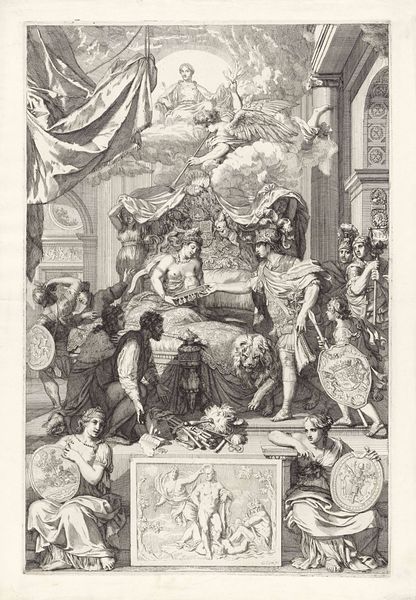
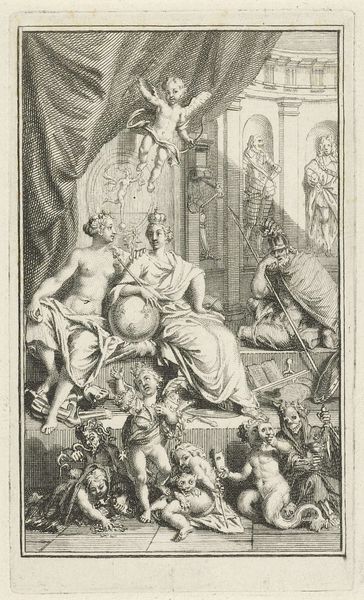
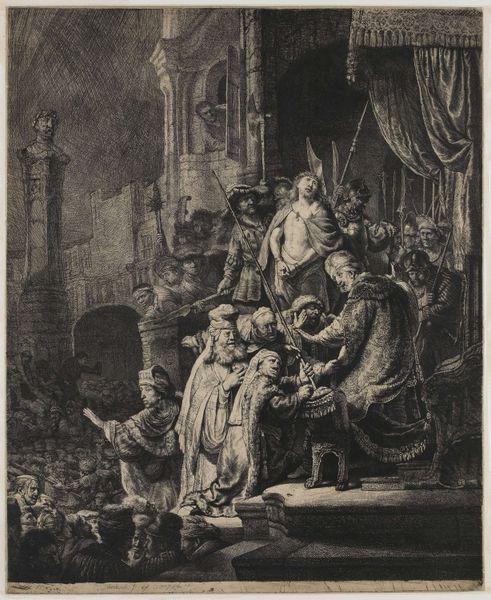
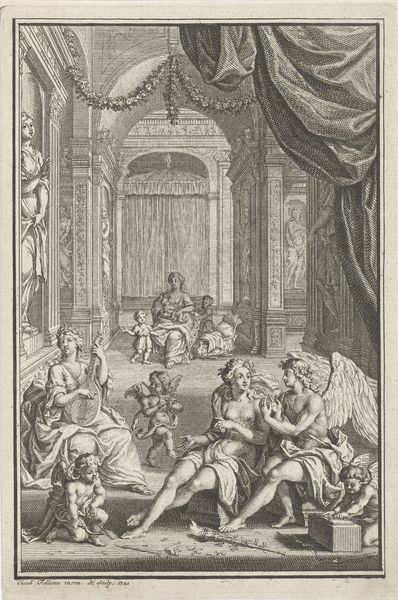
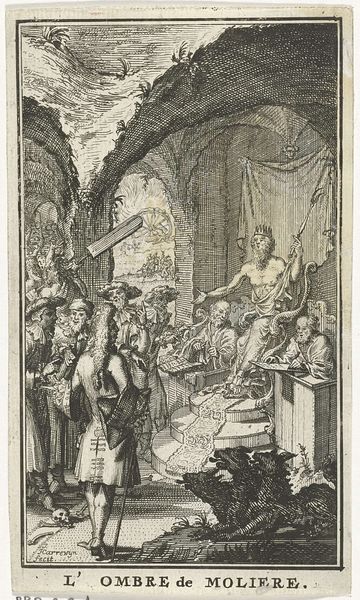
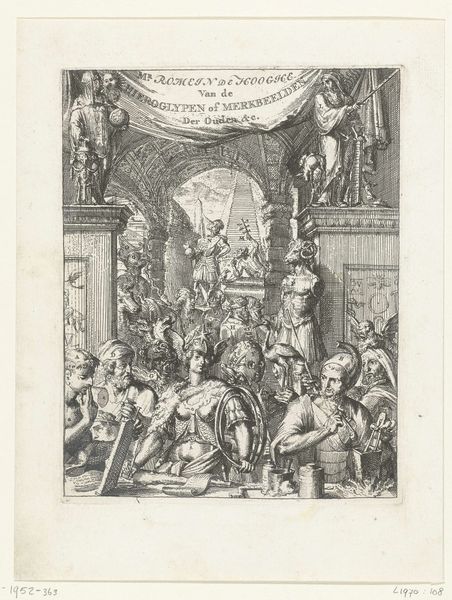
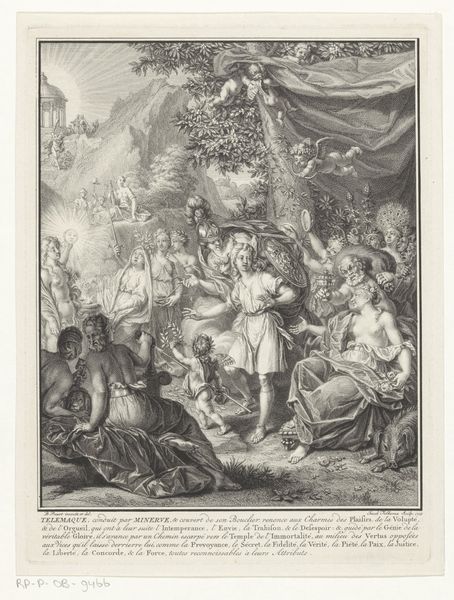
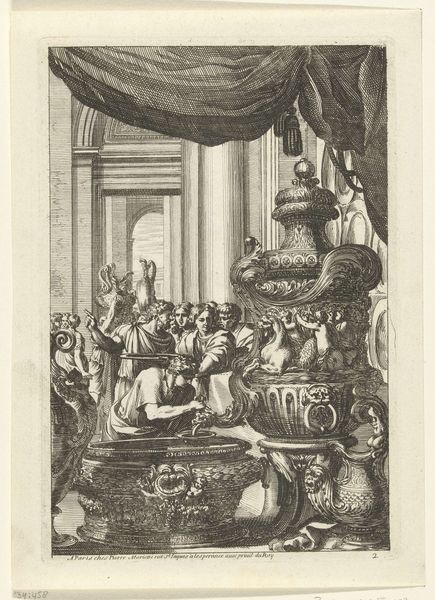
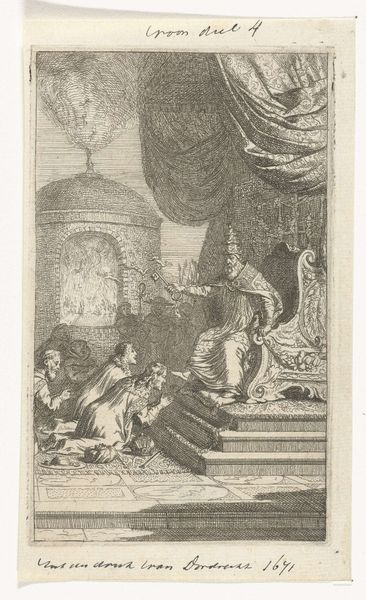
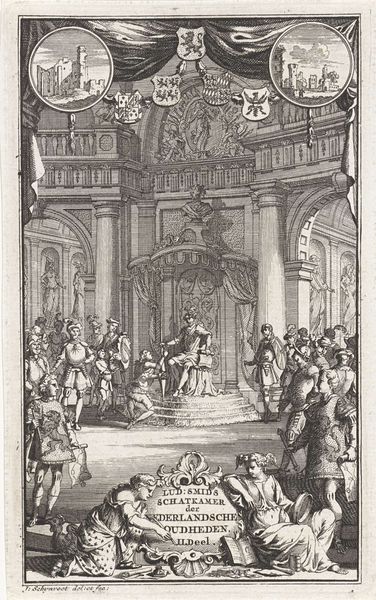
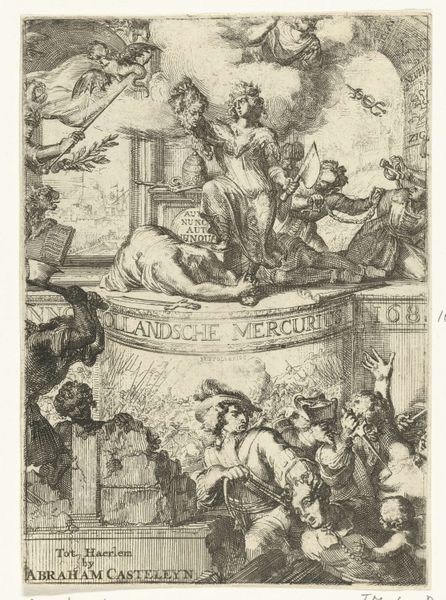
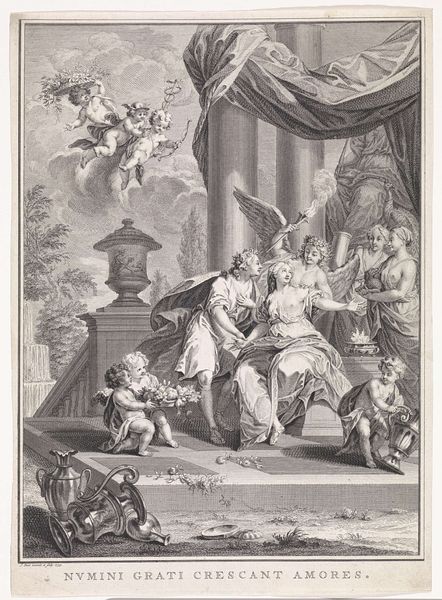
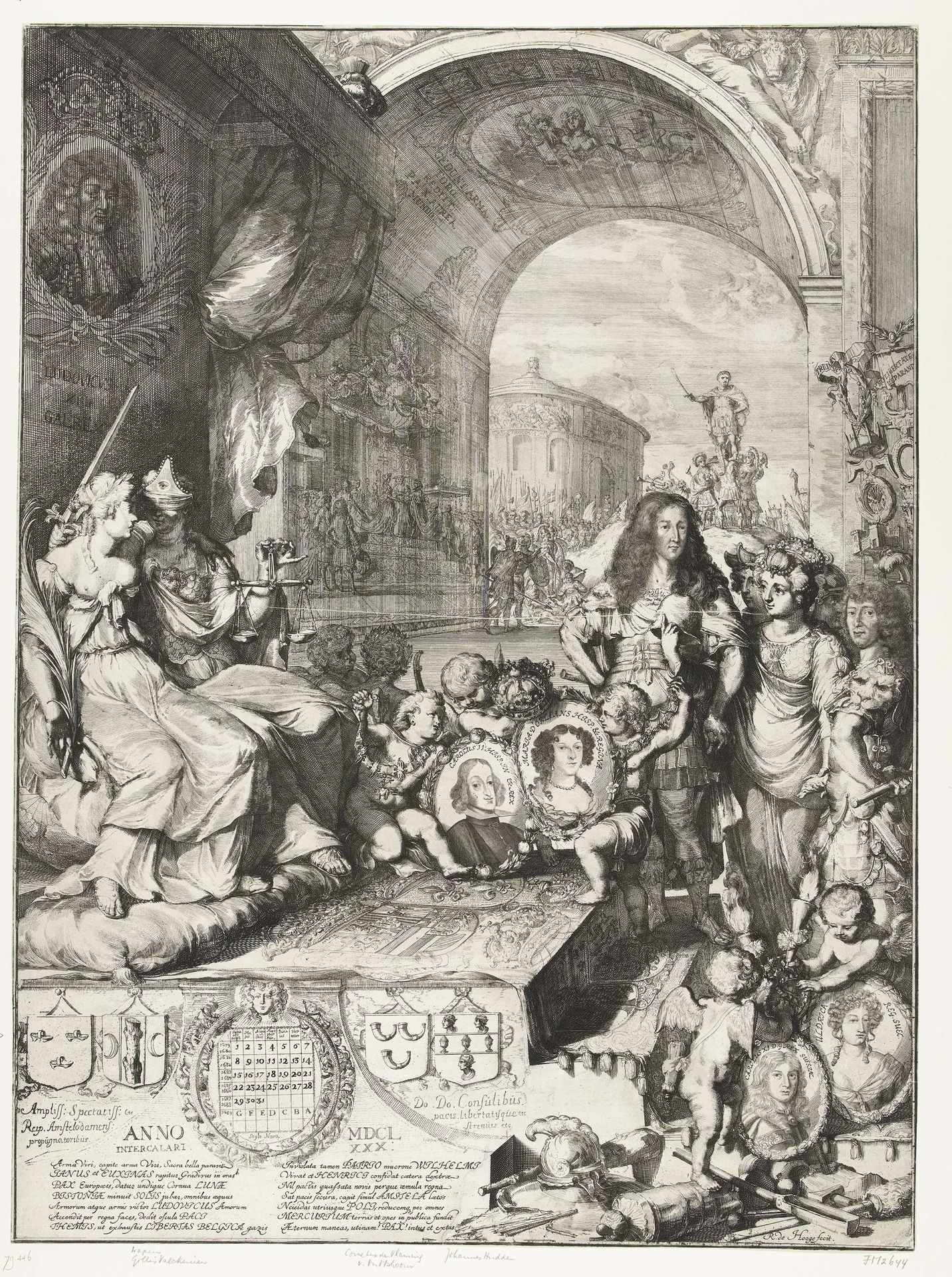
This is Romeyn de Hooghe's "Allegorie op de gebeurtenissen in het jaar 1680," an etching brimming with the textures and intricate details characteristic of the late 17th century. The composition is structured around a theatrical arch, framing a distant scene of a triumphant procession. Dominating the foreground, allegorical figures of Justice and royal figures sit amidst symbols of power and prosperity. Note how de Hooghe uses linear precision to delineate each element, from the ornate costumes to the architectural backdrop. The structured composition invites a reading of the events of 1680 through the lens of power, justice, and historical narrative. The complex arrangement and variety of symbols within the etching function as a semiotic system, where each image is a signifier. The artist uses these signs to communicate specific meanings related to the political climate and cultural values of his time. De Hooghe’s use of line and form reflects broader philosophical concerns about representation, authority, and the interpretation of historical events.
Allegorie op de gebeurtenissen in het jaar 1680
1680 - 1681

Romeyn de Hooghe
1645 - 1708Location
RijksmuseumArtwork details
- Medium
- drawing, ink, engraving
- Dimensions
- height 655 mm, width 485 mm
- Location
- Rijksmuseum
- Copyright
- Rijks Museum: Open Domain
Tags
Comments
Share your thoughts
About this artwork
This is Romeyn de Hooghe's "Allegorie op de gebeurtenissen in het jaar 1680," an etching brimming with the textures and intricate details characteristic of the late 17th century. The composition is structured around a theatrical arch, framing a distant scene of a triumphant procession. Dominating the foreground, allegorical figures of Justice and royal figures sit amidst symbols of power and prosperity. Note how de Hooghe uses linear precision to delineate each element, from the ornate costumes to the architectural backdrop. The structured composition invites a reading of the events of 1680 through the lens of power, justice, and historical narrative. The complex arrangement and variety of symbols within the etching function as a semiotic system, where each image is a signifier. The artist uses these signs to communicate specific meanings related to the political climate and cultural values of his time. De Hooghe’s use of line and form reflects broader philosophical concerns about representation, authority, and the interpretation of historical events.
Comments
Share your thoughts