About this artwork
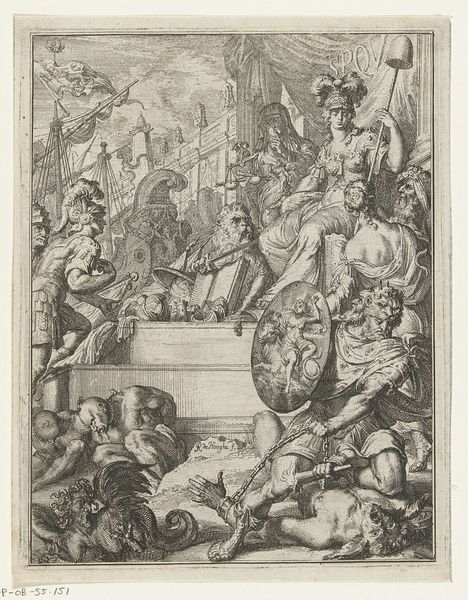
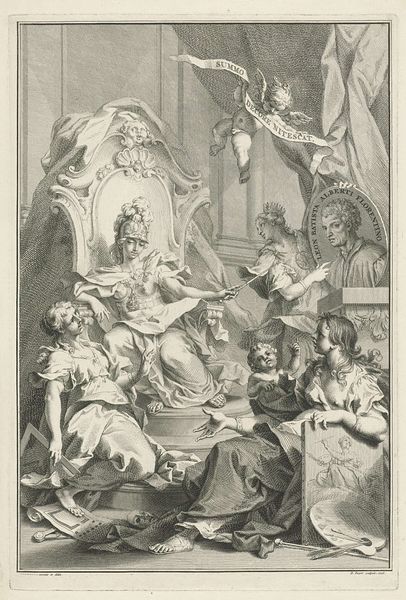
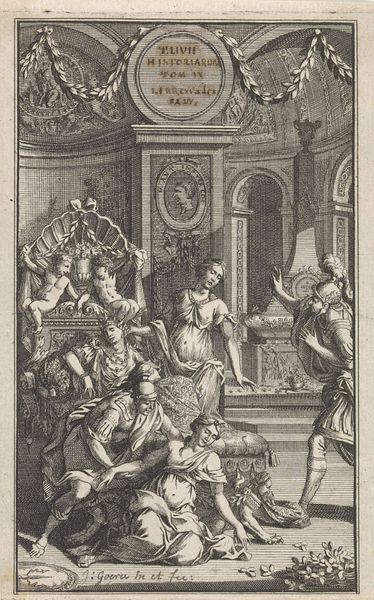
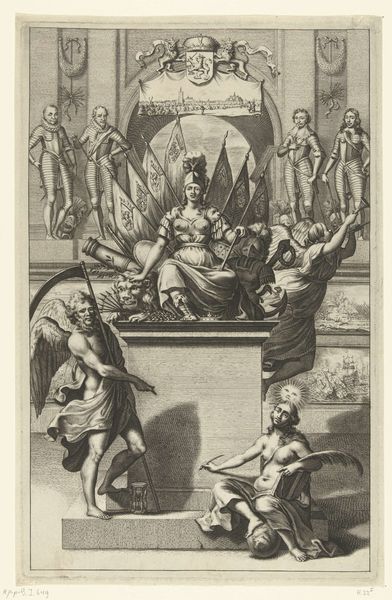
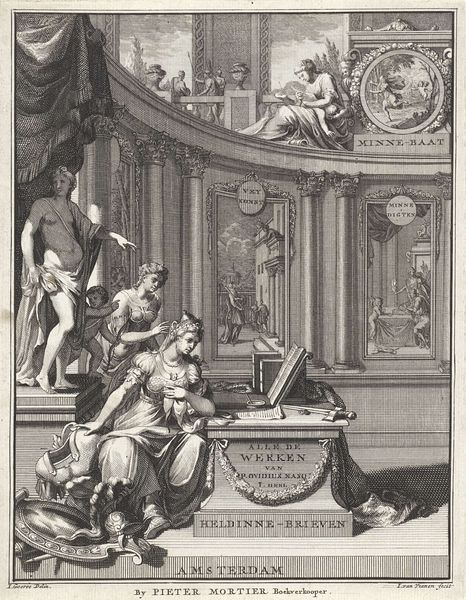
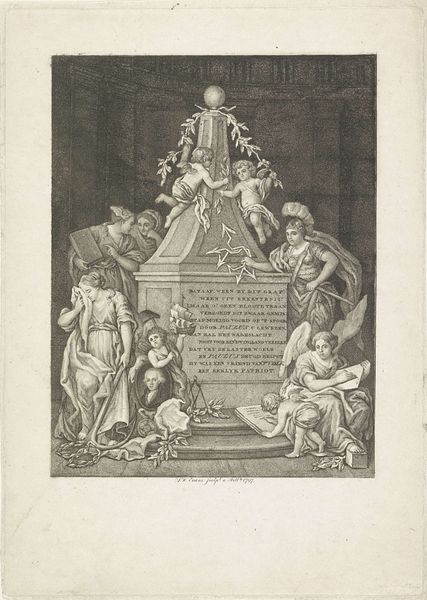
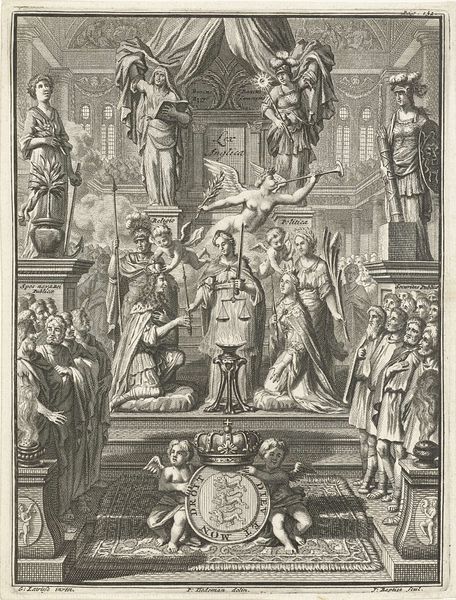
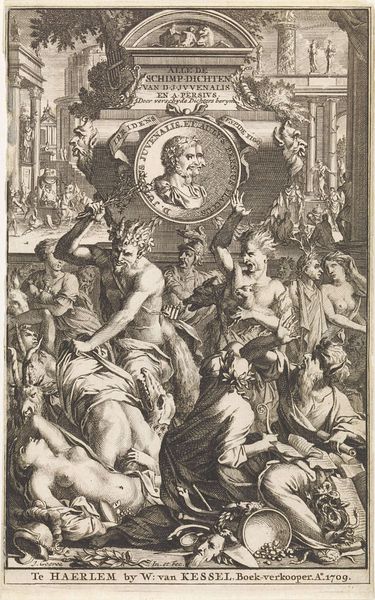
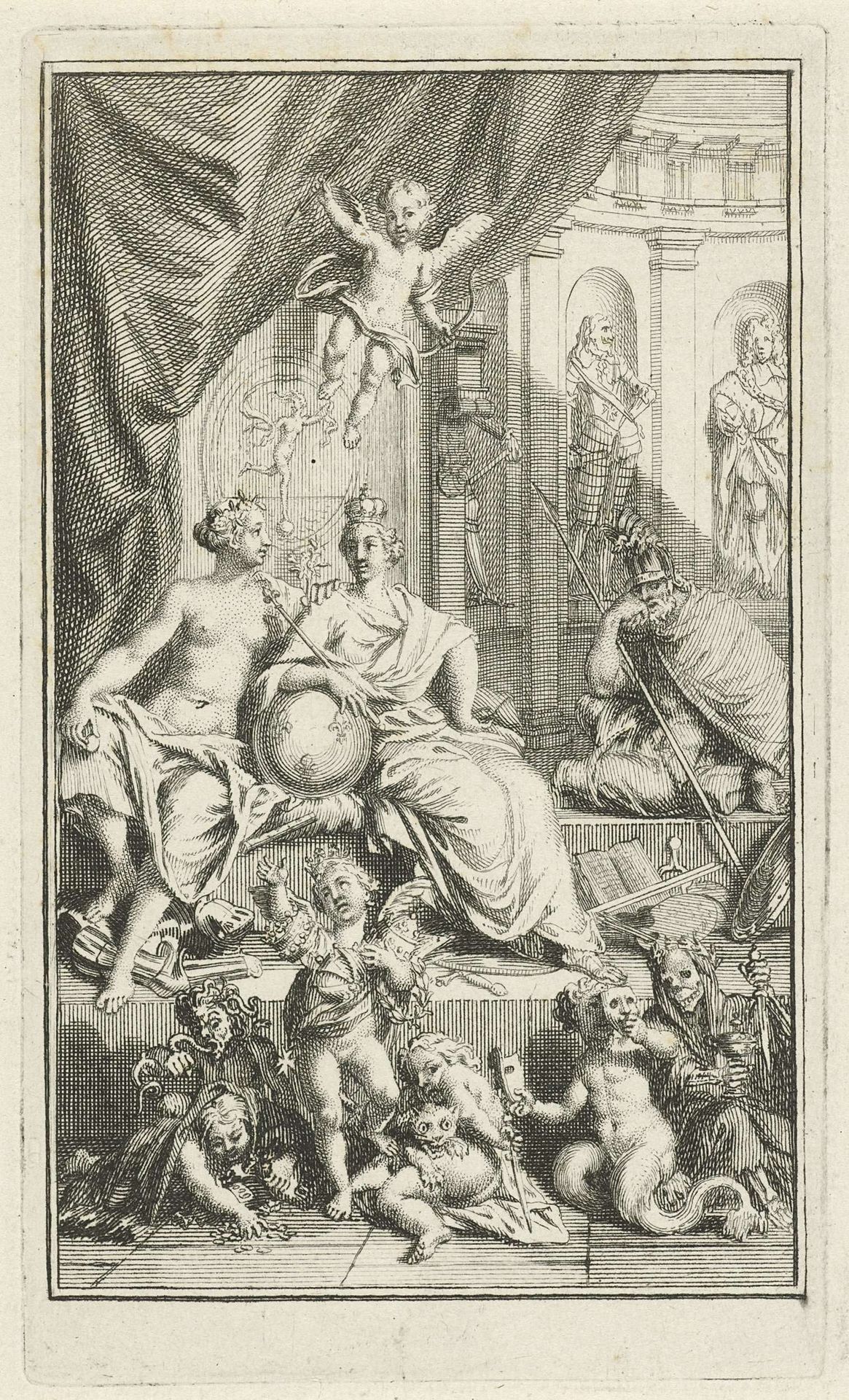
Bernard Picart created this engraving, an allegorical title page featuring the personification of France. The regal female figure seated at the center holds a globe, symbolizing dominion and influence, a motif echoing the Roman goddess Fortuna. Note how the globe reappears throughout the Renaissance, often in depictions of rulers or personifications of virtues, signifying power and worldly knowledge. The association of the globe with control isn't linear. We see it, for example, in ancient Roman art, where it was an attribute of emperors, then it vanishes, only to resurface centuries later during the Renaissance. Consider also the putti surrounding the central figures, signifying blessings. These cherubic figures have a lineage extending from classical art into Christian iconography, embodying innocence and divine favor. Notice how these motifs, deeply embedded in our collective memory, invoke a sense of timeless authority and cultural continuity. They act on a subconscious level, reminding us of the cyclical nature of symbols.
Allegorische titelpagina met de personificatie van Frankrijk
1731

Bernard Picart
1673 - 1733Location
RijksmuseumArtwork details
- Medium
- engraving
- Dimensions
- height 133 mm, width 78 mm
- Location
- Rijksmuseum
- Copyright
- Rijks Museum: Open Domain
Tags
Comments
Share your thoughts
About this artwork
Bernard Picart created this engraving, an allegorical title page featuring the personification of France. The regal female figure seated at the center holds a globe, symbolizing dominion and influence, a motif echoing the Roman goddess Fortuna. Note how the globe reappears throughout the Renaissance, often in depictions of rulers or personifications of virtues, signifying power and worldly knowledge. The association of the globe with control isn't linear. We see it, for example, in ancient Roman art, where it was an attribute of emperors, then it vanishes, only to resurface centuries later during the Renaissance. Consider also the putti surrounding the central figures, signifying blessings. These cherubic figures have a lineage extending from classical art into Christian iconography, embodying innocence and divine favor. Notice how these motifs, deeply embedded in our collective memory, invoke a sense of timeless authority and cultural continuity. They act on a subconscious level, reminding us of the cyclical nature of symbols.
Comments
Share your thoughts