About this artwork
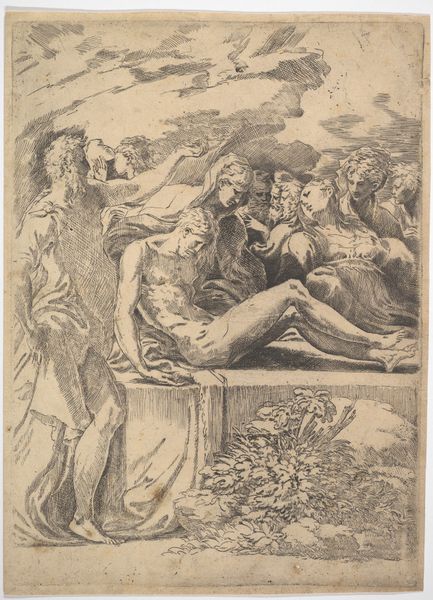
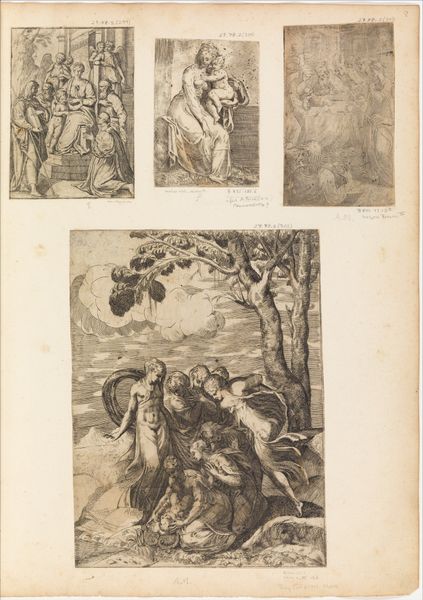
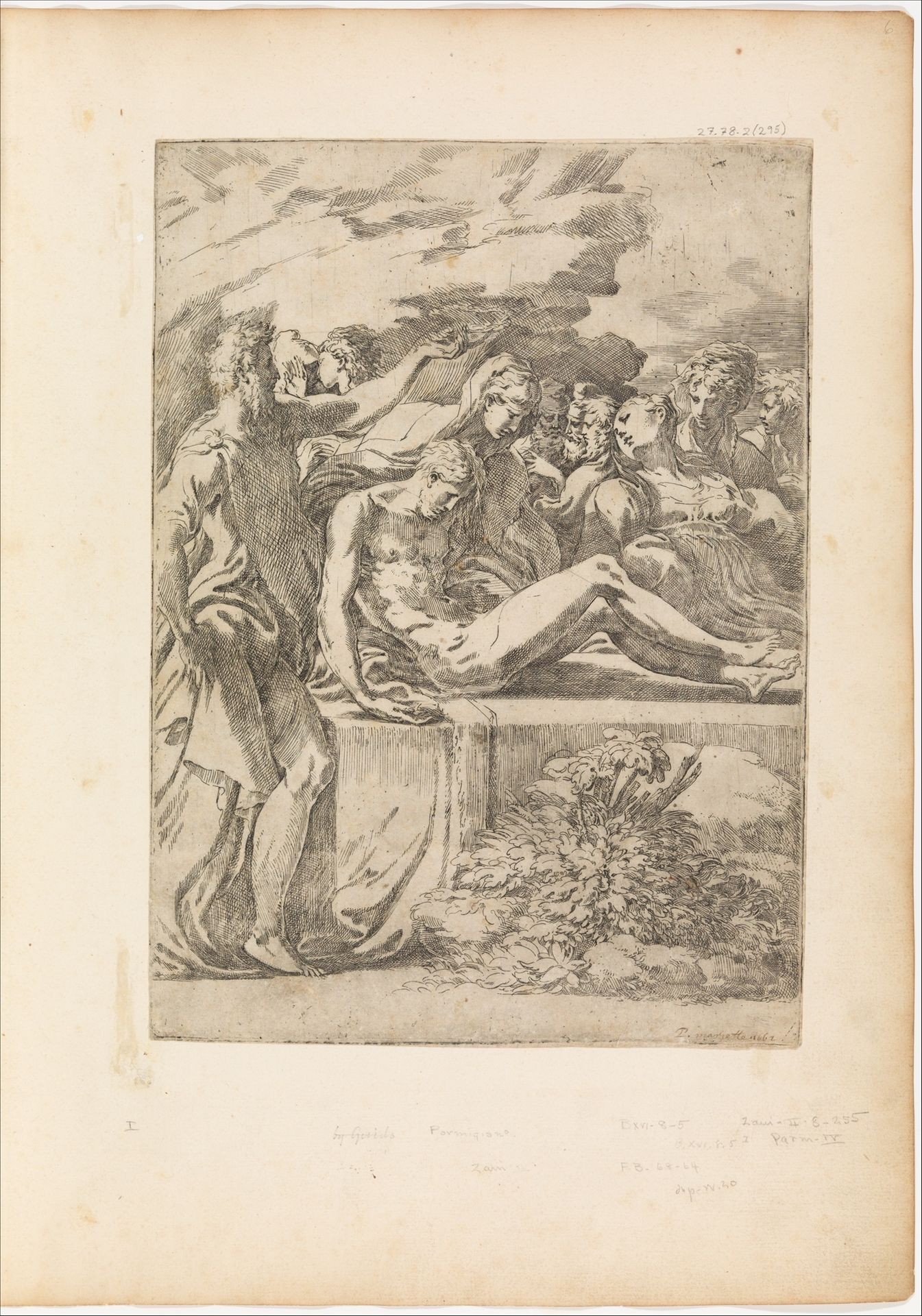
Editor: So this is Parmigianino's "Entombment Facing Right", made around 1529 or 1530. It's an engraving, so printed from an incised metal plate. I find the image both serene and sorrowful. What draws your eye when you look at it? Curator: The technique is key. Think about the labour involved in producing this image. The artist meticulously carves into the metal. This isn’t just about depicting Christ's entombment; it’s about the act of reproduction. The print allowed for the widespread circulation of this scene, a new form of visual consumption emerging at the time. Do you see how this changes the artwork's relationship with its audience? Editor: I see. So it’s not just a religious scene, but a mass-produced object, influencing how people engage with the story of Christ's death… almost a commodity? Curator: Exactly! Consider the economics. Prints were more affordable than paintings. Workshops could produce multiples, impacting patronage and artistic identity. The engraver's skill becomes a valuable asset, traded and admired within a new system of artistic production. Also, notice the composition --it reflects the mannerist style. How is he manipulating materials to show movement, emotion and dynamism to reinforce a historical record? Editor: That’s fascinating. I hadn't thought about it in terms of materials and labor turning piety into distribution. The process itself gives the image another dimension. Curator: Precisely! By examining the materials and mode of production, we see the “Entombment” as more than just a depiction; it’s a product of its time, deeply embedded in social and economic structures. It truly complicates how we appreciate it.
Entombment Facing Right
1529 - 1530


Artwork details
- Medium
- drawing, print, intaglio, engraving
- Dimensions
- Sheet: 13 in. × 9 7/16 in. (33 × 23.9 cm)
- Location
- Metropolitan Museum of Art, New York, NY
- Copyright
- Public Domain
Tags
Comments
Share your thoughts
About this artwork
Editor: So this is Parmigianino's "Entombment Facing Right", made around 1529 or 1530. It's an engraving, so printed from an incised metal plate. I find the image both serene and sorrowful. What draws your eye when you look at it? Curator: The technique is key. Think about the labour involved in producing this image. The artist meticulously carves into the metal. This isn’t just about depicting Christ's entombment; it’s about the act of reproduction. The print allowed for the widespread circulation of this scene, a new form of visual consumption emerging at the time. Do you see how this changes the artwork's relationship with its audience? Editor: I see. So it’s not just a religious scene, but a mass-produced object, influencing how people engage with the story of Christ's death… almost a commodity? Curator: Exactly! Consider the economics. Prints were more affordable than paintings. Workshops could produce multiples, impacting patronage and artistic identity. The engraver's skill becomes a valuable asset, traded and admired within a new system of artistic production. Also, notice the composition --it reflects the mannerist style. How is he manipulating materials to show movement, emotion and dynamism to reinforce a historical record? Editor: That’s fascinating. I hadn't thought about it in terms of materials and labor turning piety into distribution. The process itself gives the image another dimension. Curator: Precisely! By examining the materials and mode of production, we see the “Entombment” as more than just a depiction; it’s a product of its time, deeply embedded in social and economic structures. It truly complicates how we appreciate it.
Comments
Share your thoughts