About this artwork
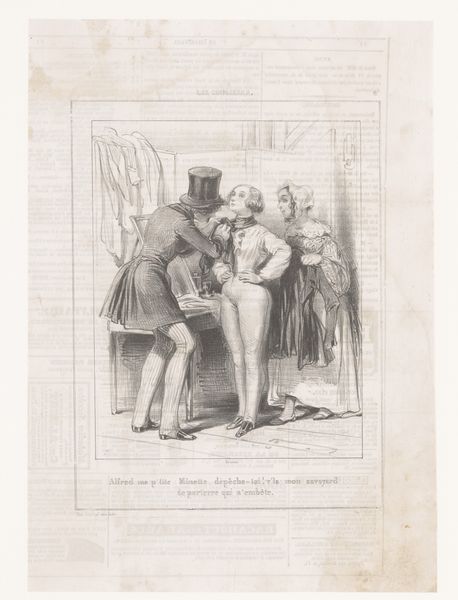
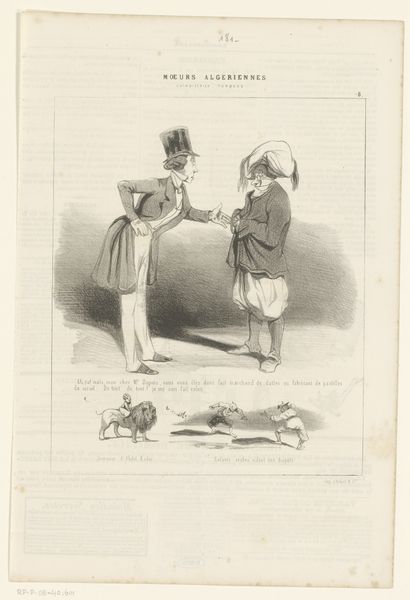
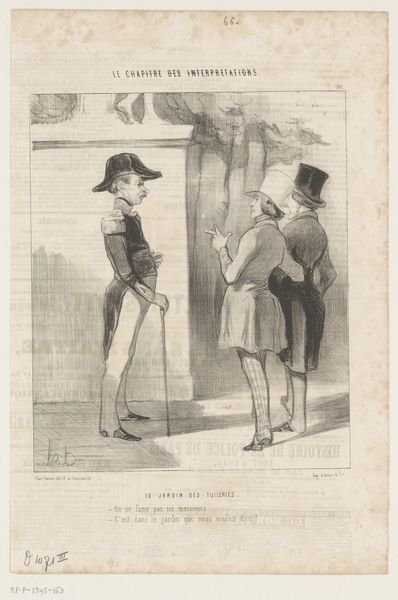
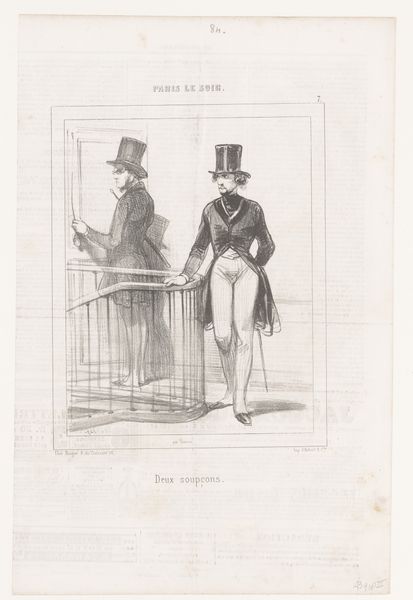
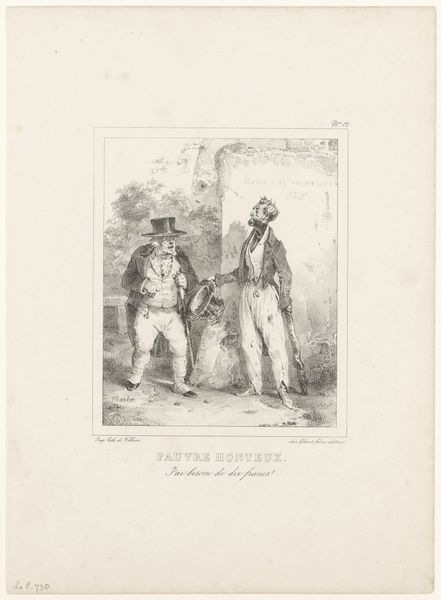
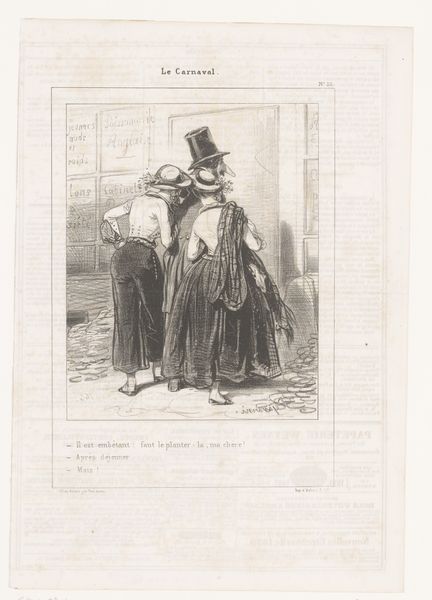
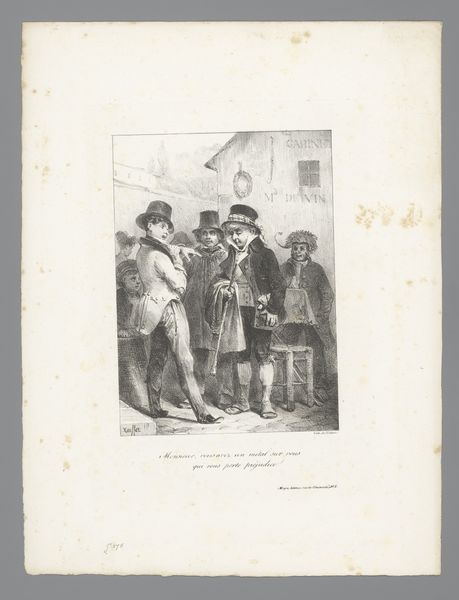
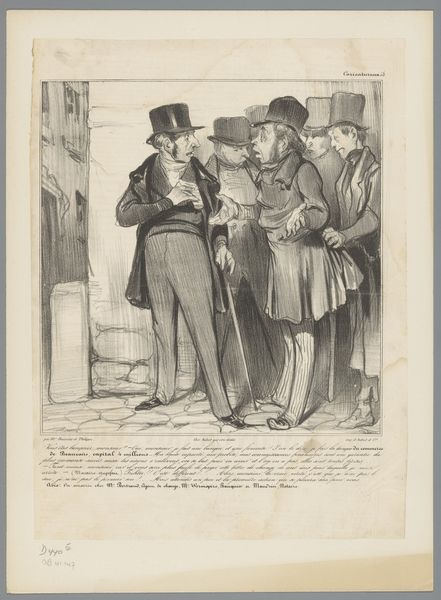
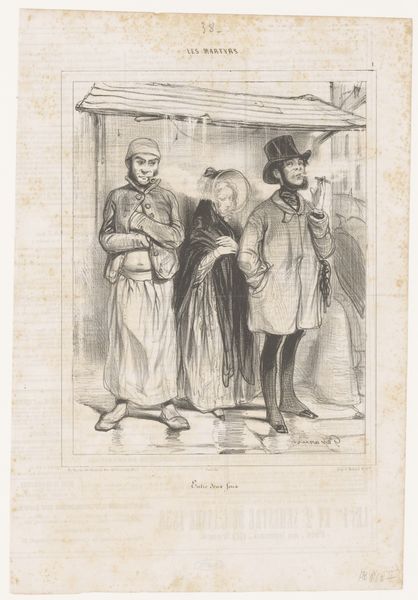
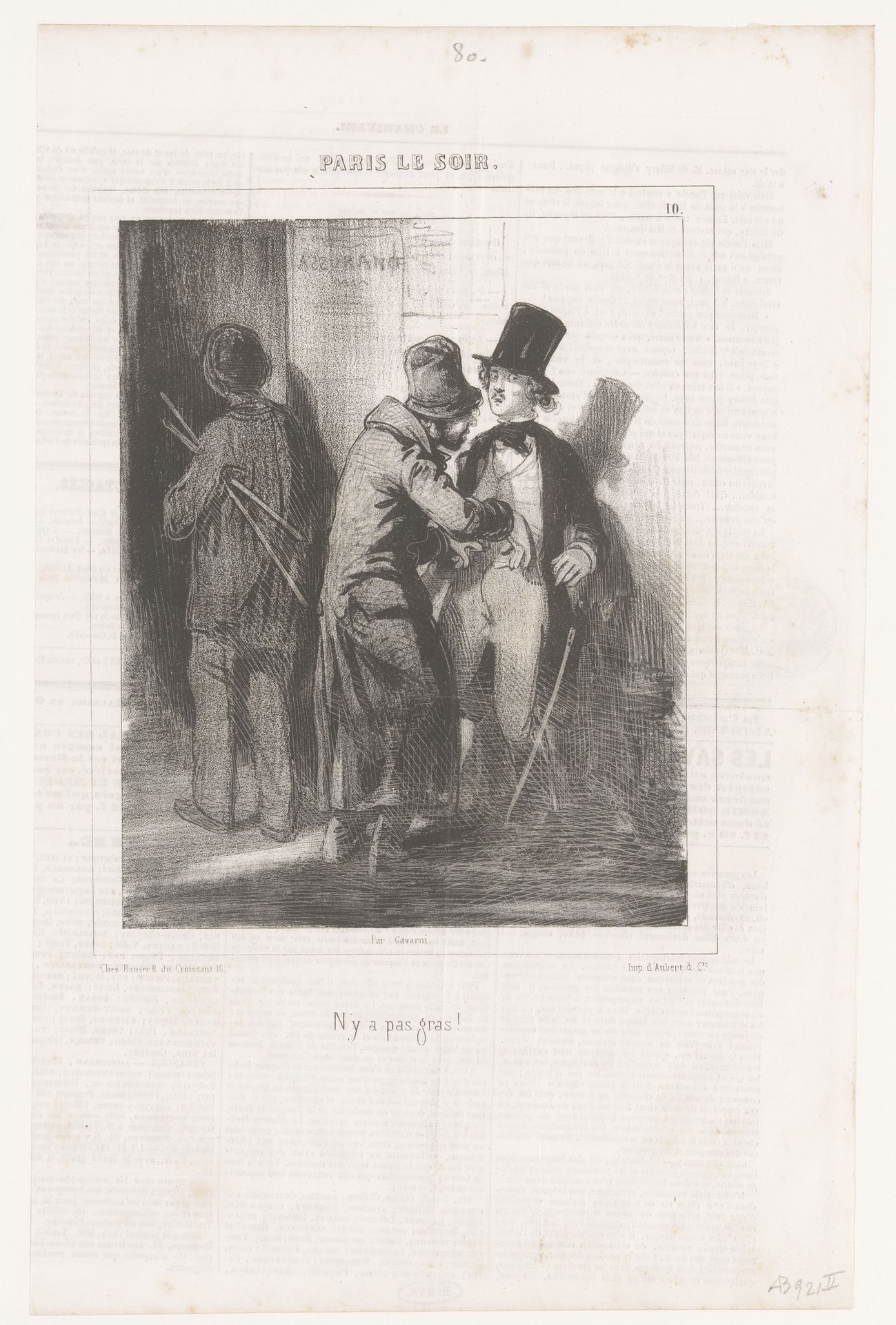
Paul Gavarni created this lithograph entitled 'Man wordt op straat gefouilleerd door een dief' – A man being searched in the street by a thief – in nineteenth-century France, when the rise of industrial capitalism exacerbated class divisions, creating social unrest. Here, Gavarni depicts a moment of stark inequality, as a well-dressed gentleman is accosted by a thief. The scene plays out in the shadows, highlighting the hidden struggles of urban life. The thief's rough handling contrasts sharply with the gentleman's refined attire, underscoring the social disparities of the time. Gavarni was known for his caricatures of Parisian life, and this work captures the tension and vulnerability inherent in a society marked by economic stratification. The artist’s emotional investment in these social commentaries is evident, as Gavarni developed alternative narratives to those promoted by the bourgeoisie. This is a scene of violation, yet it prompts us to reflect on broader societal injustices.
Man wordt op straat gefouilleerd door een dief 1840

Paul Gavarni
1804 - 1866Location
RijksmuseumArtwork details
- Medium
- drawing, lithograph, print
- Dimensions
- height 362 mm, width 236 mm
- Location
- Rijksmuseum
- Copyright
- Rijks Museum: Open Domain
Tags
pencil drawn
drawing
16_19th-century
lithograph
caricature
pencil sketch
pencil drawing
romanticism
pencil work
genre-painting
street
Comments
No comments
About this artwork
Paul Gavarni created this lithograph entitled 'Man wordt op straat gefouilleerd door een dief' – A man being searched in the street by a thief – in nineteenth-century France, when the rise of industrial capitalism exacerbated class divisions, creating social unrest. Here, Gavarni depicts a moment of stark inequality, as a well-dressed gentleman is accosted by a thief. The scene plays out in the shadows, highlighting the hidden struggles of urban life. The thief's rough handling contrasts sharply with the gentleman's refined attire, underscoring the social disparities of the time. Gavarni was known for his caricatures of Parisian life, and this work captures the tension and vulnerability inherent in a society marked by economic stratification. The artist’s emotional investment in these social commentaries is evident, as Gavarni developed alternative narratives to those promoted by the bourgeoisie. This is a scene of violation, yet it prompts us to reflect on broader societal injustices.
Comments
No comments