
Curatorial notes
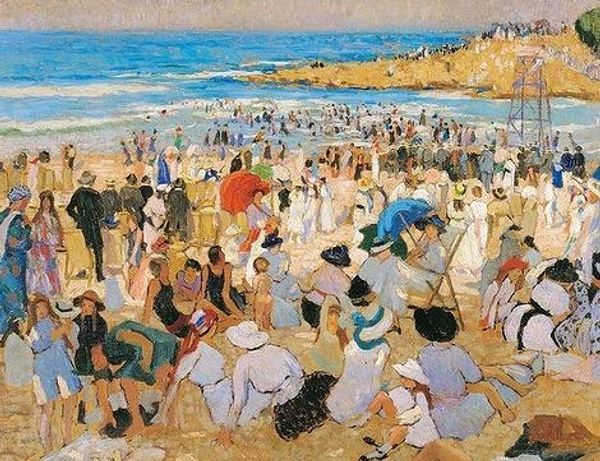
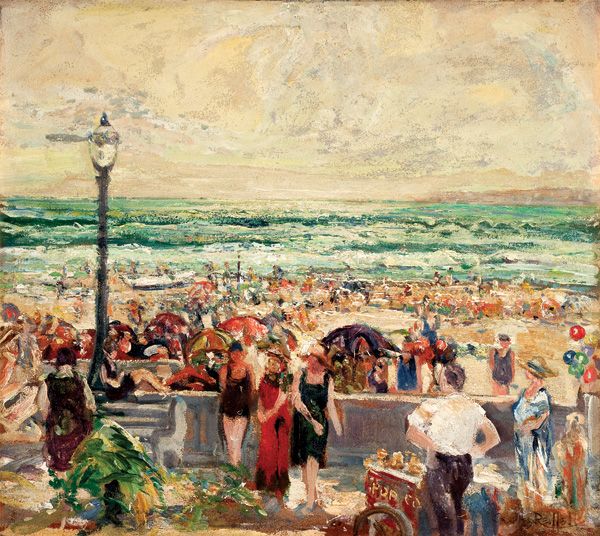
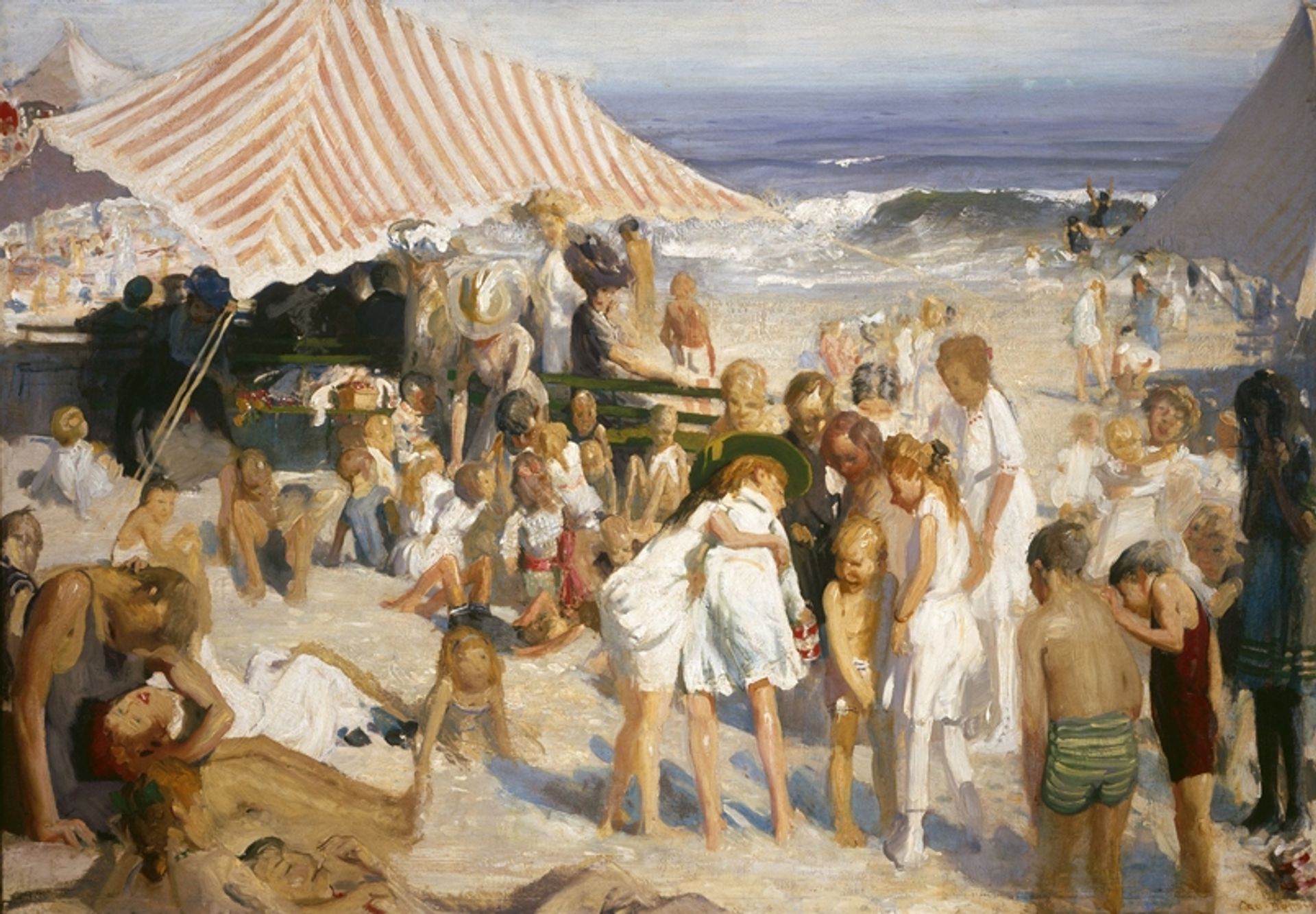
Curator: Standing before us is George Bellows’s "Beach at Coney Island," painted in 1908. Bellows was a prominent figure in the Ashcan School movement. Editor: It’s wonderfully chaotic. It feels like Bellows has bottled the feeling of a hot, crowded summer’s day. The overall color palette is creamy and sun-drenched. I immediately feel the slightly gritty sand under my bare feet. Curator: Absolutely, that tactile sense is key! He masterfully captures the energy of Coney Island. Notice how he doesn’t shy away from showing the common people at leisure, a departure from traditional landscape painting, right? It feels like a real slice of American life. Editor: Indeed, but beyond just a “slice of life,” I’m fascinated by how Bellows uses those striped tents in the background. Their stark geometry seems almost unnatural amongst the swirling mass of bodies. I wonder if they symbolize the organized escape from the city versus the liberating wildness of the shore. Curator: Fascinating idea! The parasols, the dark bathing costumes against the bright sand, create a staccato rhythm of dark and light that carries your eye across the canvas. It's about visual intensity, that frenetic joy that perhaps only a crowded beach can give you. The overall brushstroke creates a very loose impressionist landscape, where you see all the subjects of his works melting in the same hot sunny day, and also it may symbolize life. Editor: And isn't it interesting how he focuses mostly on children? They dominate the foreground, playing, hugging, almost indifferent to us viewers. Children always hold such potent symbolic weight. They are a glimpse of purity and future potential, but perhaps also a kind of social commentary, observing their lives. What symbols do they carry? What futures might lay ahead for them? Curator: Very evocative question, their youth against the transient summer scene only deepens the mystery! Bellows isn't just documenting; he’s provoking feeling through these candid observations of people at leisure. In this painting Bellows captures something genuinely affecting and familiar. It’s both an ordinary moment and, simultaneously, a complex commentary. Editor: Indeed, Bellows’ vision really pulls you into that moment in time, an experience now somehow frozen. Thank you for bringing this fascinating image into such vivid perspective!