About this artwork
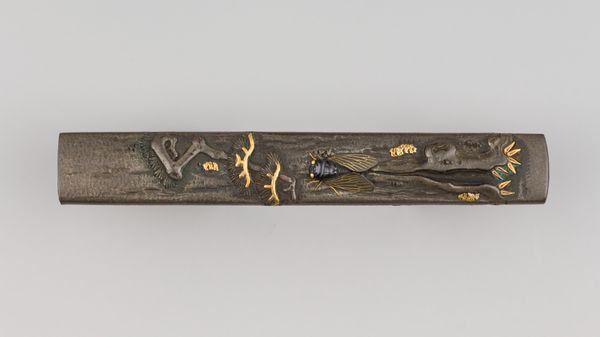
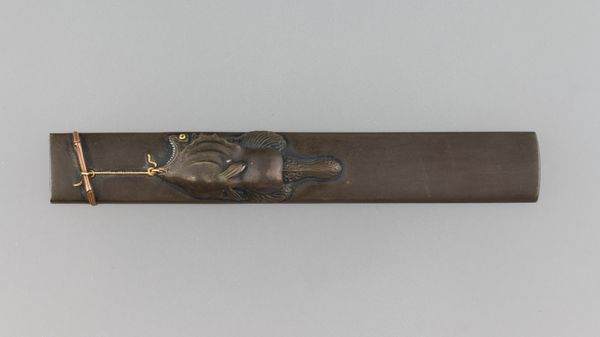
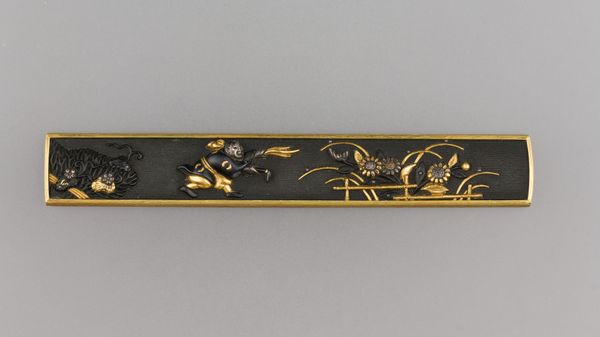
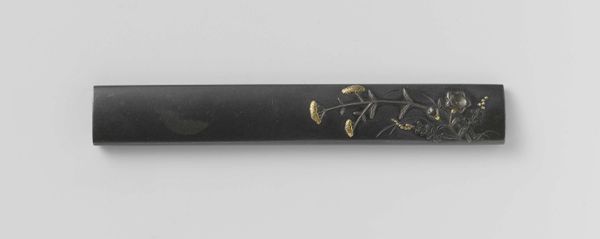
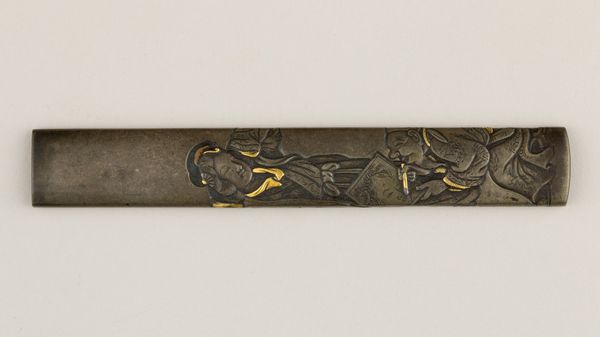
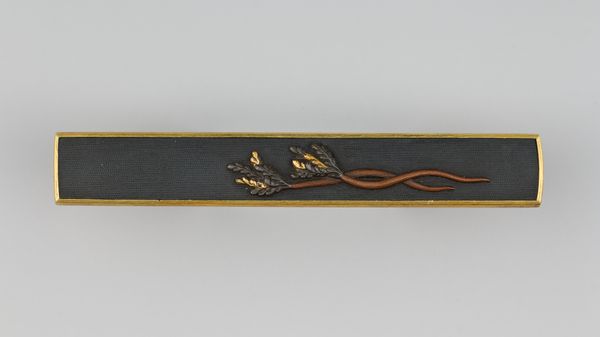
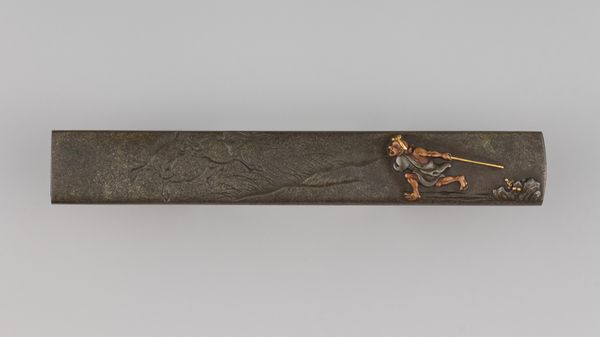
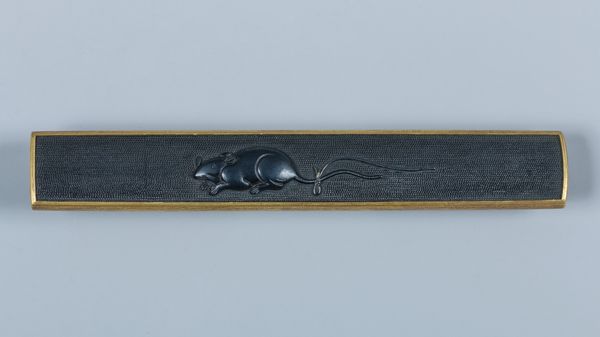
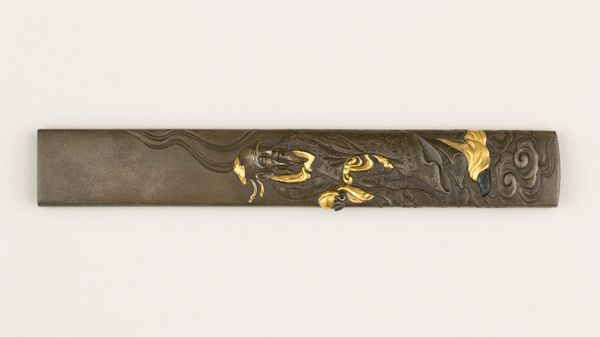
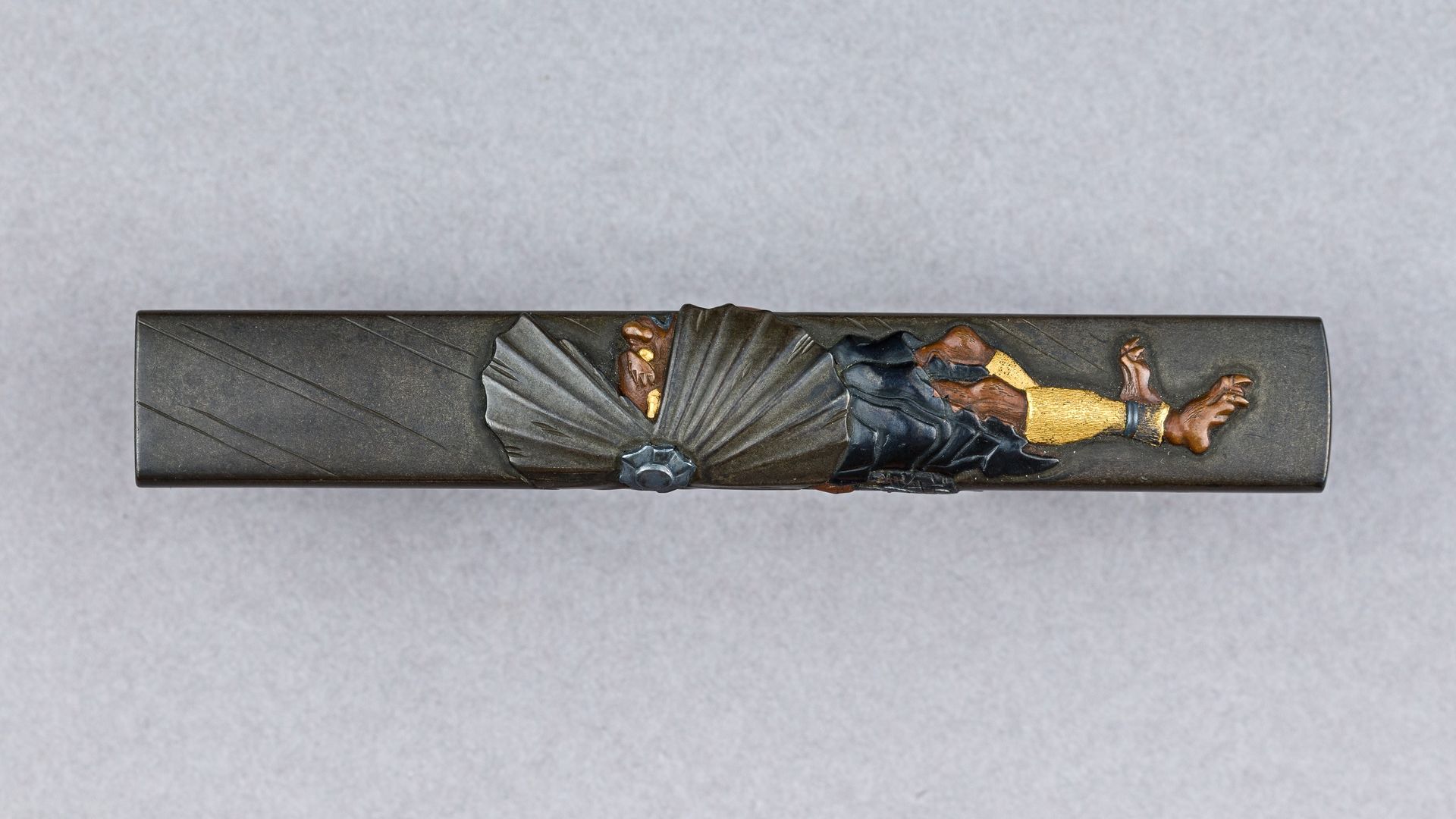
This knife handle, or Kozuka, was created by Akichika Oishi, who was born in 1850, during a time of immense transformation in Japan. As the feudal Edo period gave way to the Meiji Restoration, traditional art forms navigated shifting cultural values. The Kozuka depicts a scene with intricate detail: a figure lying prostrate, partially obscured by what appears to be a fan. The figure's posture and the fan may be read as signifiers of defeat or subjugation. Knife handles, often ornamented, were not merely functional; they were deeply intertwined with the identity and status of the samurai class. Here, we might consider how the scene on the handle reflects the anxieties and power dynamics of a society undergoing rapid modernization. Does it challenge or reinforce prevailing notions of power and identity? As you look at the piece, reflect on the stories it tells, both overt and hidden, about a society in transition.
Knife Handle (Kozuka)
1800 - 1825
Artwork details
- Medium
- carving, sculpture, wood
- Dimensions
- L. 3 13/16 in. (9.7 cm); W. 9/16 in. (1.4 cm); thickness 1/4 in. (0.6 cm); Wt. 1.2 oz. (34 g)
- Location
- Metropolitan Museum of Art, New York, NY
- Copyright
- Public Domain
Tags
Comments
Share your thoughts
About this artwork
This knife handle, or Kozuka, was created by Akichika Oishi, who was born in 1850, during a time of immense transformation in Japan. As the feudal Edo period gave way to the Meiji Restoration, traditional art forms navigated shifting cultural values. The Kozuka depicts a scene with intricate detail: a figure lying prostrate, partially obscured by what appears to be a fan. The figure's posture and the fan may be read as signifiers of defeat or subjugation. Knife handles, often ornamented, were not merely functional; they were deeply intertwined with the identity and status of the samurai class. Here, we might consider how the scene on the handle reflects the anxieties and power dynamics of a society undergoing rapid modernization. Does it challenge or reinforce prevailing notions of power and identity? As you look at the piece, reflect on the stories it tells, both overt and hidden, about a society in transition.
Comments
Share your thoughts