About this artwork
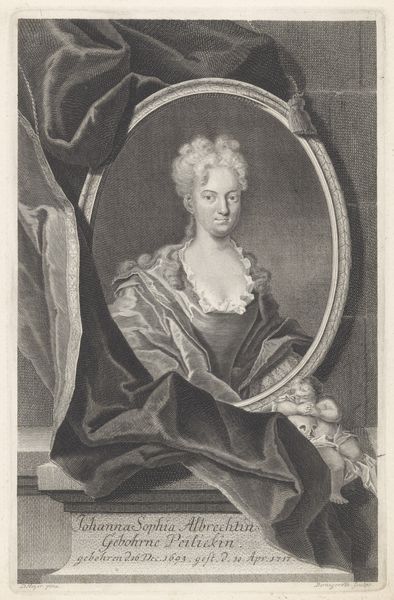
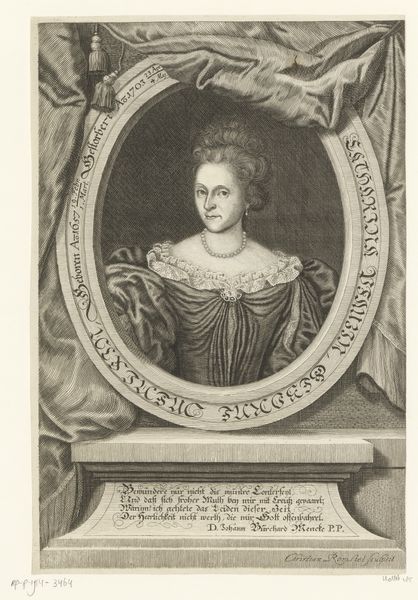
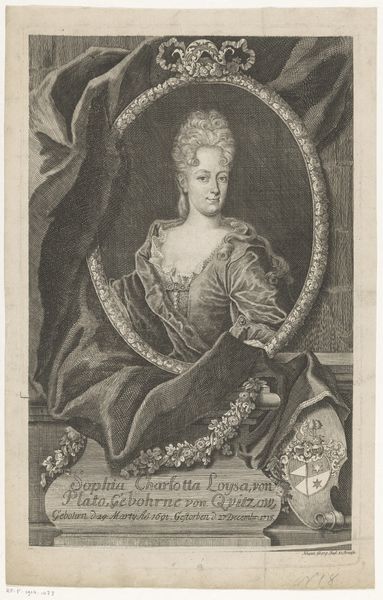
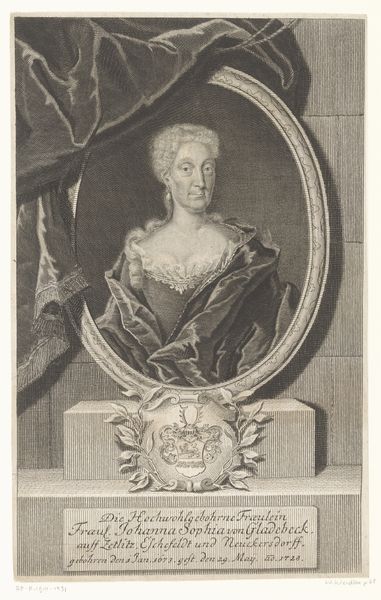
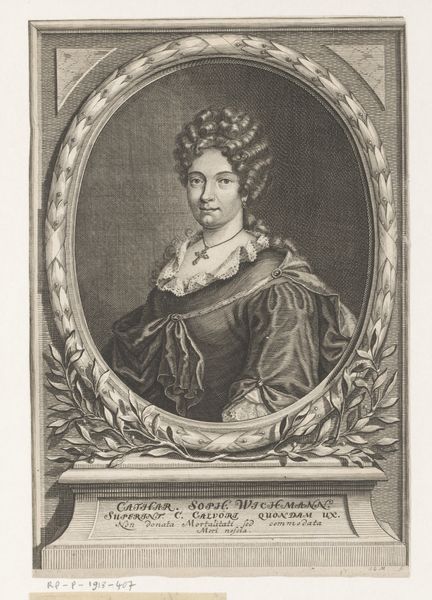
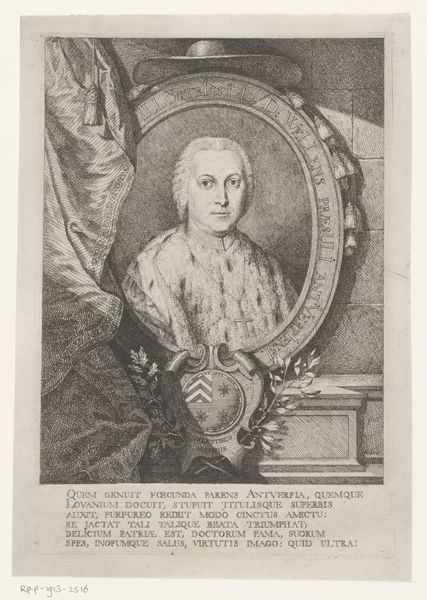
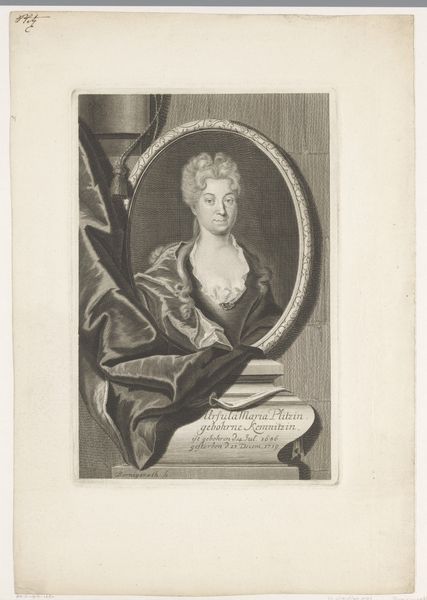
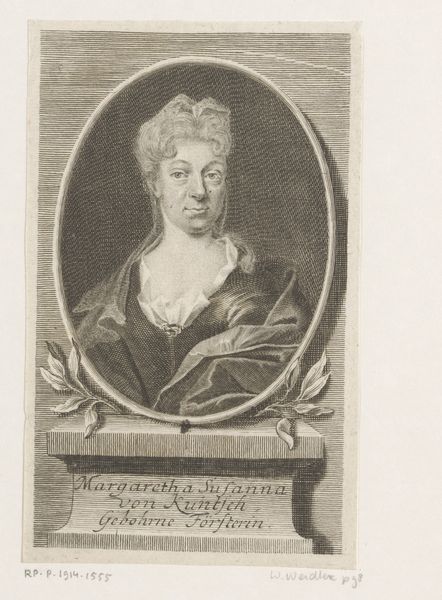
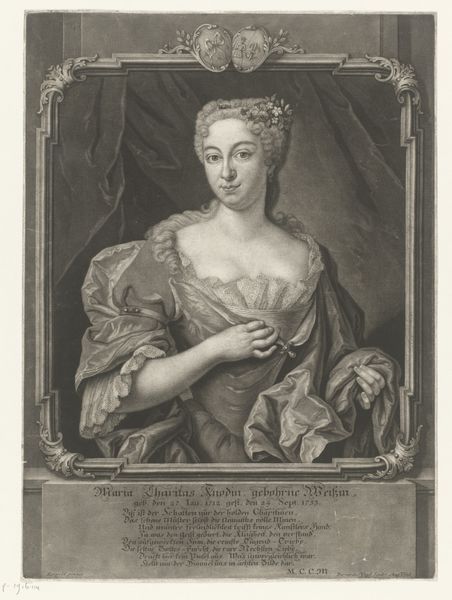
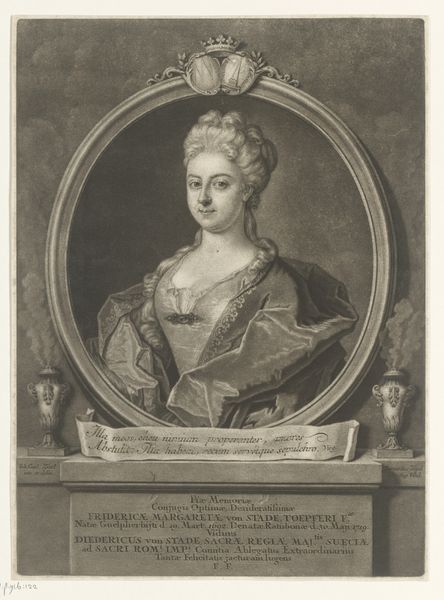
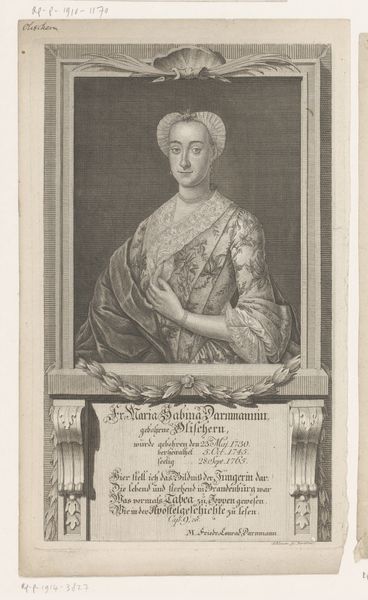
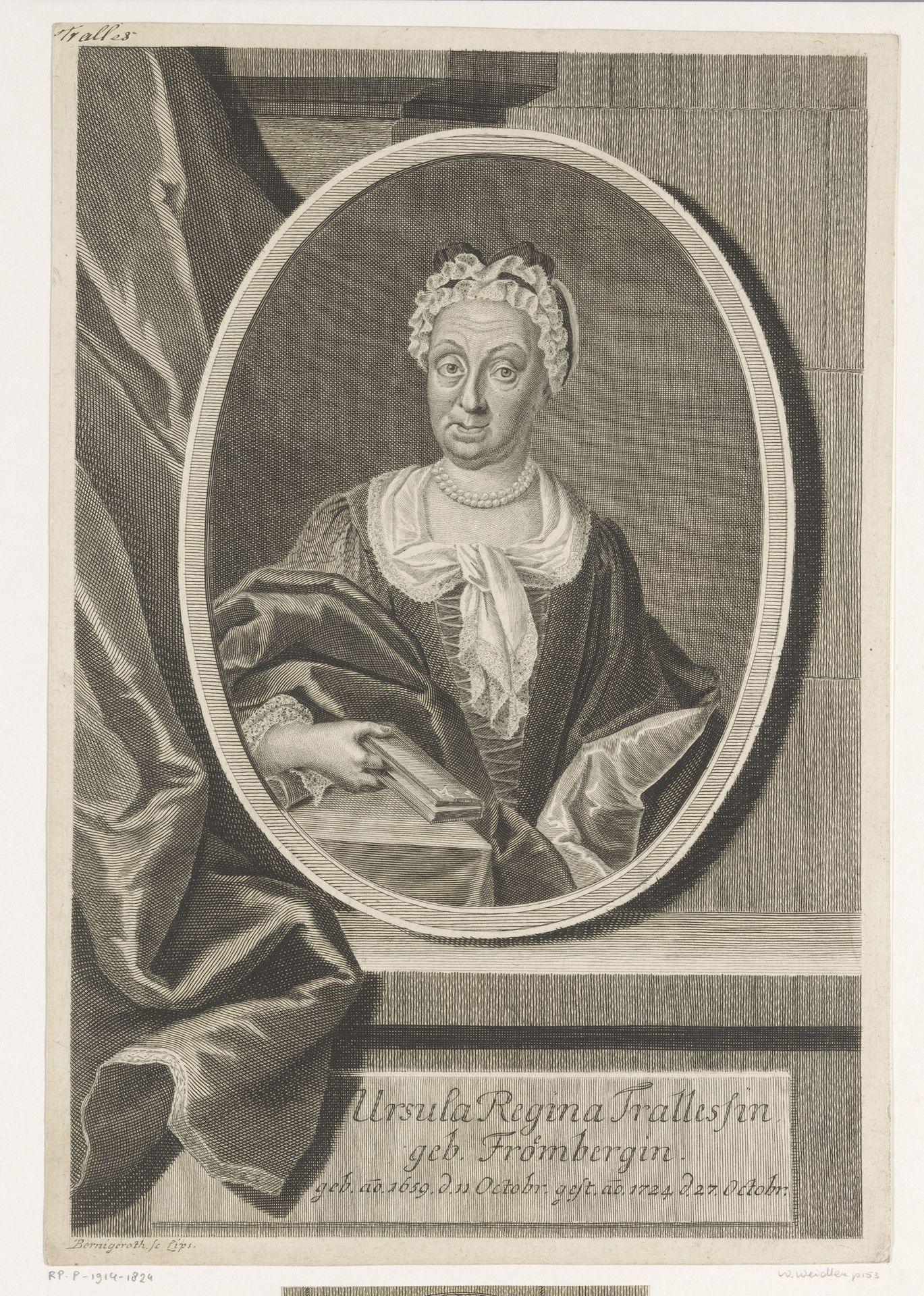
Martin Bernigeroth created this print of Ursula Regina Tralles in the late 17th or early 18th century. It offers insight into the social conventions surrounding portraiture and representation of women during that time. The print, made in Germany, uses visual cues to communicate Ursula’s status and identity. The oval frame, classical architecture, and draped curtain evoke the refined taste associated with the upper classes. Her clothing, pearl necklace, and the book she holds all speak to her position within society. Note that such images reinforced social hierarchies, conveying messages about rank and respectability. Understanding this print requires us to consider its institutional context. Engravings like this were often commissioned by the sitter or their family to commemorate a marriage, an anniversary, or the passing of a loved one, and were thus important in shaping public memory. By researching the Tralles family and Bernigeroth’s career, we can gain a deeper understanding of the social and cultural forces at play in this image.
Portret van Ursula Regina Tralles
1724 - 1733

Martin Bernigeroth
1670 - 1733Location
RijksmuseumArtwork details
- Medium
- print, engraving
- Dimensions
- height 295 mm, width 201 mm
- Location
- Rijksmuseum
- Copyright
- Rijks Museum: Open Domain
Tags
Comments
Share your thoughts
About this artwork
Martin Bernigeroth created this print of Ursula Regina Tralles in the late 17th or early 18th century. It offers insight into the social conventions surrounding portraiture and representation of women during that time. The print, made in Germany, uses visual cues to communicate Ursula’s status and identity. The oval frame, classical architecture, and draped curtain evoke the refined taste associated with the upper classes. Her clothing, pearl necklace, and the book she holds all speak to her position within society. Note that such images reinforced social hierarchies, conveying messages about rank and respectability. Understanding this print requires us to consider its institutional context. Engravings like this were often commissioned by the sitter or their family to commemorate a marriage, an anniversary, or the passing of a loved one, and were thus important in shaping public memory. By researching the Tralles family and Bernigeroth’s career, we can gain a deeper understanding of the social and cultural forces at play in this image.
Comments
Share your thoughts