1667
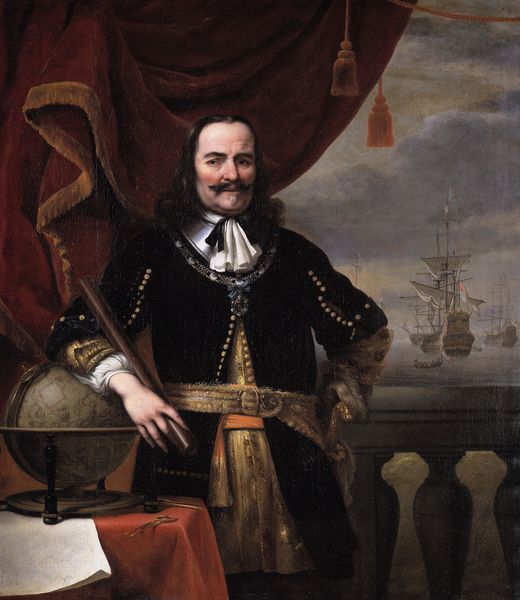
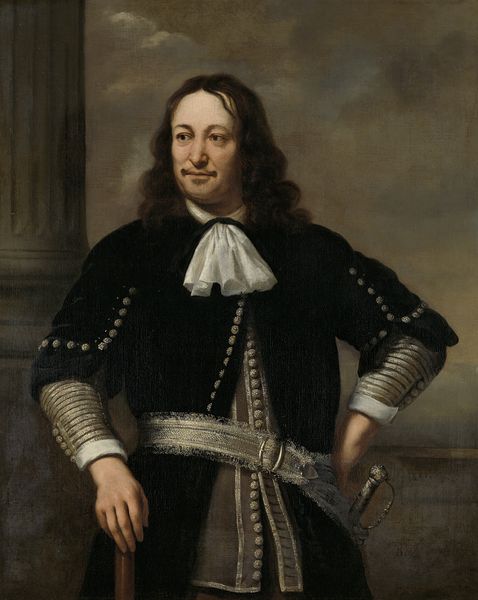
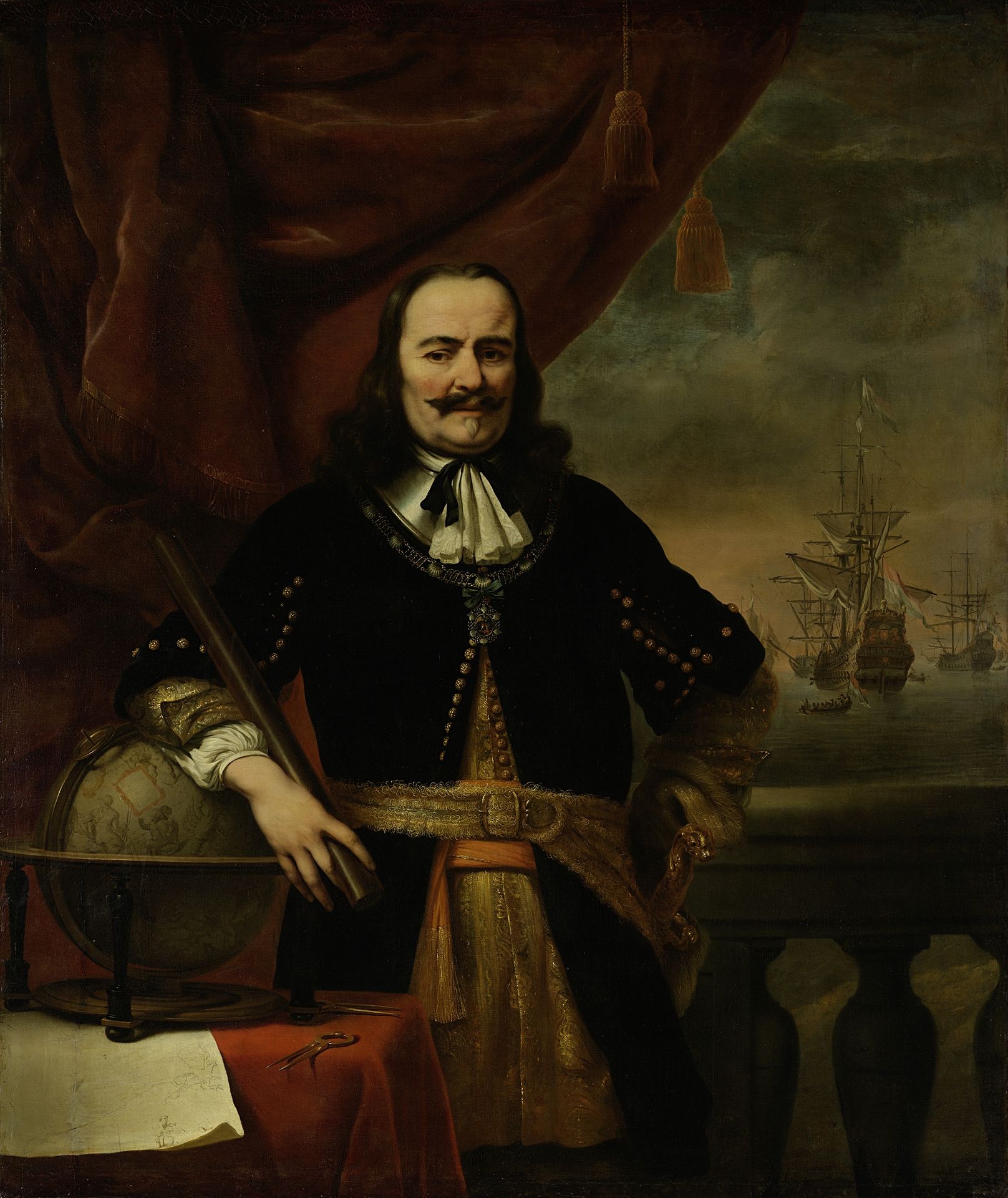
Michiel de Ruyter as Lieutenant-Admiral

Ferdinand Bol
1616 - 1680Location
RijksmuseumListen to curator's interpretation
Curatorial notes
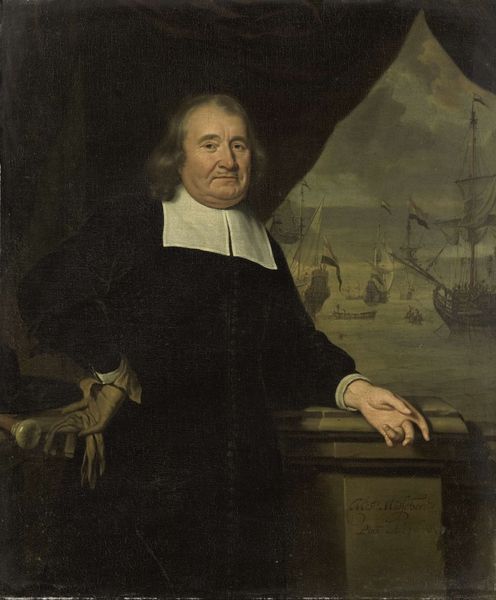
Curator: Let's turn our attention to Ferdinand Bol's 1667 portrait of "Michiel de Ruyter as Lieutenant-Admiral," currently residing here at the Rijksmuseum. Editor: My immediate impression? One of understated power. The dark palette contrasted with those gleaming ships hints at both the man's authority and the tangible might of the Dutch fleet. Curator: Bol was quite strategic with materials and production value. Consider the fine detailing of Ruyter’s clothing— the luxurious fabrics suggesting wealth and power but rendered with an emphasis on texture achieved by layering the oil paints. These are things that denote the status and making of this portrait. Editor: Absolutely. Beyond the fabric itself, I see a layering of symbols meant to elevate Ruyter’s image. Notice the globe there. It isn’t just an object; it speaks to his global reach, his understanding of the seas, the voyages and power projection that were key to the Dutch Republic’s identity. Curator: Yes, that maritime dominance relied upon both skill and tangible resources. Look closely at the background’s cityscapes – not idyllic but showing intense industrial activity and how those cities connect to the naval activities to project national strength. Editor: Exactly! And that intense naval presence— those ships! For the Dutch Republic at this time, sea power *was* cultural power. The ships aren’t just warships, they become floating symbols of Dutch ingenuity and global trade networks. Curator: Consider too, the system of patronage. Who commissioned this work, and why? This work would have reinforced particular messages that aligned with power structures that the country embraced. Editor: Perhaps; though there's a quieter strength here. It’s not as flamboyant or propagandistic as many contemporary portraits. Ruyter looks competent, not necessarily glorious. That hints at the complex, evolving symbols of leadership being made real by everyday individuals. Curator: Very well put. Overall, analyzing the making of this oil painting reveals the dynamic between commerce and art and the processes involved in production, to define the subject and by extension the power. Editor: And for me, Bol captures the emergence of modern cultural symbols as a kind of visual echo—historical references made vital again, through art and leadership, continuing to resonate today.