About this artwork
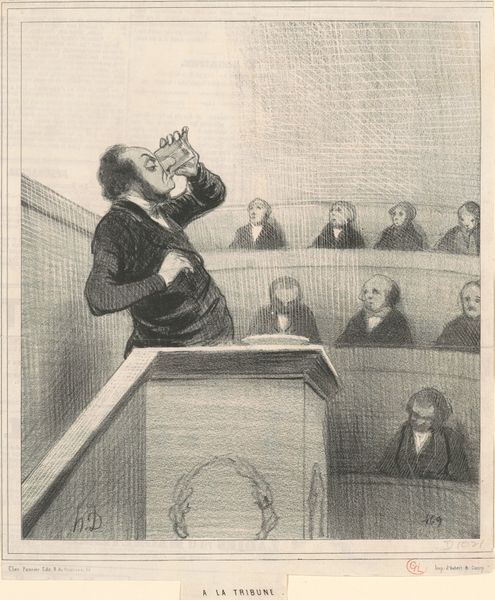
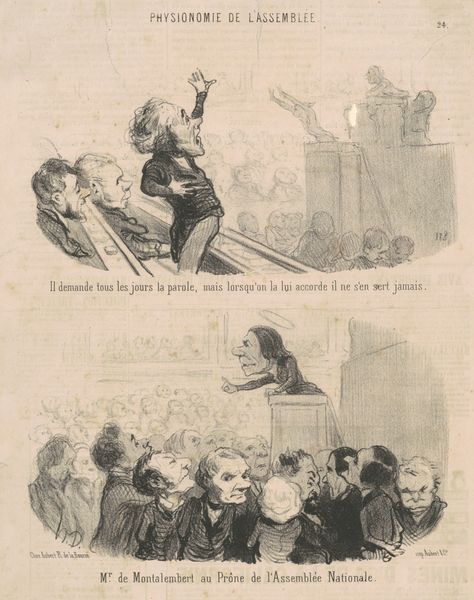
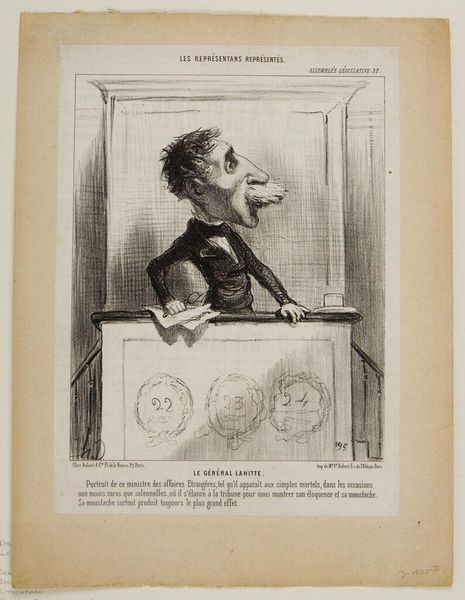
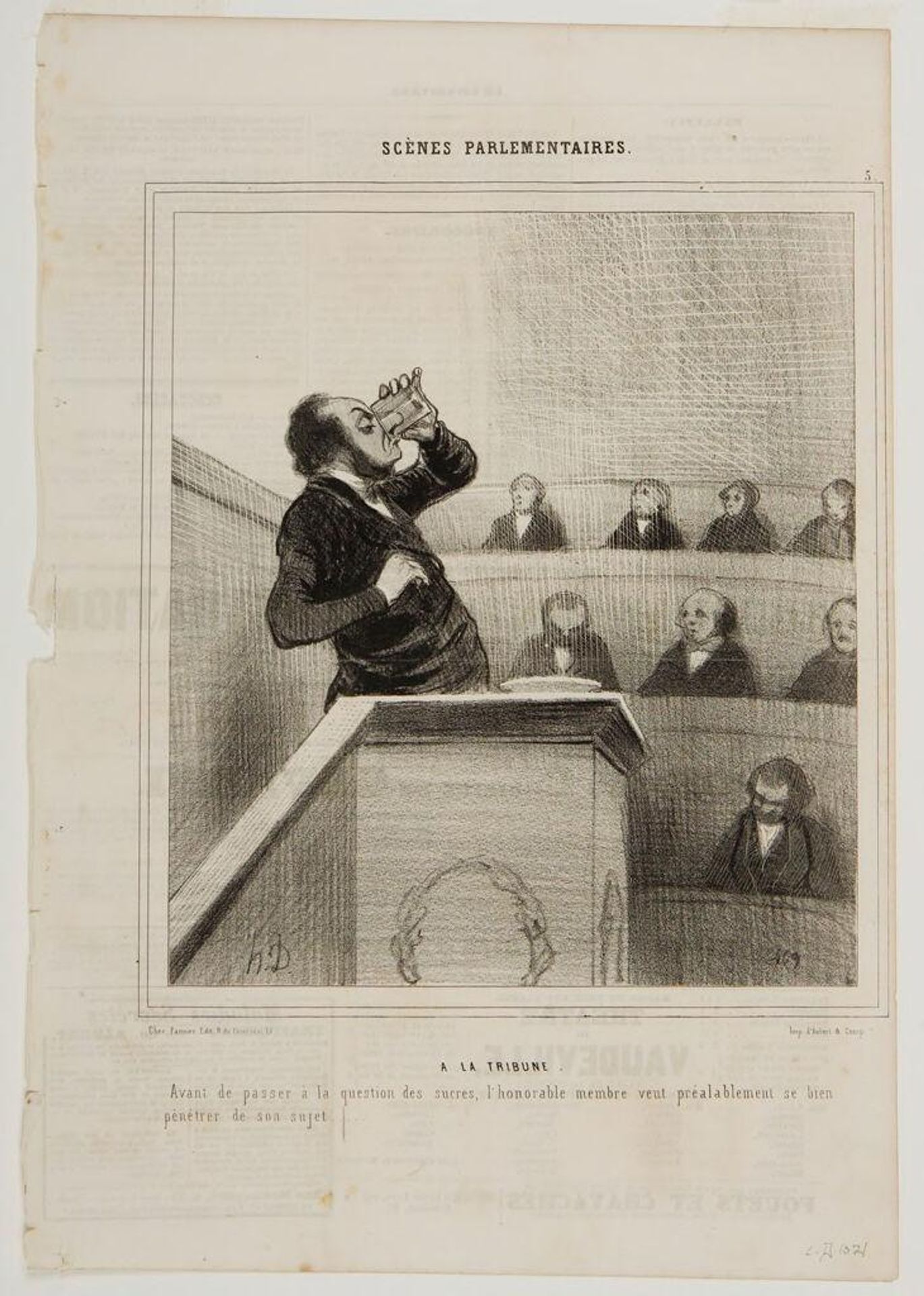
Curator: Here we have Honoré Daumier’s “To the Tribune,” a lithograph that captures a moment in a parliamentary setting. The speaker is guzzling water or maybe beer. What strikes you first? Editor: The symbolism of thirst, obviously. The vessel, likely a tankard, dominates, speaking to a deeper, more visceral need than mere refreshment. Curator: It's a powerful commentary on political discourse. Daumier was known for his critiques of power structures and societal norms. The image implies a performative thirst, perhaps for power itself, enacted on a very public stage. Editor: The action is crude, almost barbaric. It connects to longstanding visual tropes around indulgence, but inverted, using the political class as its subject. Curator: Exactly. And Daumier situates this figure within a larger history of political corruption and excess. It’s not just about this one man, but about the systems that enable such behavior. Editor: The mug becomes an emblem of the political class. An emblem of greed and, perhaps, ignorance. An object that is, sadly, timeless. Curator: Indeed. His visual language is a critique of power, but also of the spectacle of political life. Editor: A powerful statement about the corrupting nature of power, then, and how symbols can distill even the most complex political realities into something instantly recognizable.


Artwork details
- Location
- Harvard Art Museums
- Copyright
- CC0 1.0
Comments
No comments
About this artwork
Curator: Here we have Honoré Daumier’s “To the Tribune,” a lithograph that captures a moment in a parliamentary setting. The speaker is guzzling water or maybe beer. What strikes you first? Editor: The symbolism of thirst, obviously. The vessel, likely a tankard, dominates, speaking to a deeper, more visceral need than mere refreshment. Curator: It's a powerful commentary on political discourse. Daumier was known for his critiques of power structures and societal norms. The image implies a performative thirst, perhaps for power itself, enacted on a very public stage. Editor: The action is crude, almost barbaric. It connects to longstanding visual tropes around indulgence, but inverted, using the political class as its subject. Curator: Exactly. And Daumier situates this figure within a larger history of political corruption and excess. It’s not just about this one man, but about the systems that enable such behavior. Editor: The mug becomes an emblem of the political class. An emblem of greed and, perhaps, ignorance. An object that is, sadly, timeless. Curator: Indeed. His visual language is a critique of power, but also of the spectacle of political life. Editor: A powerful statement about the corrupting nature of power, then, and how symbols can distill even the most complex political realities into something instantly recognizable.
Comments
No comments