About this artwork
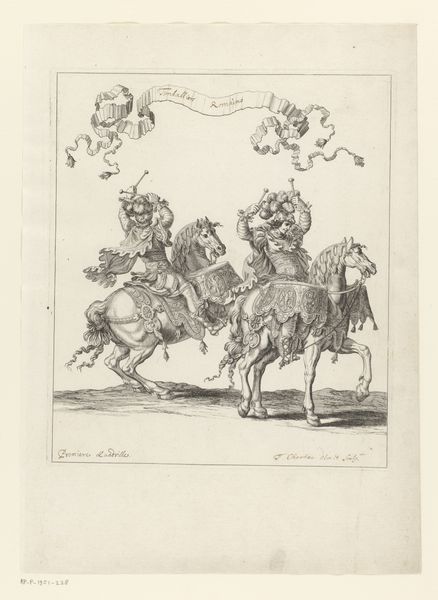
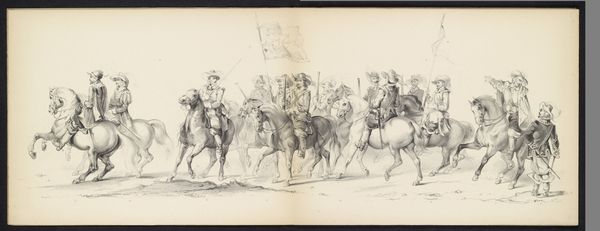
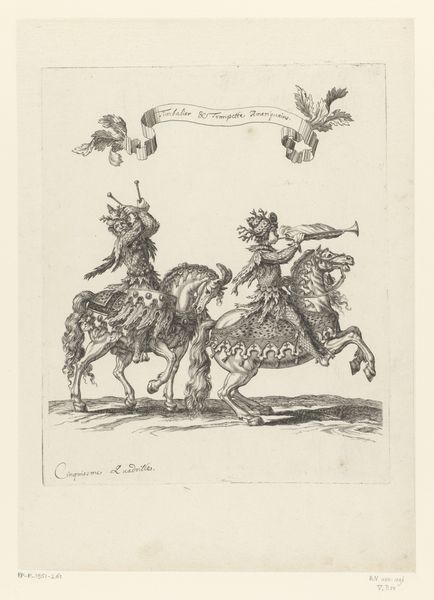
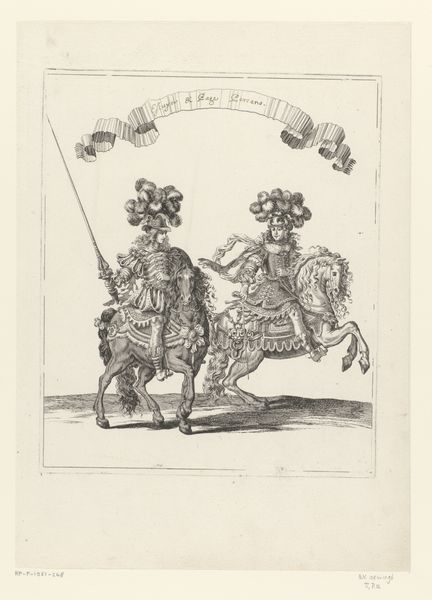
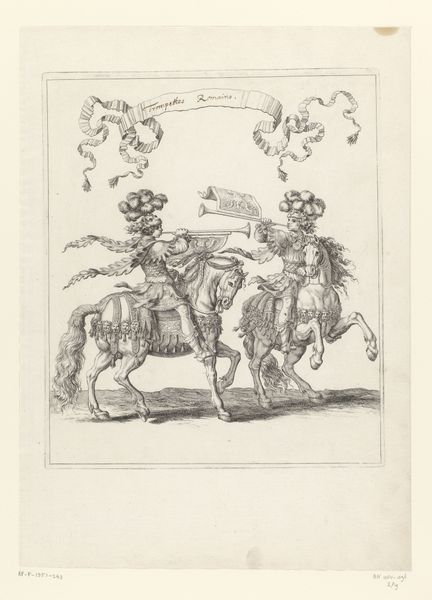
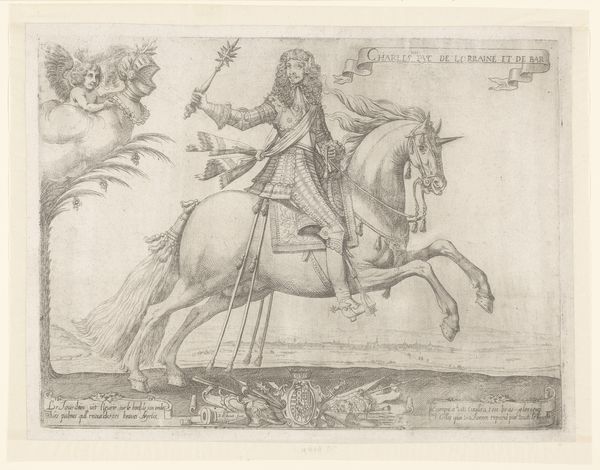
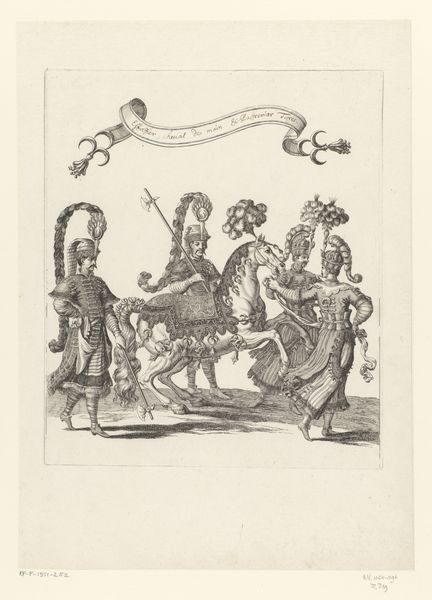
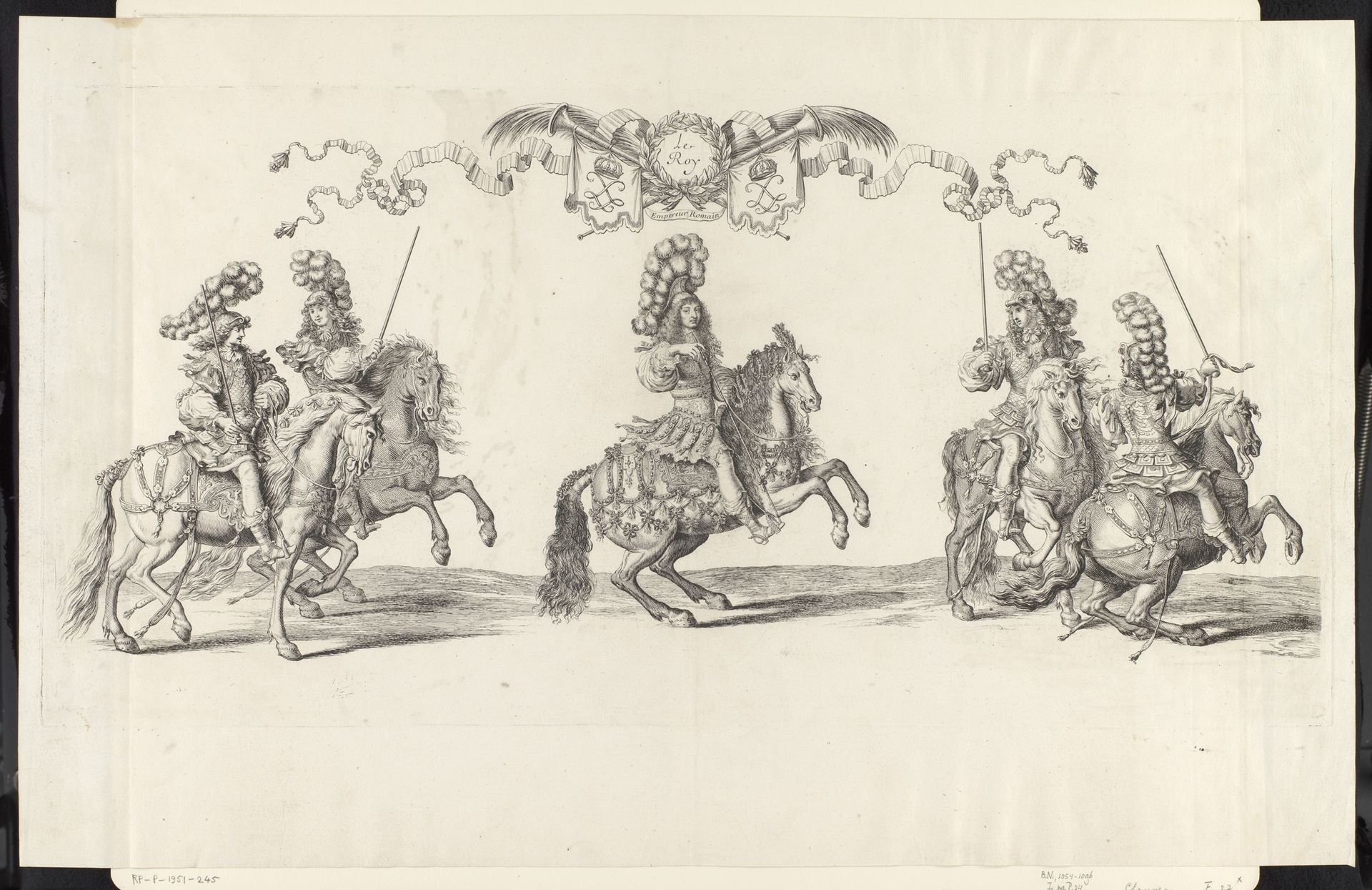
Curator: Oh, the grandeur! The first impression that hits you is the confidence of those rearing horses and flamboyant costumes. What do you think? Editor: It certainly has a swagger to it. Looking closer, this pen and ink drawing, housed here at the Rijksmuseum, is "King Louis XIV on Horseback with Two Riders on Either Side in Roman Costume" by François Chauveau, created around 1670. Curator: The Sun King! Chauveau really captures that sense of absolute power, doesn't he? It’s interesting he chose the medium of ink sketch for such a lavish display. The lightness in execution makes the over-the-top opulence seem, I don't know, almost theatrical? Editor: I see a deliberate staging of power here. The Roman costumes are more than mere fancy dress; they consciously tie Louis to the legacy of Roman emperors. That elaborate headdress on the central figure evokes images of power and the classical era all at once. He isn’t just a king; he's Caesar reborn. Curator: Absolutely! And consider those flanking figures. Are they symbols, almost archetypes, representing, perhaps, military might or royal duty? They’re certainly not just along for the ride. Editor: Precisely! It's a tableau vivant. Chauveau uses symbolism to construct a narrative. Notice how the figures are evenly spaced, suggesting not just procession, but also inevitability and order. It's not just about Louis the man; it's about the idea of monarchy itself, presented as ordained, powerful, and eternal. Curator: It’s interesting to see Chauveau almost playfully sketch with a frenetic energy. The detail is gorgeous when you look close. Those tiny flicks of ink creating texture. The overall effect dances that knife-edge balance of grand illusion and fleeting reality. Editor: You know, I was thinking about the medium as well. Ink is enduring. While appearing spontaneous, the choice solidifies Louis' reign and presence into permanence through the act of committed linework, capturing the fleeting spectacle and lodging it into the cultural memory. Curator: So, a fascinating glimpse into both the self-fashioned image of a powerful ruler and the artistry behind crafting such an image. I’ll not soon forget it. Editor: Indeed, an elegant exercise in imbuing temporal power with timeless symbols. Food for thought, indeed.
Koning Lodewijk XIV te paard met twee ruiters aan weerszijden in Romeins kostuum
1670

François Chauveau
1613 - 1676Location
RijksmuseumArtwork details
- Medium
- drawing, ink, pen
- Dimensions
- height 318 mm, width 641 mm
- Location
- Rijksmuseum
- Copyright
- Rijks Museum: Open Domain
Tags
Comments
Share your thoughts
About this artwork
Curator: Oh, the grandeur! The first impression that hits you is the confidence of those rearing horses and flamboyant costumes. What do you think? Editor: It certainly has a swagger to it. Looking closer, this pen and ink drawing, housed here at the Rijksmuseum, is "King Louis XIV on Horseback with Two Riders on Either Side in Roman Costume" by François Chauveau, created around 1670. Curator: The Sun King! Chauveau really captures that sense of absolute power, doesn't he? It’s interesting he chose the medium of ink sketch for such a lavish display. The lightness in execution makes the over-the-top opulence seem, I don't know, almost theatrical? Editor: I see a deliberate staging of power here. The Roman costumes are more than mere fancy dress; they consciously tie Louis to the legacy of Roman emperors. That elaborate headdress on the central figure evokes images of power and the classical era all at once. He isn’t just a king; he's Caesar reborn. Curator: Absolutely! And consider those flanking figures. Are they symbols, almost archetypes, representing, perhaps, military might or royal duty? They’re certainly not just along for the ride. Editor: Precisely! It's a tableau vivant. Chauveau uses symbolism to construct a narrative. Notice how the figures are evenly spaced, suggesting not just procession, but also inevitability and order. It's not just about Louis the man; it's about the idea of monarchy itself, presented as ordained, powerful, and eternal. Curator: It’s interesting to see Chauveau almost playfully sketch with a frenetic energy. The detail is gorgeous when you look close. Those tiny flicks of ink creating texture. The overall effect dances that knife-edge balance of grand illusion and fleeting reality. Editor: You know, I was thinking about the medium as well. Ink is enduring. While appearing spontaneous, the choice solidifies Louis' reign and presence into permanence through the act of committed linework, capturing the fleeting spectacle and lodging it into the cultural memory. Curator: So, a fascinating glimpse into both the self-fashioned image of a powerful ruler and the artistry behind crafting such an image. I’ll not soon forget it. Editor: Indeed, an elegant exercise in imbuing temporal power with timeless symbols. Food for thought, indeed.
Comments
Share your thoughts