About this artwork
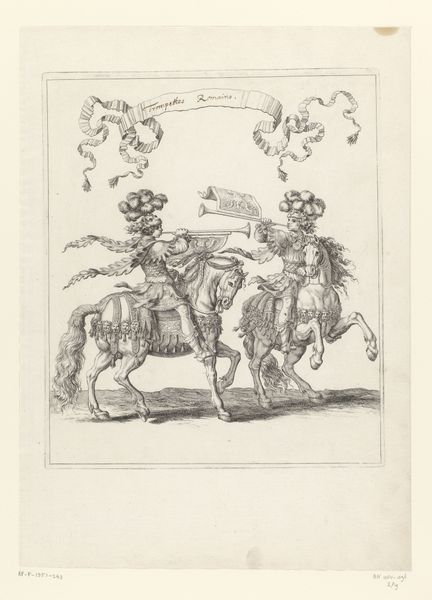
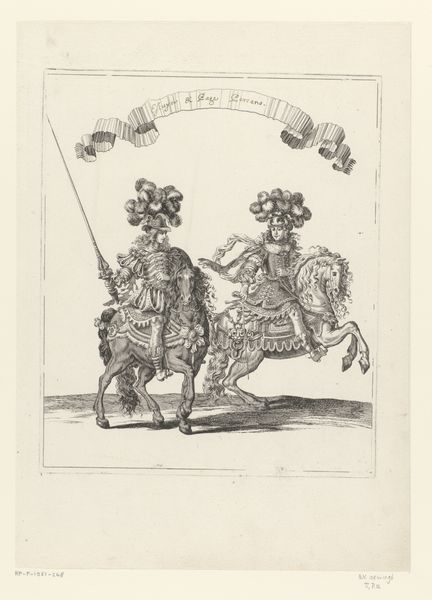
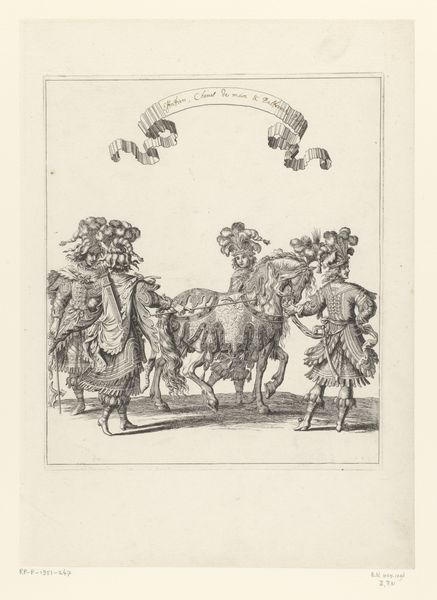
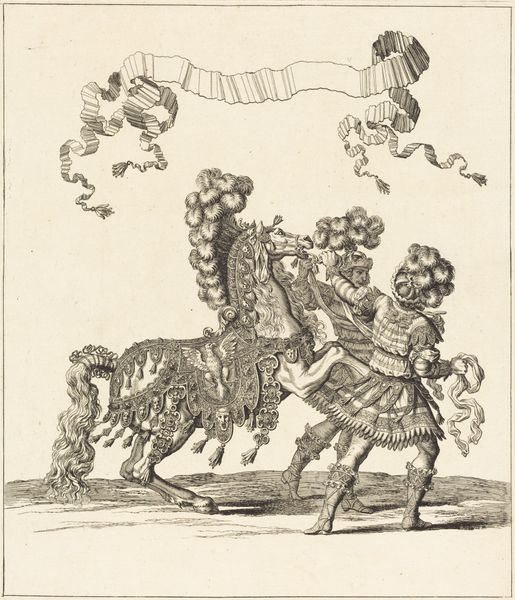
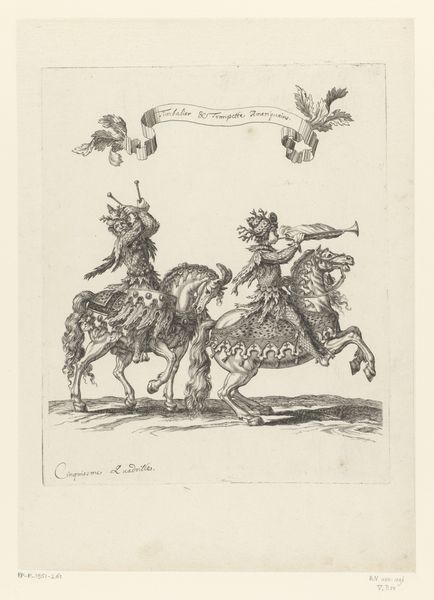
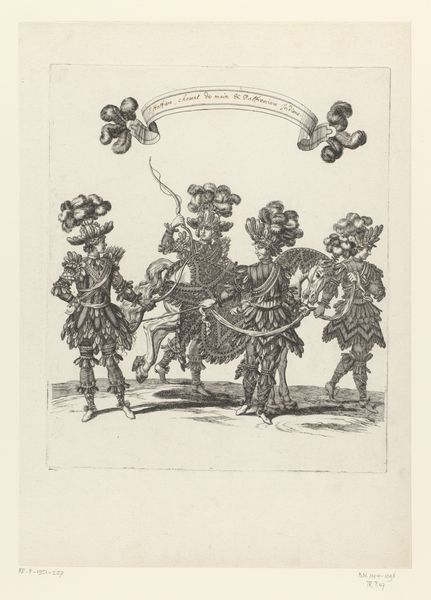
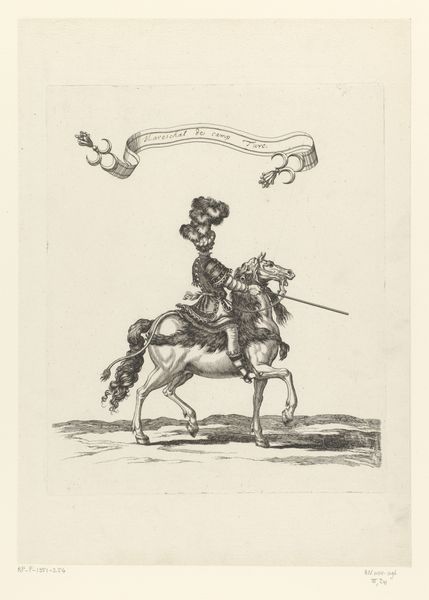
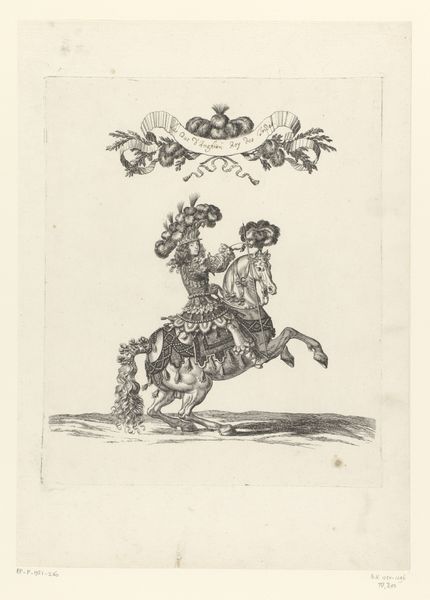
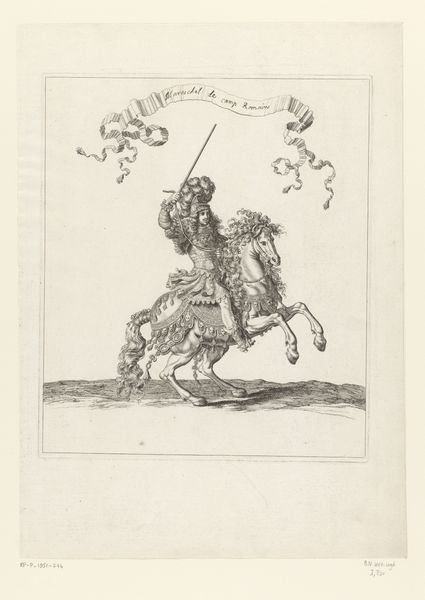
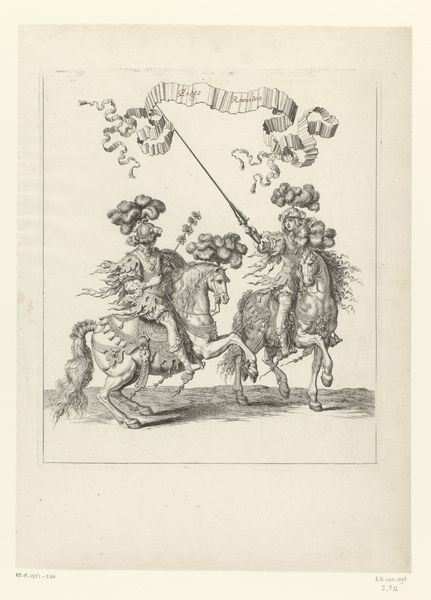
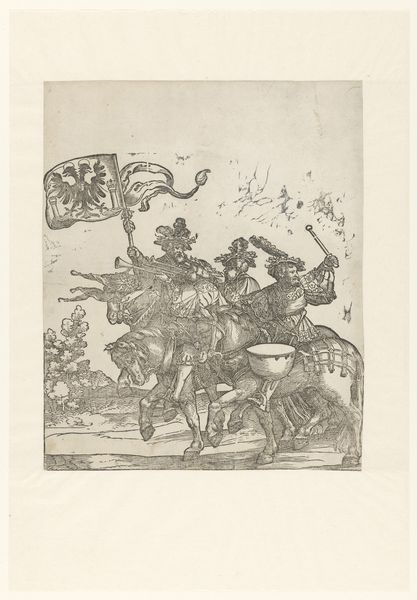
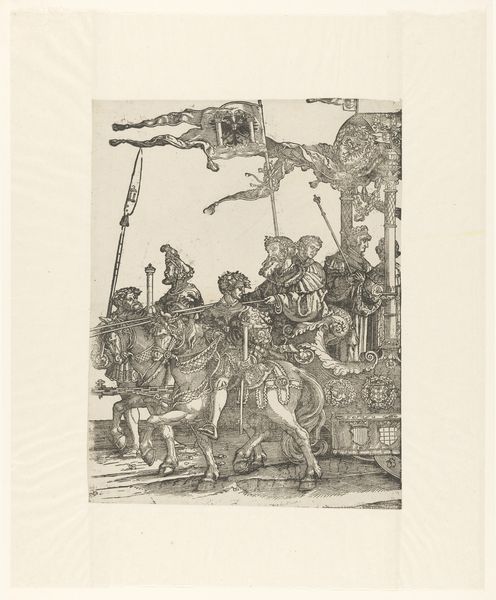
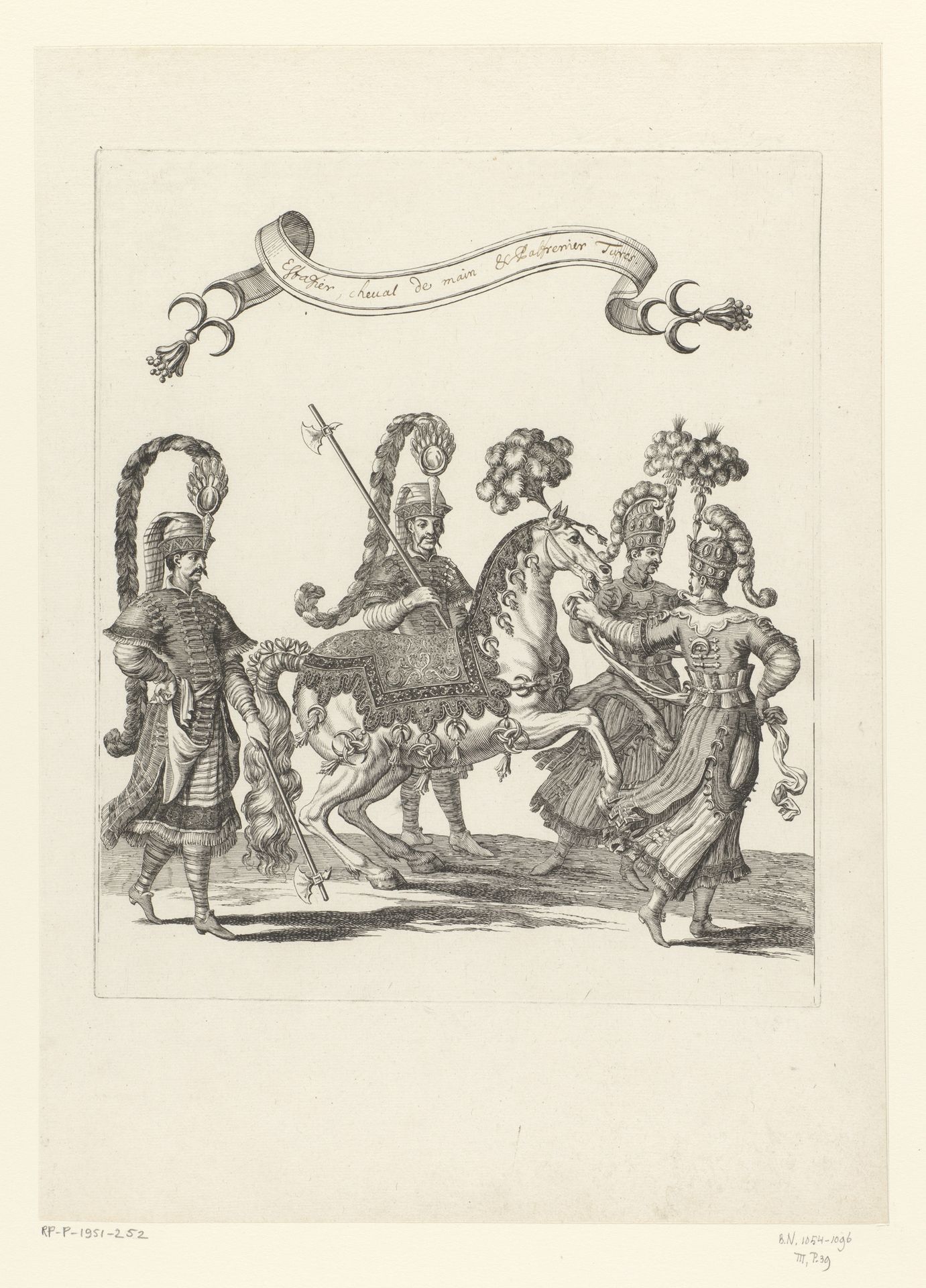
François Chauveau created this etching, "Voetknechten en palfrenier met paard in Turks kostuum," sometime in the 17th century, now held at the Rijksmuseum. The composition, meticulously detailed through fine lines, presents an almost theatrical scene, dominated by figures adorned in what the artist perceived as Turkish attire. This meticulous detail evokes a sense of curiosity, perhaps even wonder. In examining Chauveau’s work, the construction of the ‘other’ becomes apparent. The elaborate costumes and the stylized presentation reduce cultural identity to mere spectacle. Here, the artist's emphasis on ornamentation and exoticism is less about genuine representation and more about constructing a visual other. It invites reflection on how cultural difference is not just observed but actively produced. Consider the formal elements—the lines defining the costumes, the shading giving depth to the figures. These are not neutral; they are instruments in a visual discourse that essentializes and exoticizes. This etching provides a mirror to our own understanding of cultural representation, inviting us to question the power dynamics inherent in how we perceive and portray those different from ourselves.
Voetknechten en palfrenier met paard in Turks kostuum
1670

François Chauveau
1613 - 1676Location
RijksmuseumArtwork details
- Medium
- drawing, print, etching, ink, engraving
- Dimensions
- height 307 mm, width 260 mm
- Location
- Rijksmuseum
- Copyright
- Rijks Museum: Open Domain
Tags
Comments
Share your thoughts
About this artwork
François Chauveau created this etching, "Voetknechten en palfrenier met paard in Turks kostuum," sometime in the 17th century, now held at the Rijksmuseum. The composition, meticulously detailed through fine lines, presents an almost theatrical scene, dominated by figures adorned in what the artist perceived as Turkish attire. This meticulous detail evokes a sense of curiosity, perhaps even wonder. In examining Chauveau’s work, the construction of the ‘other’ becomes apparent. The elaborate costumes and the stylized presentation reduce cultural identity to mere spectacle. Here, the artist's emphasis on ornamentation and exoticism is less about genuine representation and more about constructing a visual other. It invites reflection on how cultural difference is not just observed but actively produced. Consider the formal elements—the lines defining the costumes, the shading giving depth to the figures. These are not neutral; they are instruments in a visual discourse that essentializes and exoticizes. This etching provides a mirror to our own understanding of cultural representation, inviting us to question the power dynamics inherent in how we perceive and portray those different from ourselves.
Comments
Share your thoughts