About this artwork
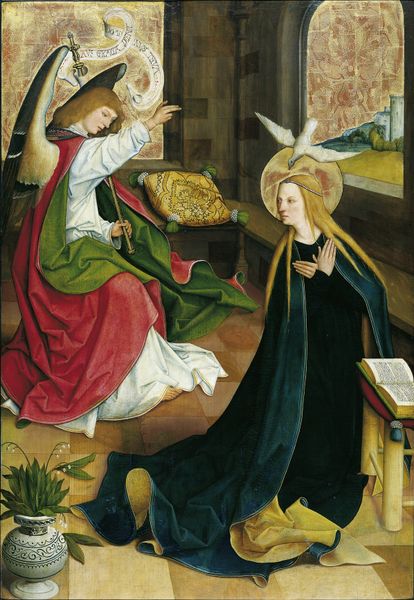
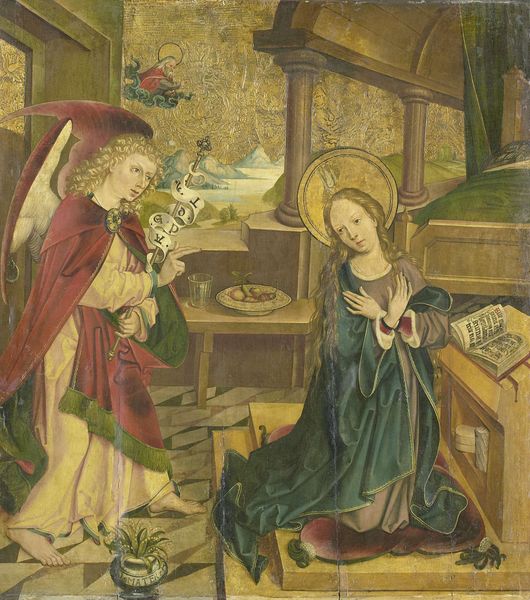
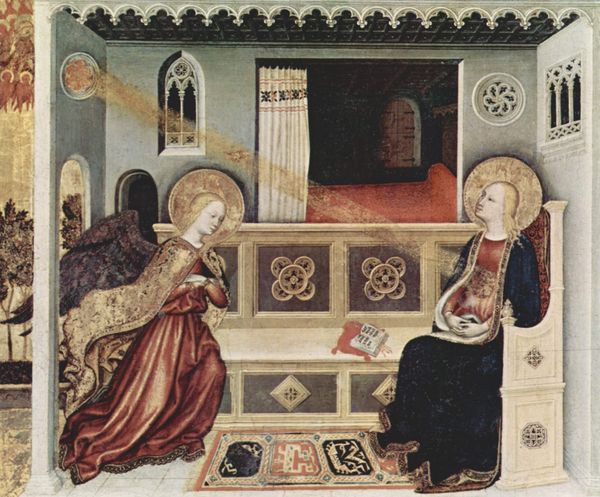
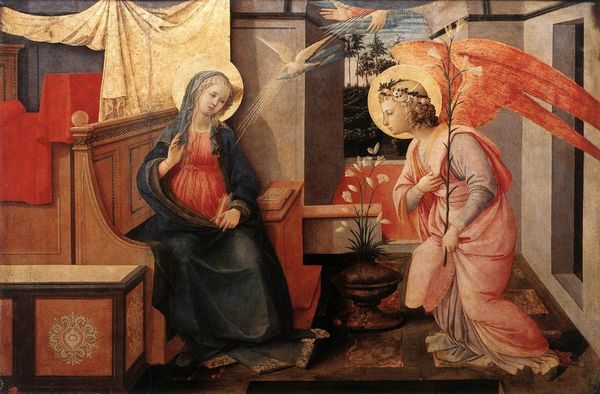
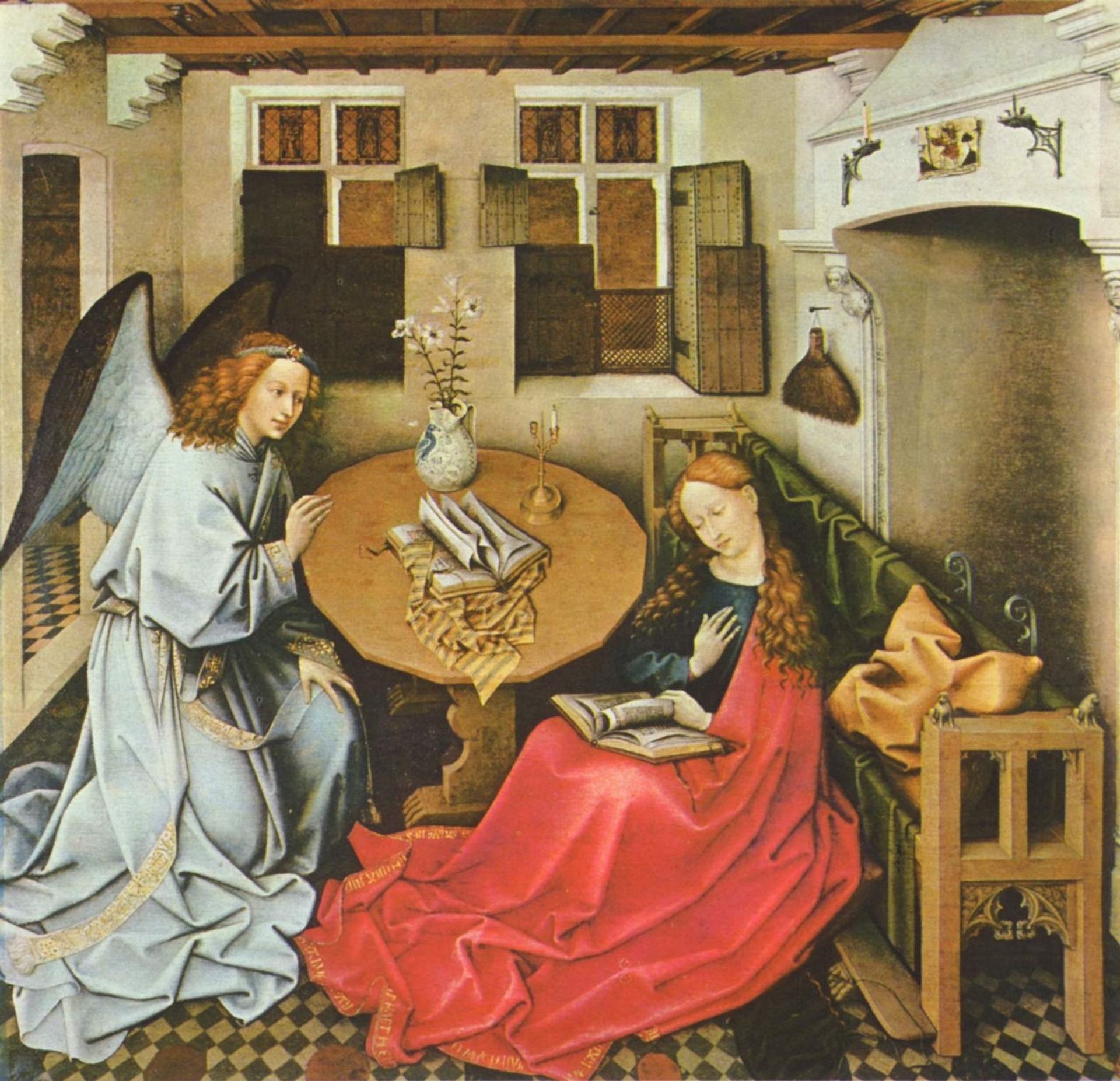
This is Robert Campin’s, The Annunciation, painted in oil sometime in the first half of the 15th century. The painting depicts the angel Gabriel visiting Mary to announce that she will be the mother of Jesus. Made in modern-day Belgium, this painting would have served a specific function for the church. Consider how its naturalistic style might have helped viewers identify with the story. Rather than using a strictly symbolic visual language, Campin represents the figures in a recognizably domestic setting. Note the way Mary is reading, calmly, in her room. Does this make the scene more relatable? How might it inspire personal devotion? Art historians often consider how paintings like this one functioned within the religious and social institutions of the time. By consulting church records, personal letters, and other primary source documents, we can get a better sense of what this artwork meant to its original audience.
The Annunciation 1430

Robert Campin
1375 - 1444Location
Royal Museums of Fine Arts of Belgium, Brussels, BelgiumArtwork details
- Medium
- panel, painting, oil-paint
- Dimensions
- 58 x 64 cm
- Location
- Royal Museums of Fine Arts of Belgium, Brussels, Belgium
- Copyright
- Public domain
Tags
medieval
panel
allegory
narrative-art
painting
oil-paint
perspective
oil painting
studio composition
intimism
arch
christianity
painting painterly
history-painting
northern-renaissance
italian-renaissance
virgin-mary
angel
Comments
No comments
About this artwork
This is Robert Campin’s, The Annunciation, painted in oil sometime in the first half of the 15th century. The painting depicts the angel Gabriel visiting Mary to announce that she will be the mother of Jesus. Made in modern-day Belgium, this painting would have served a specific function for the church. Consider how its naturalistic style might have helped viewers identify with the story. Rather than using a strictly symbolic visual language, Campin represents the figures in a recognizably domestic setting. Note the way Mary is reading, calmly, in her room. Does this make the scene more relatable? How might it inspire personal devotion? Art historians often consider how paintings like this one functioned within the religious and social institutions of the time. By consulting church records, personal letters, and other primary source documents, we can get a better sense of what this artwork meant to its original audience.
Comments
No comments