before 1581
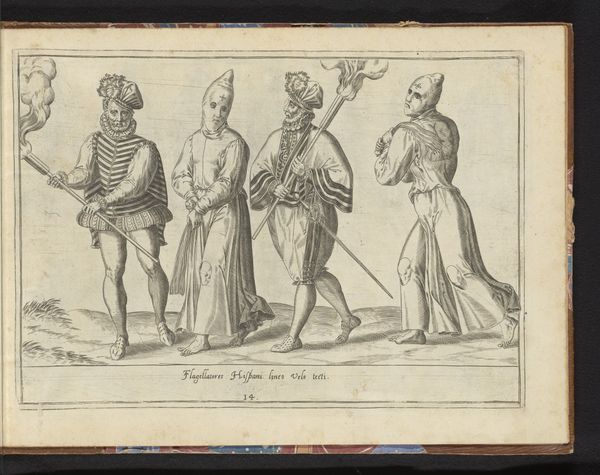
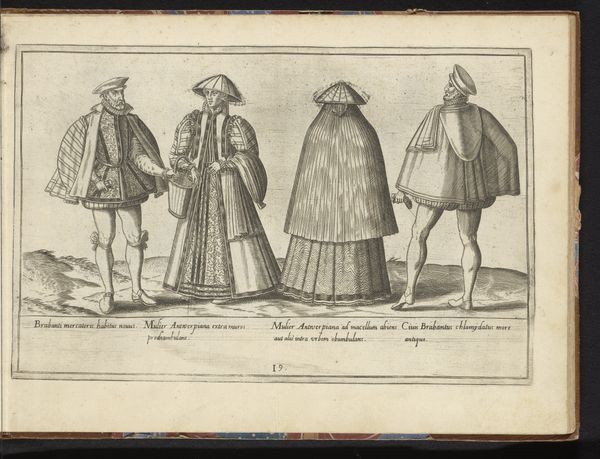
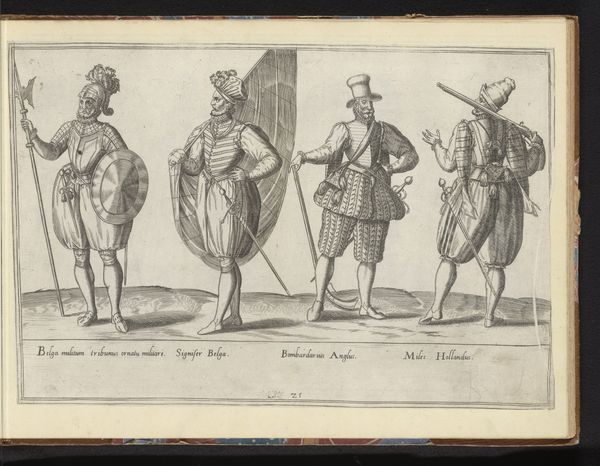
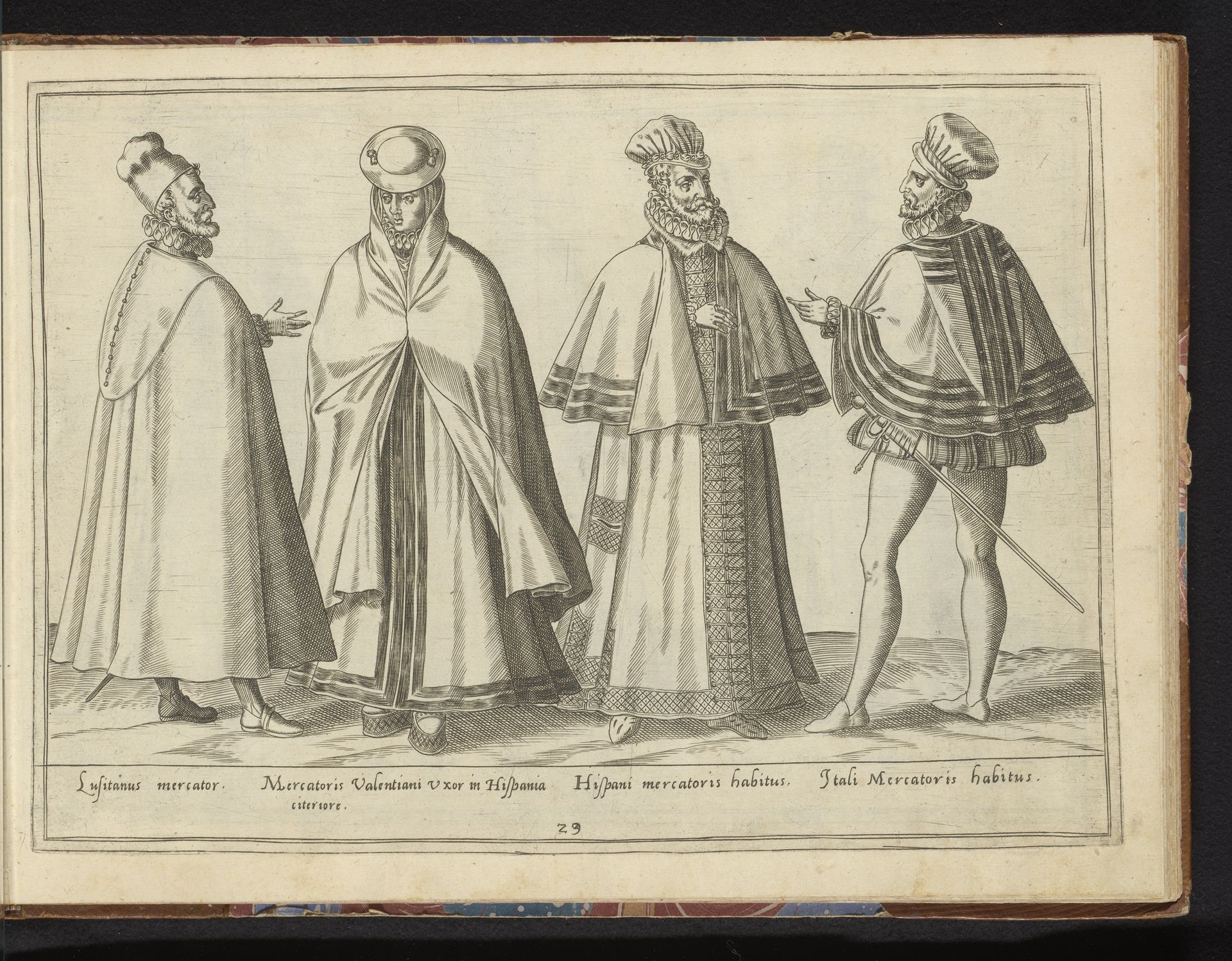
Drie mannen en een vrouw, gekleed volgens de Spaanse en Italiaanse mode van ca. 1580

Abraham de Bruyn
1540 - 1587Location
RijksmuseumListen to curator's interpretation
Curatorial notes
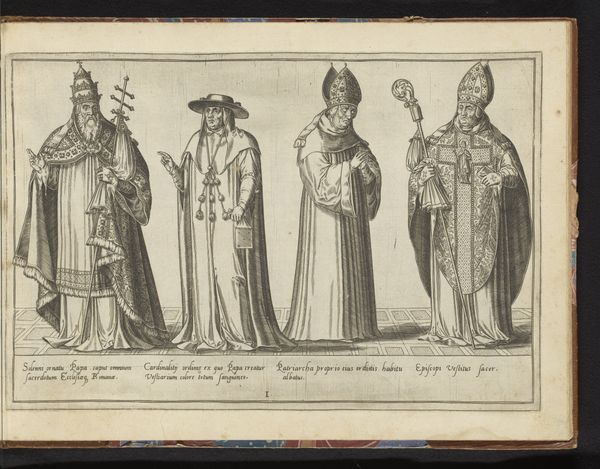
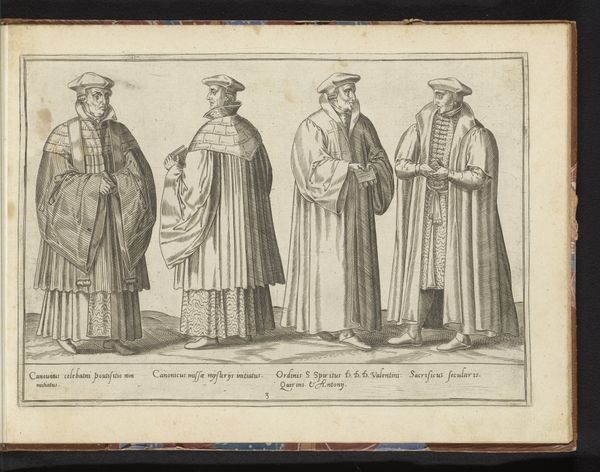
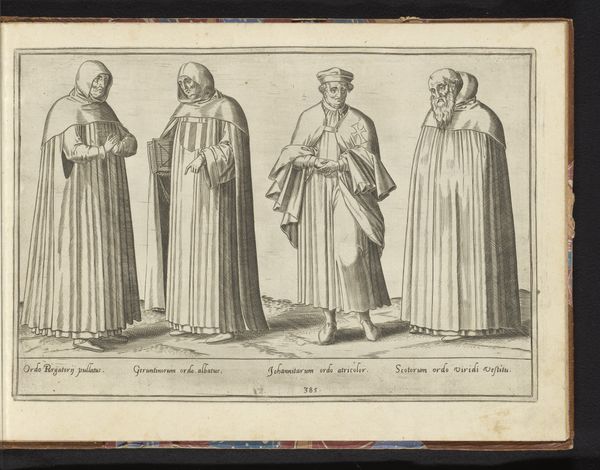
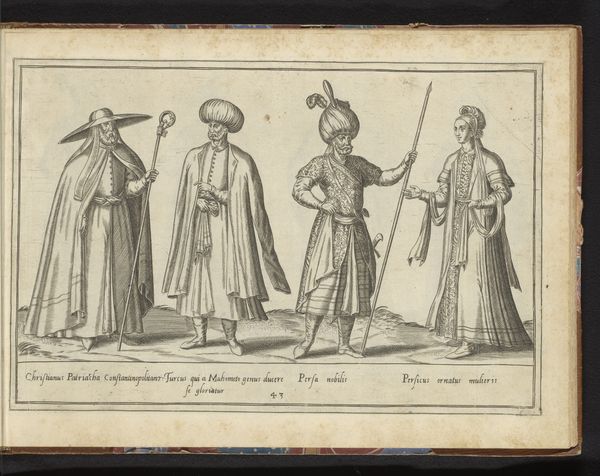
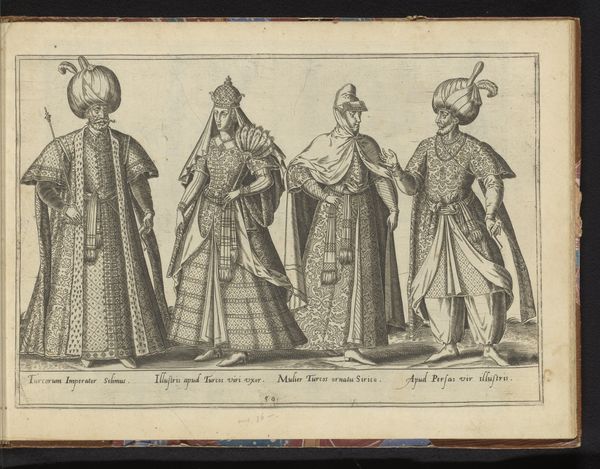
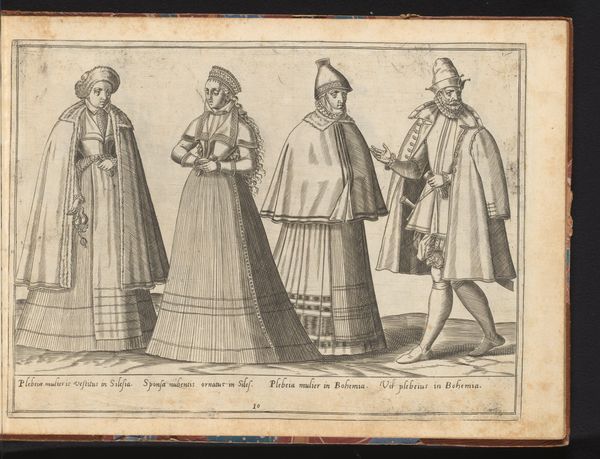
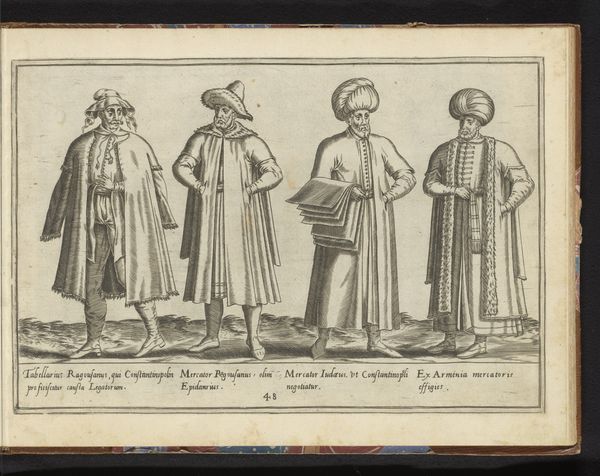
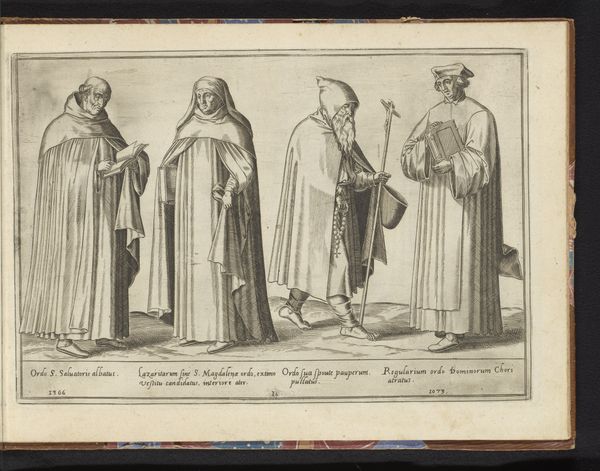
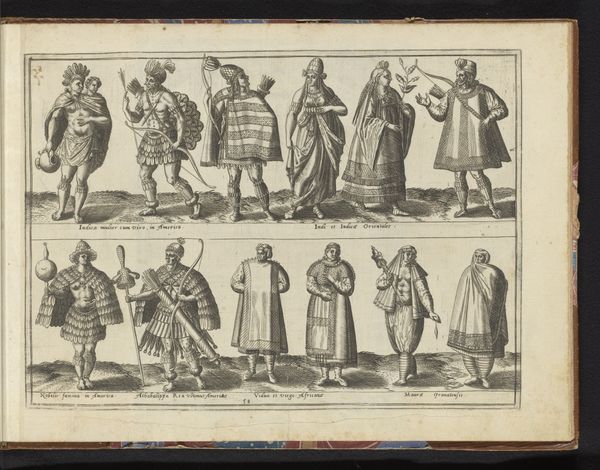
This engraving by Abraham de Bruyn, made around 1580, captures the attire of merchants from across Europe, each distinguished by unique garments. Notice the voluminous cloaks worn by the figures; these are not merely functional pieces of clothing. The cloak, throughout history, has been a symbol of status, mystery, and protection. Think of the ancient Roman toga, or the medieval knight's surcoat, each carrying its own weight of societal meaning. The way these merchants drape themselves in fabric connects them to a long lineage of power and authority. Observe also the varying styles of headwear, each a cultural marker. These details transcend mere fashion, tapping into our collective memory of social roles and identities. The attire speaks volumes, engaging us on a subconscious level, evoking feelings of familiarity, and perhaps even a longing for a bygone era. These symbols, though rooted in a specific time, resonate with timeless human themes of identity and status.