About this artwork
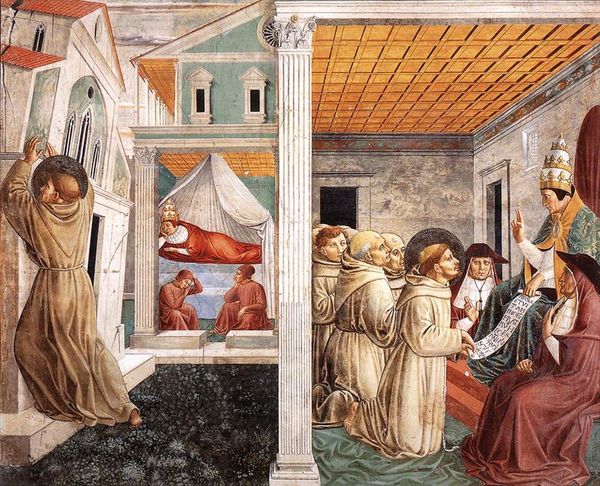
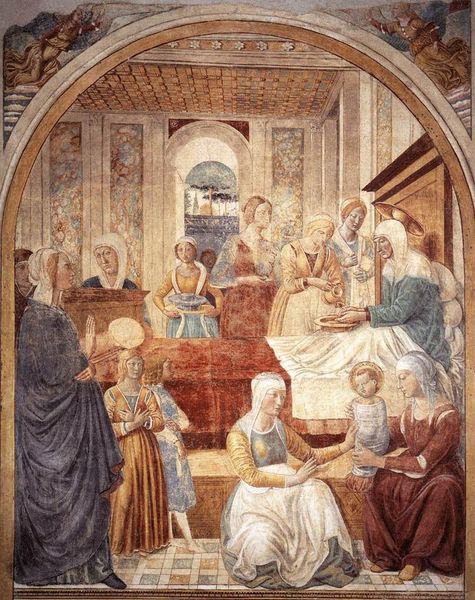
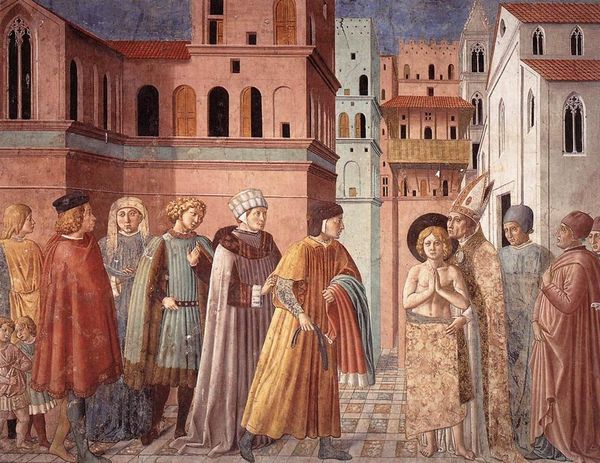
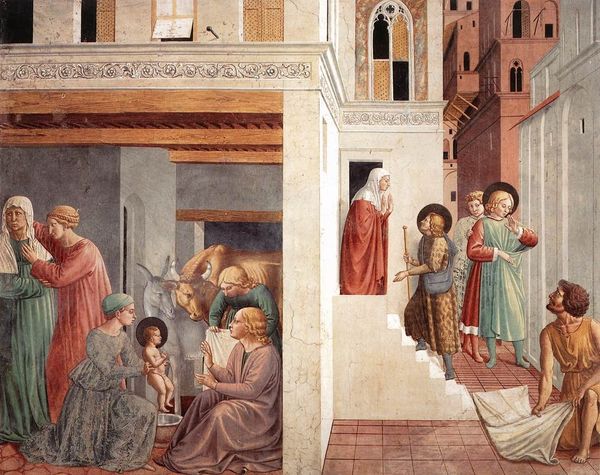
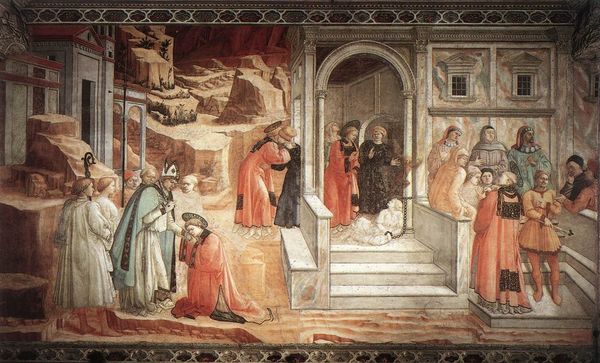
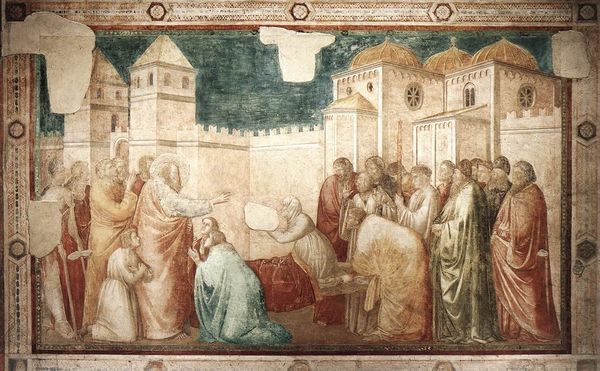
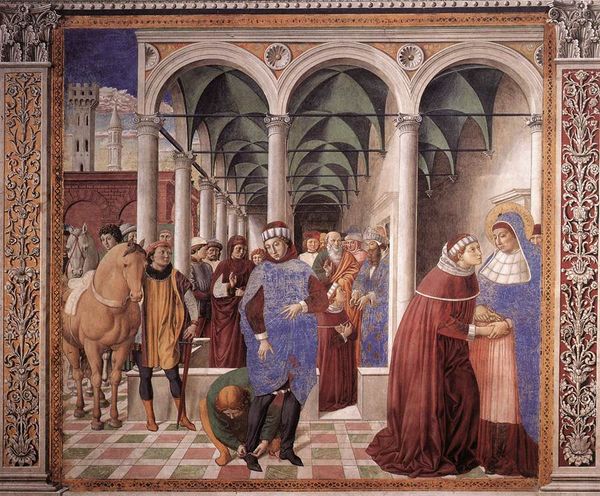
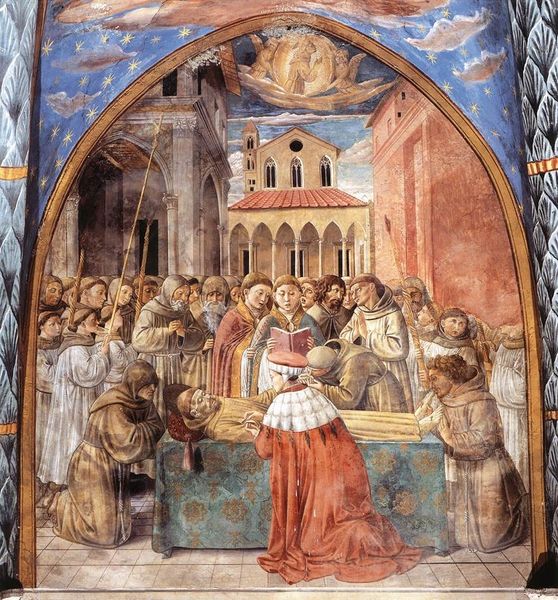
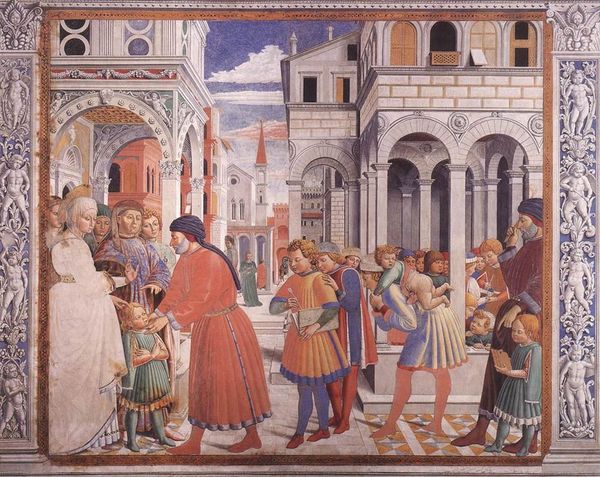
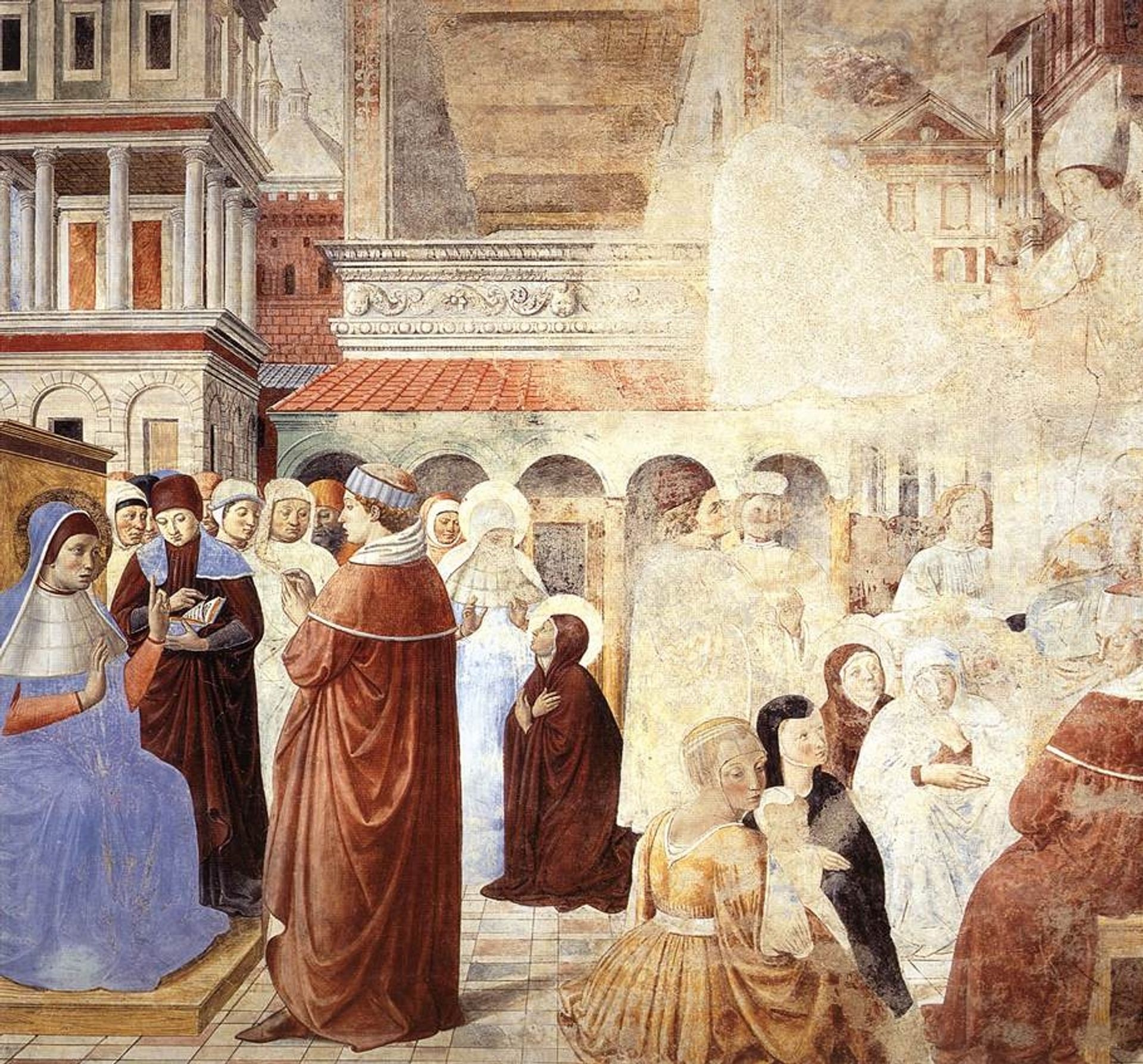
Curator: Allow me to introduce "Scenes with St. Ambrose," a fresco crafted circa 1465 by Benozzo Gozzoli, here in the Sant'Agostino Church, San Gimignano. It’s quite the layered composition, isn’t it? Editor: Oh, yes. It strikes me as a study in human dignity. So many figures, and each with this distinct presence...it's almost like a family reunion where the heavenly and earthly mingle without a second thought. Curator: Gozzoli's application of fresco is fascinating when we think about the socioeconomic context, using what’s available locally – the pigments, the walls. Labor here isn’t just a craft, it’s integral to constructing and reinforcing communal memory. It links these people back to place, literally etched in stone. Editor: That thought also pulls me toward those haloes— those gentle glows that remind us, it’s not *just* a history. See the kneeling figures, how they almost breathe their silent prayers into that monumental setting. Curator: And the city itself rendered not just as backdrop, but testament to civic power, the structures made possible by material wealth acquired via trade and patronage. What resonates too is this accessibility. The visual narrative allows broader engagement. Editor: Mmm, like stepping back to witness history painted on the walls themselves, full of echoes. Imagine the community, gathering here, reading those faces. I think this scene almost teaches us to slow down, just watch, and feel the weight of time. Curator: I completely agree. Considering the piece’s historical role, these frescoes acted not just as artworks, but as crucial elements of communal and devotional life in Renaissance San Gimignano. It’s not art removed, but enmeshed. Editor: Leaving this fresco, I am taking away is that it can echo how important the tangible can be. Even how painting is sometimes not separate from us at all, just like an emotion given color.
Scenes with St. Ambrose 1465

Benozzo Gozzoli
1421 - 1497Location
Sant'Agostino Church, San Gimignano, ItalyArtwork details
- Medium
- fresco
- Dimensions
- 220 x 230 cm
- Location
- Sant'Agostino Church, San Gimignano, Italy
- Copyright
- Public domain
Tags
portrait
medieval
narrative-art
holy-places
fresco
oil painting
christianity
painting painterly
history-painting
italian-renaissance
Comments
No comments
About this artwork
Curator: Allow me to introduce "Scenes with St. Ambrose," a fresco crafted circa 1465 by Benozzo Gozzoli, here in the Sant'Agostino Church, San Gimignano. It’s quite the layered composition, isn’t it? Editor: Oh, yes. It strikes me as a study in human dignity. So many figures, and each with this distinct presence...it's almost like a family reunion where the heavenly and earthly mingle without a second thought. Curator: Gozzoli's application of fresco is fascinating when we think about the socioeconomic context, using what’s available locally – the pigments, the walls. Labor here isn’t just a craft, it’s integral to constructing and reinforcing communal memory. It links these people back to place, literally etched in stone. Editor: That thought also pulls me toward those haloes— those gentle glows that remind us, it’s not *just* a history. See the kneeling figures, how they almost breathe their silent prayers into that monumental setting. Curator: And the city itself rendered not just as backdrop, but testament to civic power, the structures made possible by material wealth acquired via trade and patronage. What resonates too is this accessibility. The visual narrative allows broader engagement. Editor: Mmm, like stepping back to witness history painted on the walls themselves, full of echoes. Imagine the community, gathering here, reading those faces. I think this scene almost teaches us to slow down, just watch, and feel the weight of time. Curator: I completely agree. Considering the piece’s historical role, these frescoes acted not just as artworks, but as crucial elements of communal and devotional life in Renaissance San Gimignano. It’s not art removed, but enmeshed. Editor: Leaving this fresco, I am taking away is that it can echo how important the tangible can be. Even how painting is sometimes not separate from us at all, just like an emotion given color.
Comments
No comments