About this artwork
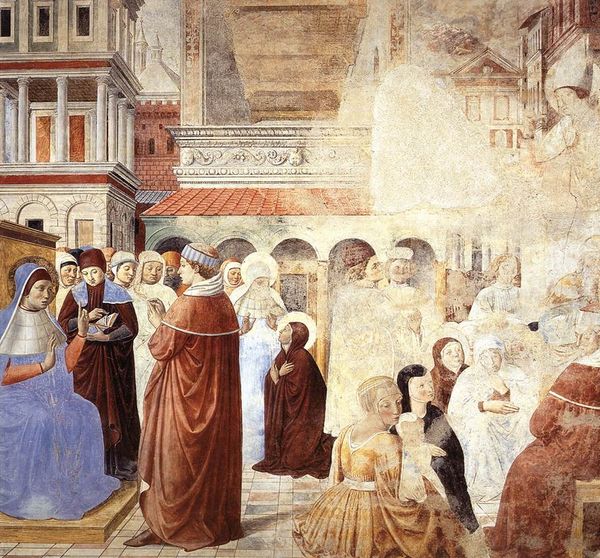
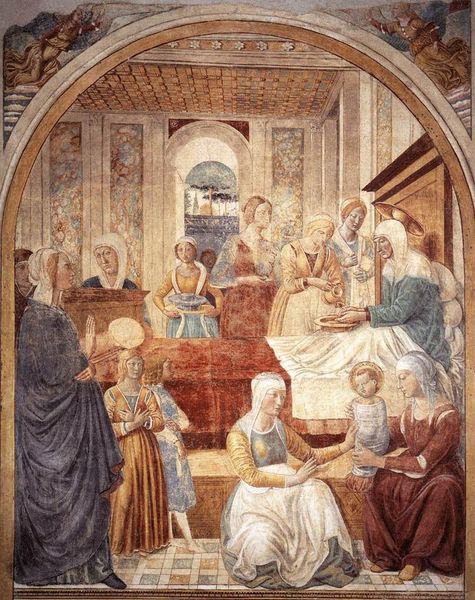
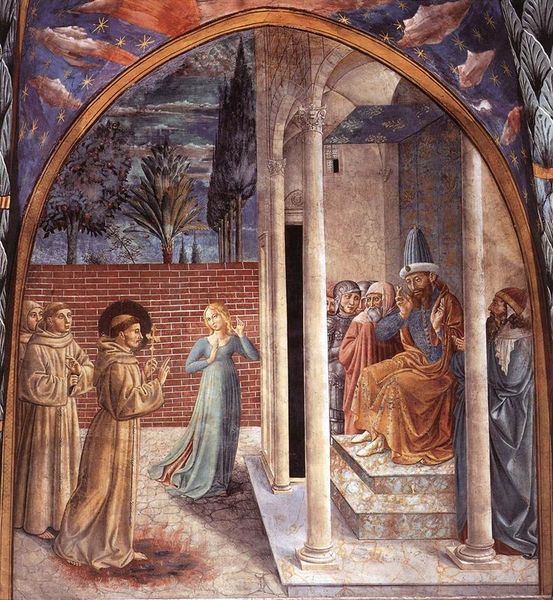
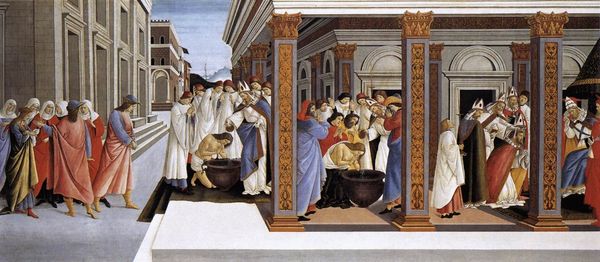
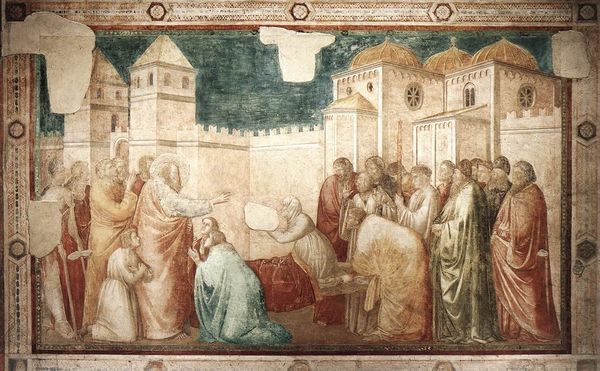
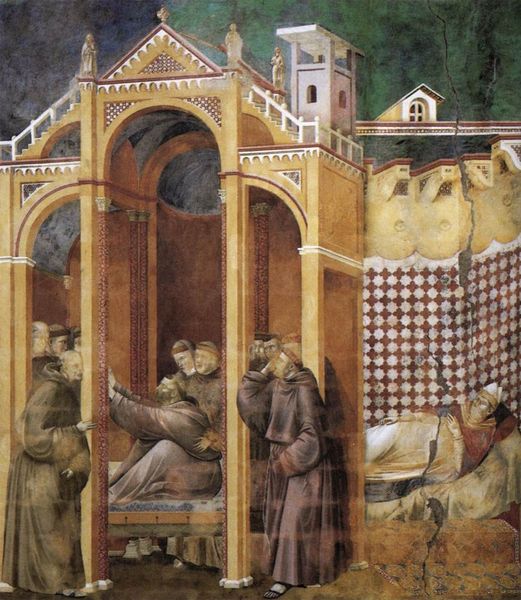
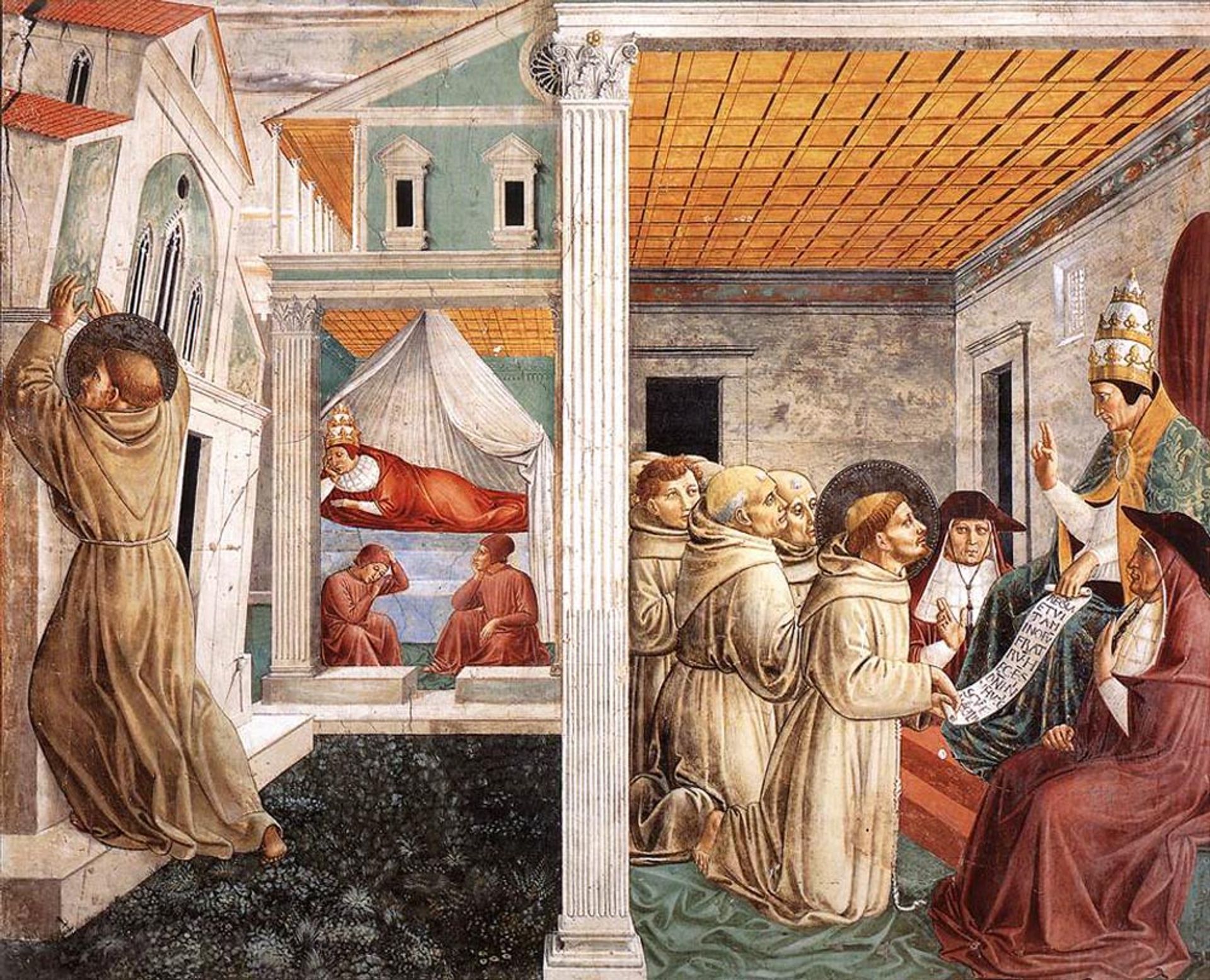
Benozzo Gozzoli painted this fresco of "Dream of Innocent III and the Confirmation of the Rule" using a unique process that was popular during the Renaissance period in Italy. A fresco is more than just a painting; it is an integral part of the wall itself. Gozzoli applied thin layers of wet plaster and then rapidly painted the image before the plaster dried, permanently fusing the pigments to the wall. Notice how the even surface emphasizes the geometric architectural details, directing your eye across the plane in a measured pace. The material choices, from the rough plaster to the finely ground pigments, reflect the social context of the 15th century. Pigments came from minerals mined and processed through extensive labor, giving the artwork a sense of place and time. Each brushstroke shows not only Gozzoli's artistic skill, but also the work of countless others who quarried, ground, and traded these materials. Looking closely at the materials and processes, you begin to appreciate how much labor, skill, and resources went into creating this lasting image.

Artwork details
- Medium
- painting, fresco, architecture
- Dimensions
- 304 x 220 cm
- Copyright
- Public domain
Tags
medieval
narrative-art
painting
fresco
oil painting
christianity
history-painting
italian-renaissance
architecture
historical building
christ
Comments
No comments
About this artwork
Benozzo Gozzoli painted this fresco of "Dream of Innocent III and the Confirmation of the Rule" using a unique process that was popular during the Renaissance period in Italy. A fresco is more than just a painting; it is an integral part of the wall itself. Gozzoli applied thin layers of wet plaster and then rapidly painted the image before the plaster dried, permanently fusing the pigments to the wall. Notice how the even surface emphasizes the geometric architectural details, directing your eye across the plane in a measured pace. The material choices, from the rough plaster to the finely ground pigments, reflect the social context of the 15th century. Pigments came from minerals mined and processed through extensive labor, giving the artwork a sense of place and time. Each brushstroke shows not only Gozzoli's artistic skill, but also the work of countless others who quarried, ground, and traded these materials. Looking closely at the materials and processes, you begin to appreciate how much labor, skill, and resources went into creating this lasting image.
Comments
No comments