About this artwork
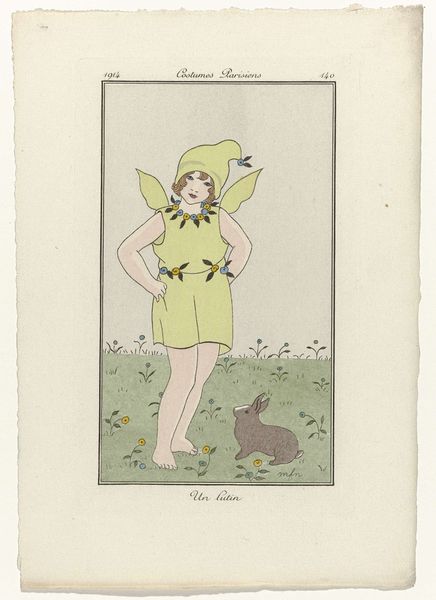
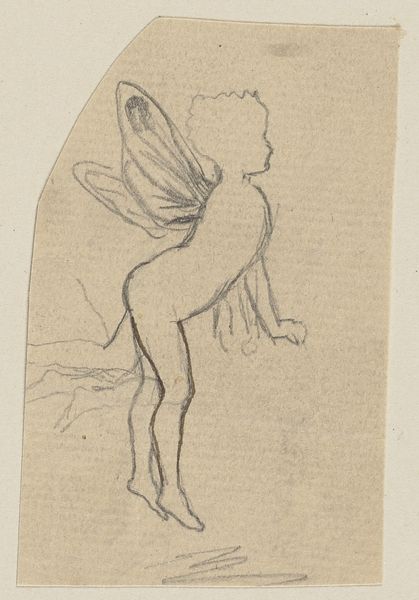
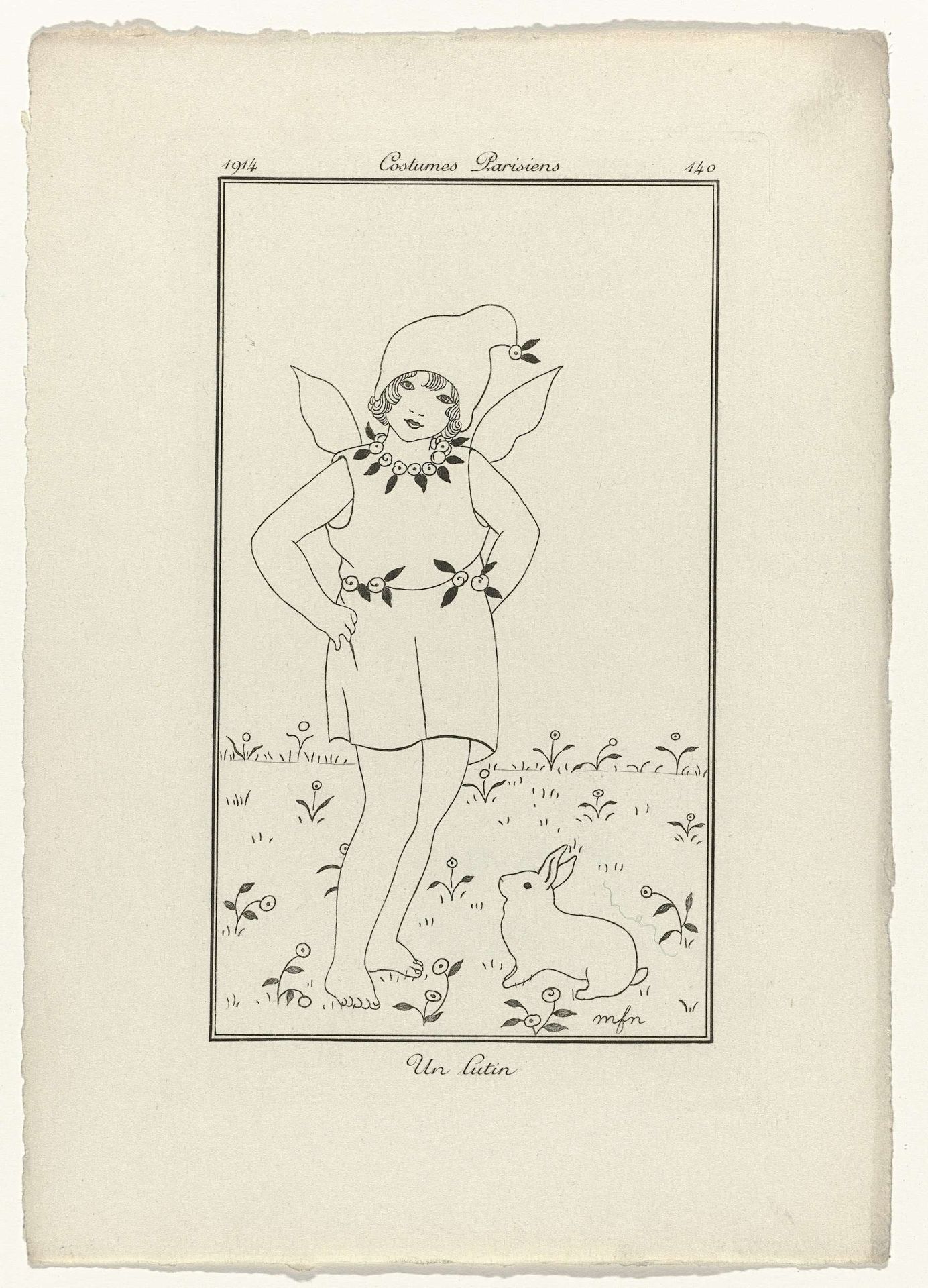
Curator: This delicate image is titled "Journal des Dames et des Modes, Costumes Parisiens, 1914, No. 140 : Un lutin," which translates to "A Goblin" in English. Executed in pen and ink, this piece embodies the Art Nouveau style, rendered by the artist identified only as Monogrammist MFN. Editor: It feels like a child's daydream. Simplistic lines form a figure dressed as a pixie, a sort of fashionable sprite standing in a field of miniature flowers, with a rabbit looking up at her. It has a naive quality that's instantly charming. Curator: What strikes me is the context. "Journal des Dames et des Modes" was a real publication showcasing Parisian fashion. To present a goblin-like figure reveals an intriguing commentary on the whims and fancies of the upper class, and the fashionable costume balls that marked high society at the time. It reflects a desire to escape into fantasy. Editor: Precisely. The symbolism of goblins, even "cute" ones, leans into trickery, mischief. Are we to understand that fashion itself can be a sort of enchanting deception, a playful manipulation of appearances? Even the flowers decorating her person and in the ground where she stands suggests an Eden-like scene—but also, perhaps, a more precarious, temporal state. Curator: Perhaps. Though I am keen to also consider the social moment it appeared—almost at the brink of WWI. Images like these created a counterpoint of light-heartedness in a society bound to face unprecedented hardship, where nostalgia itself turned into escapism. Editor: An interesting counterpoint. Certainly the presence of the rabbit could signal innocence and vulnerability—but also speed, agility, even heightened sensory awareness of lurking danger! Curator: Ultimately, whether whimsical, a darker fantasy or indeed just a symbol for escape, it certainly encapsulated a moment of immense change on the brink, didn't it? Editor: Indeed! And regardless, a visual testament to the idea that even fashion could delve into the realms of the fantastic and allegorical.
Journal des Dames et des Modes, Costumes Parisiens, 1914, No. 140 : Un lutin 1914

Artwork details
- Medium
- drawing, ink, pen
- Dimensions
- height 178 mm, width 109 mm
- Copyright
- Rijks Museum: Open Domain
Tags
portrait
drawing
art-nouveau
landscape
figuration
ink
symbolism
pen
miniature
Comments
No comments
About this artwork
Curator: This delicate image is titled "Journal des Dames et des Modes, Costumes Parisiens, 1914, No. 140 : Un lutin," which translates to "A Goblin" in English. Executed in pen and ink, this piece embodies the Art Nouveau style, rendered by the artist identified only as Monogrammist MFN. Editor: It feels like a child's daydream. Simplistic lines form a figure dressed as a pixie, a sort of fashionable sprite standing in a field of miniature flowers, with a rabbit looking up at her. It has a naive quality that's instantly charming. Curator: What strikes me is the context. "Journal des Dames et des Modes" was a real publication showcasing Parisian fashion. To present a goblin-like figure reveals an intriguing commentary on the whims and fancies of the upper class, and the fashionable costume balls that marked high society at the time. It reflects a desire to escape into fantasy. Editor: Precisely. The symbolism of goblins, even "cute" ones, leans into trickery, mischief. Are we to understand that fashion itself can be a sort of enchanting deception, a playful manipulation of appearances? Even the flowers decorating her person and in the ground where she stands suggests an Eden-like scene—but also, perhaps, a more precarious, temporal state. Curator: Perhaps. Though I am keen to also consider the social moment it appeared—almost at the brink of WWI. Images like these created a counterpoint of light-heartedness in a society bound to face unprecedented hardship, where nostalgia itself turned into escapism. Editor: An interesting counterpoint. Certainly the presence of the rabbit could signal innocence and vulnerability—but also speed, agility, even heightened sensory awareness of lurking danger! Curator: Ultimately, whether whimsical, a darker fantasy or indeed just a symbol for escape, it certainly encapsulated a moment of immense change on the brink, didn't it? Editor: Indeed! And regardless, a visual testament to the idea that even fashion could delve into the realms of the fantastic and allegorical.
Comments
No comments