About this artwork
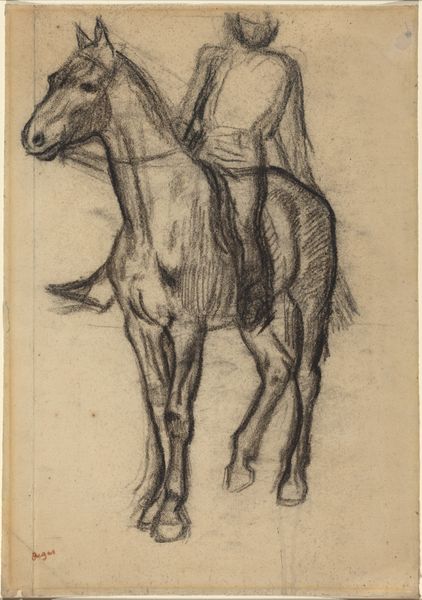
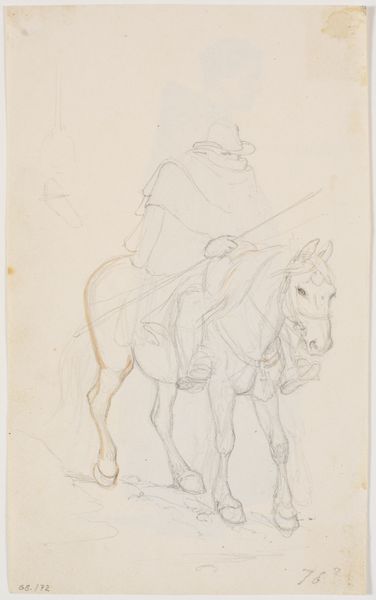
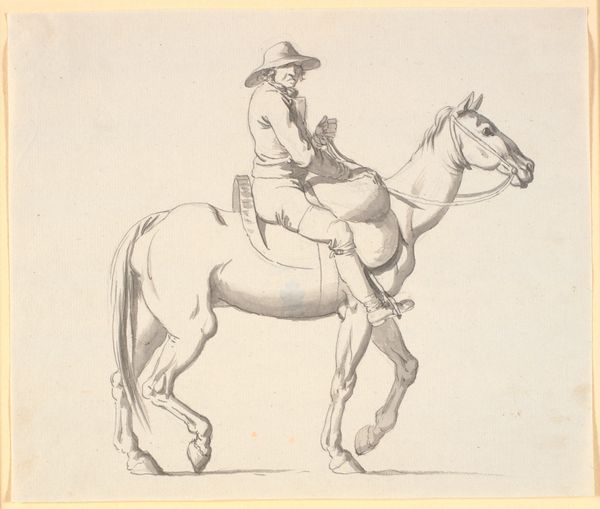
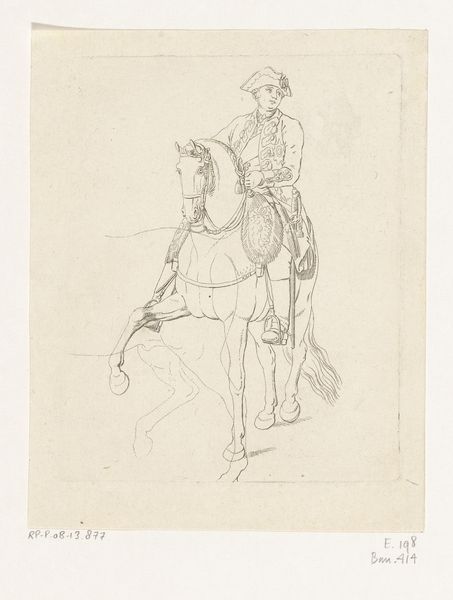
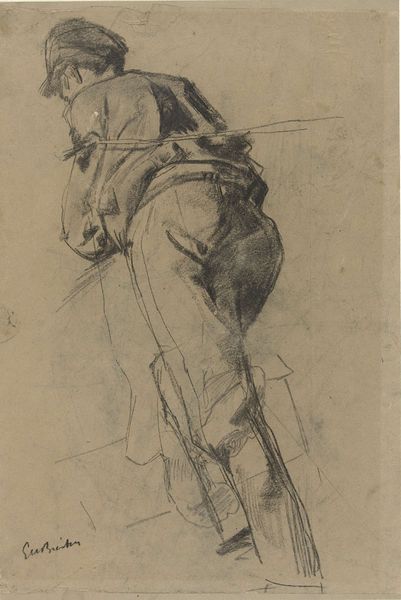
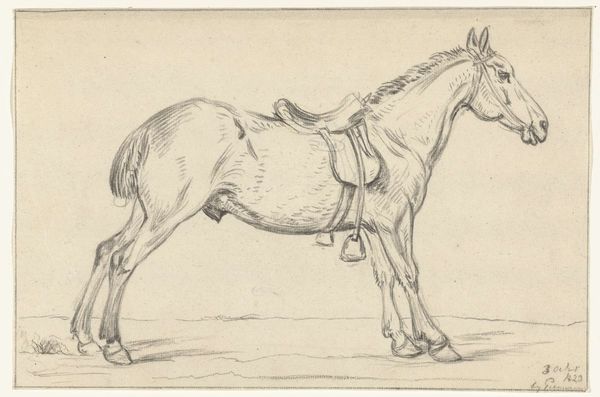
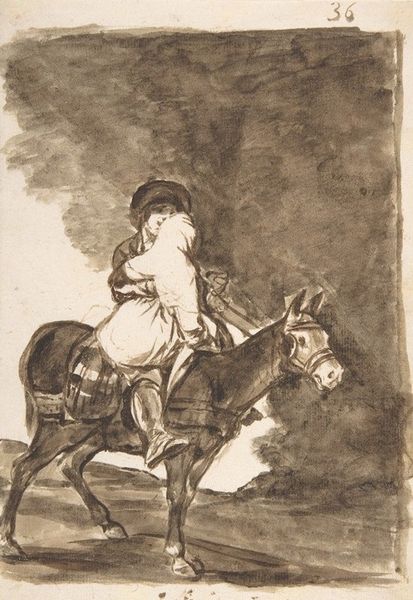
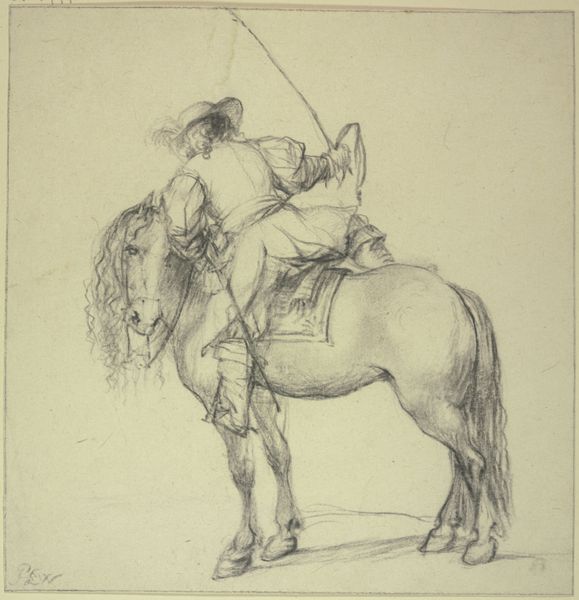
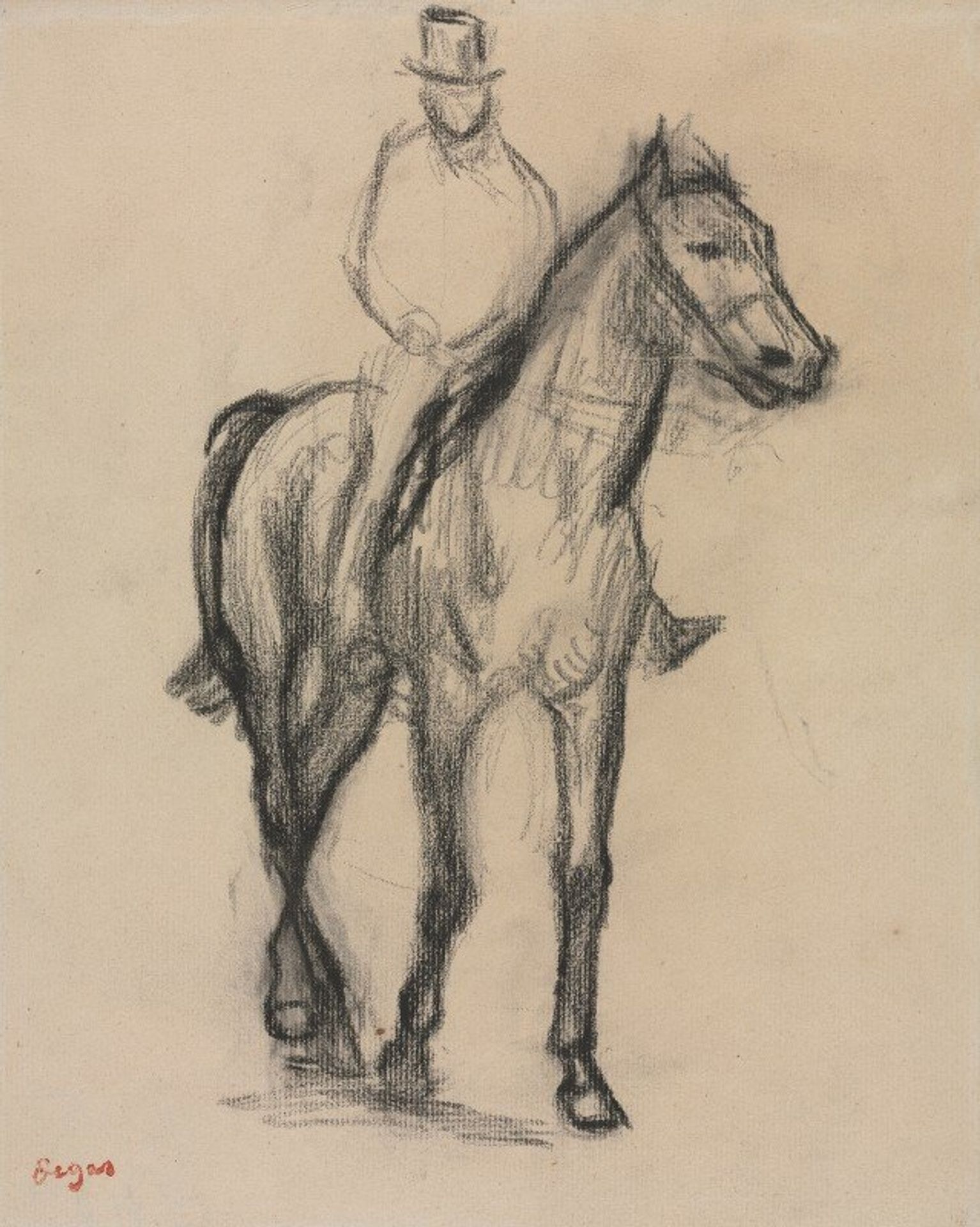
Here we see Edgar Degas’s sketch, with charcoal on paper, depicting a horse and rider, recurring motifs throughout art history, symbolizing power, status, and control. Consider the equestrian statues of Roman emperors, or Renaissance paintings of noblemen on horseback. The horse represents untamed nature, while the rider signifies human intellect and mastery over instinct. This interplay of control and freedom evokes a deep-seated psychological tension. Even today, cars, a modern mode of transportation, are still measured in Horse Power. Yet, looking at Degas's sketch, there's also a sense of precariousness. The sketch is incomplete and the posture is awkward; the rider's control appears tentative. This hints at the fragility of human dominance. The image invites us to contemplate the cyclical nature of power, and the fleeting sense of control that has echoed through centuries of artistic expression.

Artwork details
- Medium
- drawing, pencil
- Copyright
- Public Domain: Artvee
Tags
drawing
impressionism
landscape
figuration
pencil
Comments
No comments
About this artwork
Here we see Edgar Degas’s sketch, with charcoal on paper, depicting a horse and rider, recurring motifs throughout art history, symbolizing power, status, and control. Consider the equestrian statues of Roman emperors, or Renaissance paintings of noblemen on horseback. The horse represents untamed nature, while the rider signifies human intellect and mastery over instinct. This interplay of control and freedom evokes a deep-seated psychological tension. Even today, cars, a modern mode of transportation, are still measured in Horse Power. Yet, looking at Degas's sketch, there's also a sense of precariousness. The sketch is incomplete and the posture is awkward; the rider's control appears tentative. This hints at the fragility of human dominance. The image invites us to contemplate the cyclical nature of power, and the fleeting sense of control that has echoed through centuries of artistic expression.
Comments
No comments