About this artwork
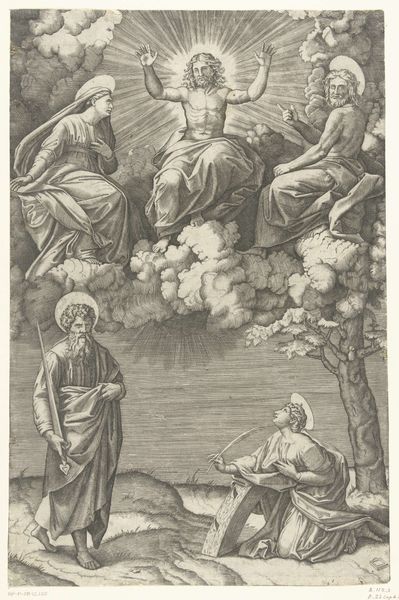
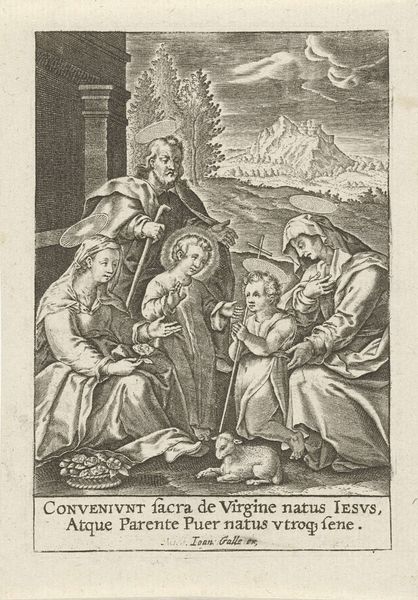
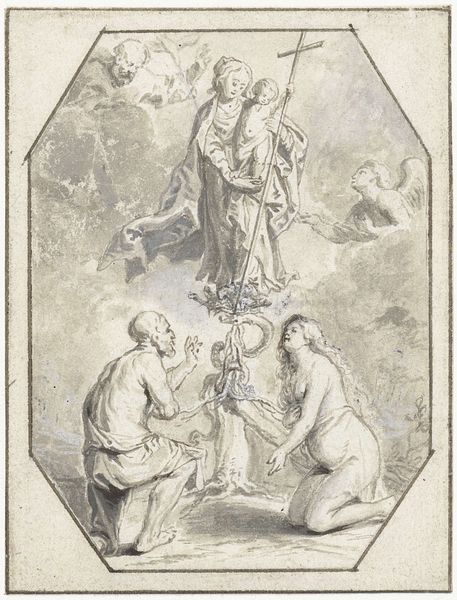
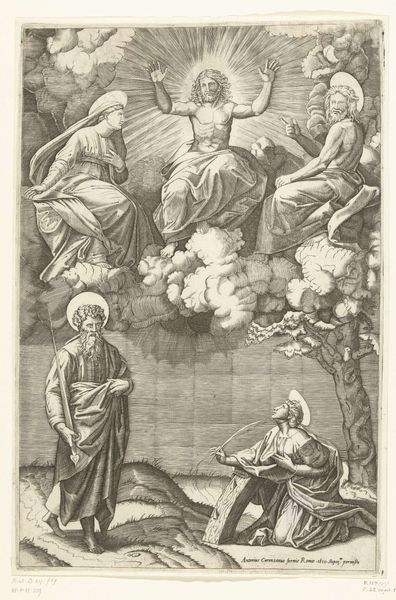
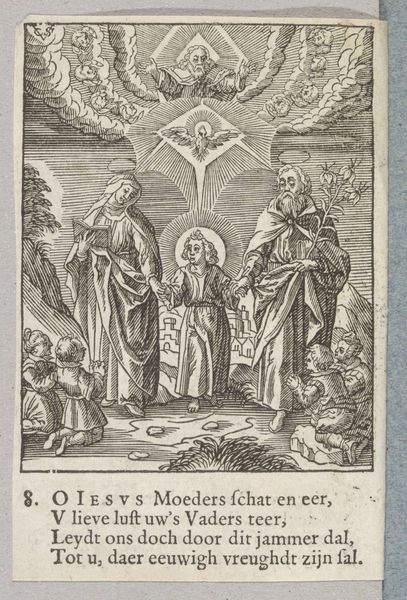
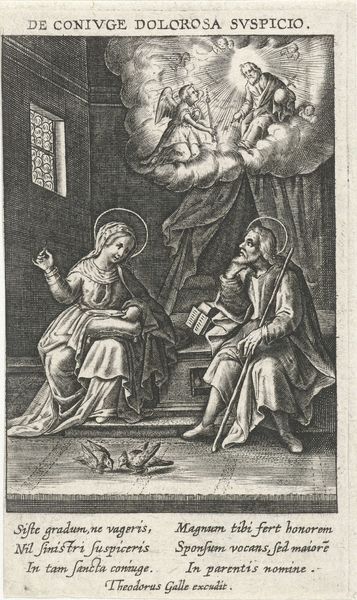
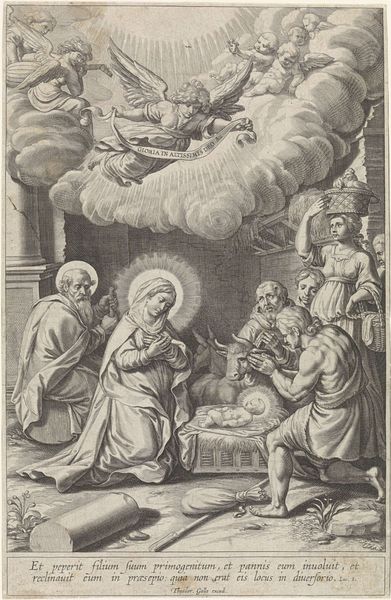
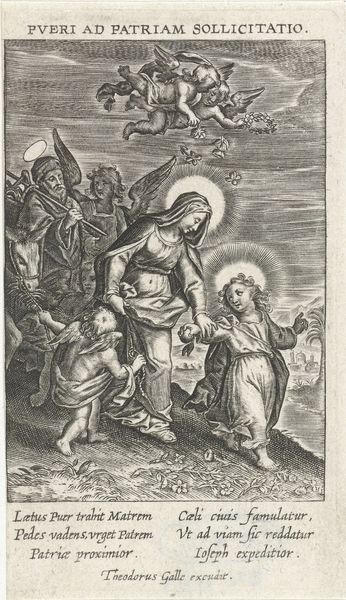
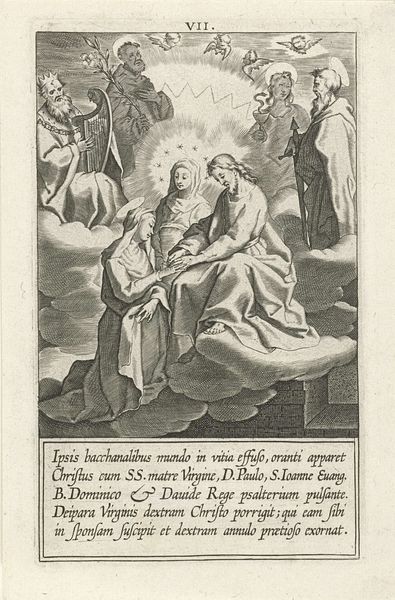
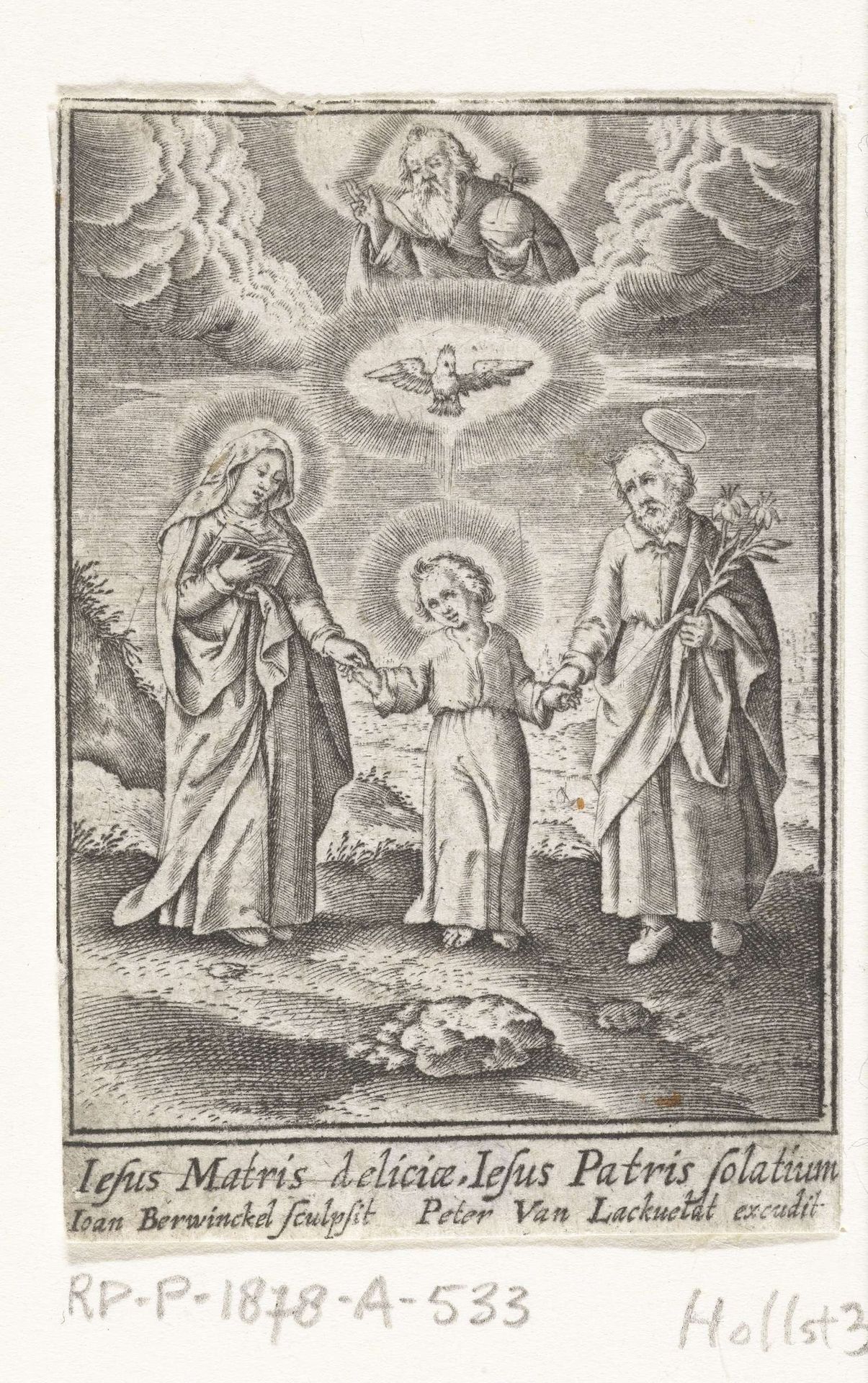
This engraving presents the Holy Family, where the Christ Child, guided by Mary and Joseph, stands beneath the Holy Spirit and God the Father. Consider the dove, emblem of the Holy Spirit. It descends, connecting divine authority with the earthly realm, echoing the ancient symbol of the descending spirit or deity present across cultures, from Greek myths to early Gnostic traditions. God the Father, depicted above, recalls Zeus or Jupiter, the patriarchal sky-father, and is similarly presented as a bearded, wise, and authoritative figure, a representation that has evolved through diverse interpretations of power and divinity. The halos surrounding the figures denote sanctity, a visual language adopted by Christianity from earlier pagan and Roman art. Such symbols are not static; their meanings shift and re-emerge, reflecting our collective attempts to grasp the divine, a recurring dream across history.
Jonge Christus tussen Maria en Jozef en boven hen Heilige Geest en God
1590 - 1610

Artwork details
- Medium
- print, ink, engraving
- Dimensions
- height 64 mm, width 44 mm
- Copyright
- Rijks Museum: Open Domain
Tags
narrative-art
figuration
11_renaissance
ink
line
history-painting
northern-renaissance
engraving
Comments
Be the first to share your thoughts about this work.
About this artwork
This engraving presents the Holy Family, where the Christ Child, guided by Mary and Joseph, stands beneath the Holy Spirit and God the Father. Consider the dove, emblem of the Holy Spirit. It descends, connecting divine authority with the earthly realm, echoing the ancient symbol of the descending spirit or deity present across cultures, from Greek myths to early Gnostic traditions. God the Father, depicted above, recalls Zeus or Jupiter, the patriarchal sky-father, and is similarly presented as a bearded, wise, and authoritative figure, a representation that has evolved through diverse interpretations of power and divinity. The halos surrounding the figures denote sanctity, a visual language adopted by Christianity from earlier pagan and Roman art. Such symbols are not static; their meanings shift and re-emerge, reflecting our collective attempts to grasp the divine, a recurring dream across history.
Comments
Be the first to share your thoughts about this work.