About this artwork
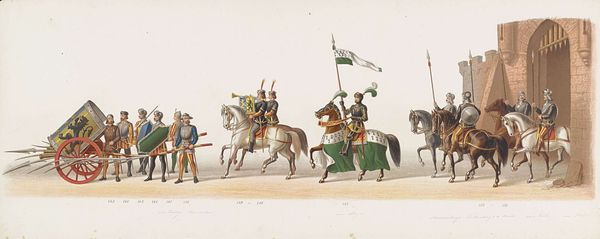
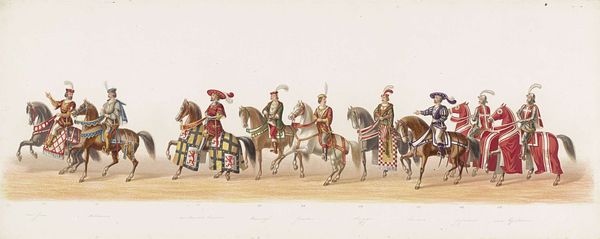
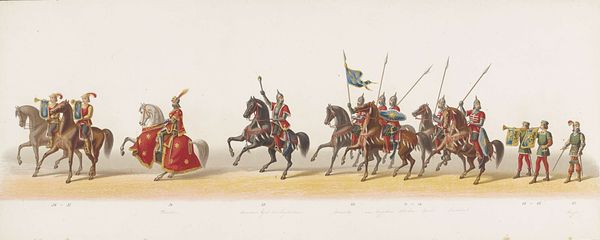
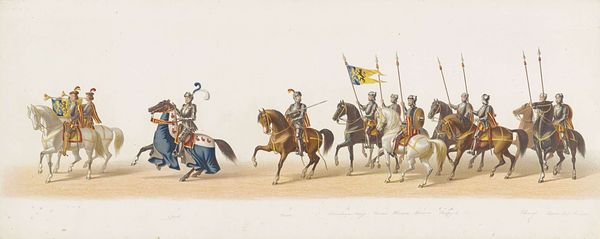
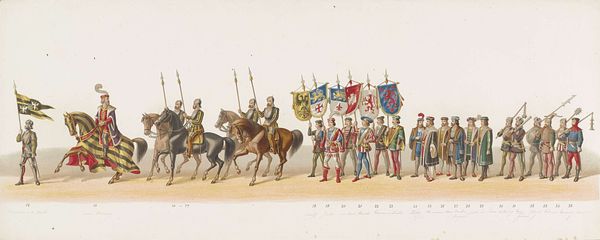
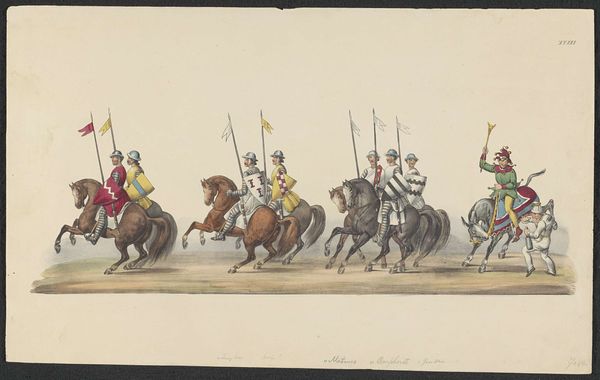
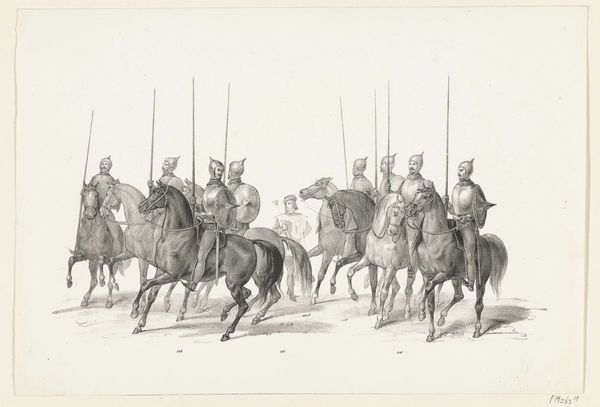
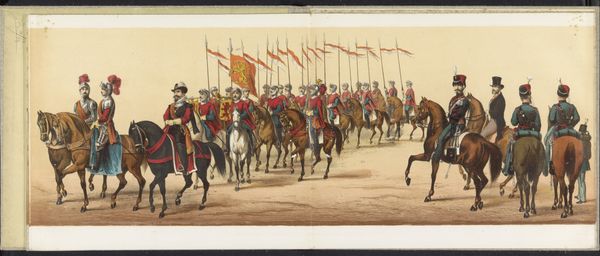
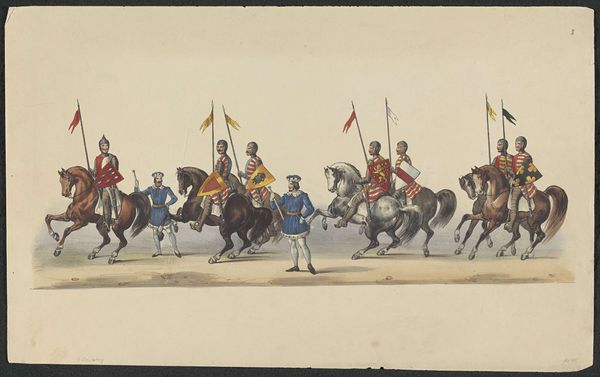
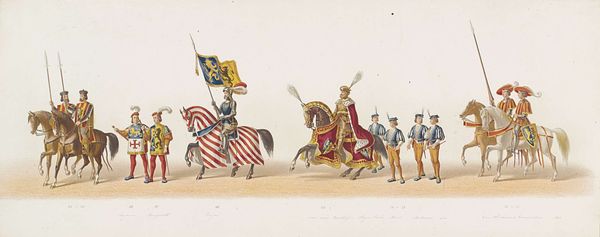
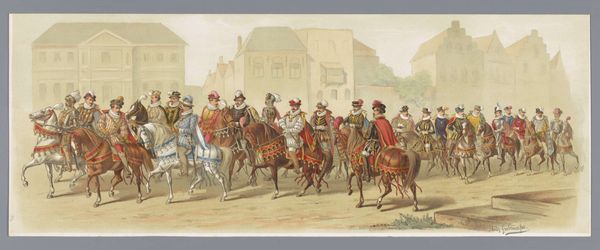
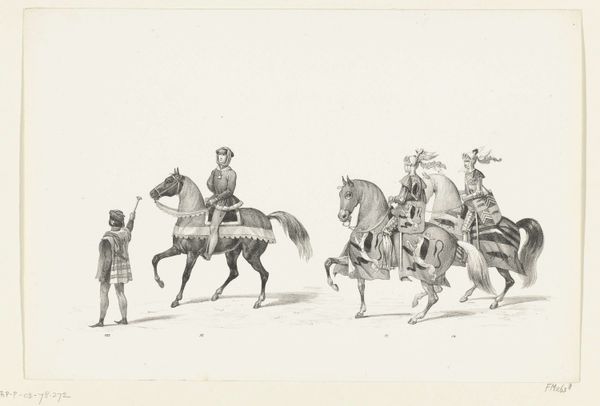
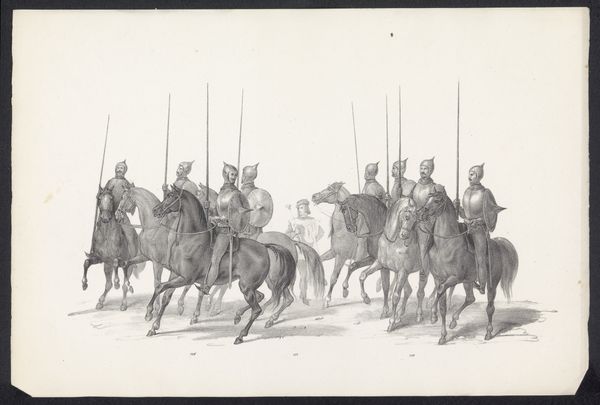
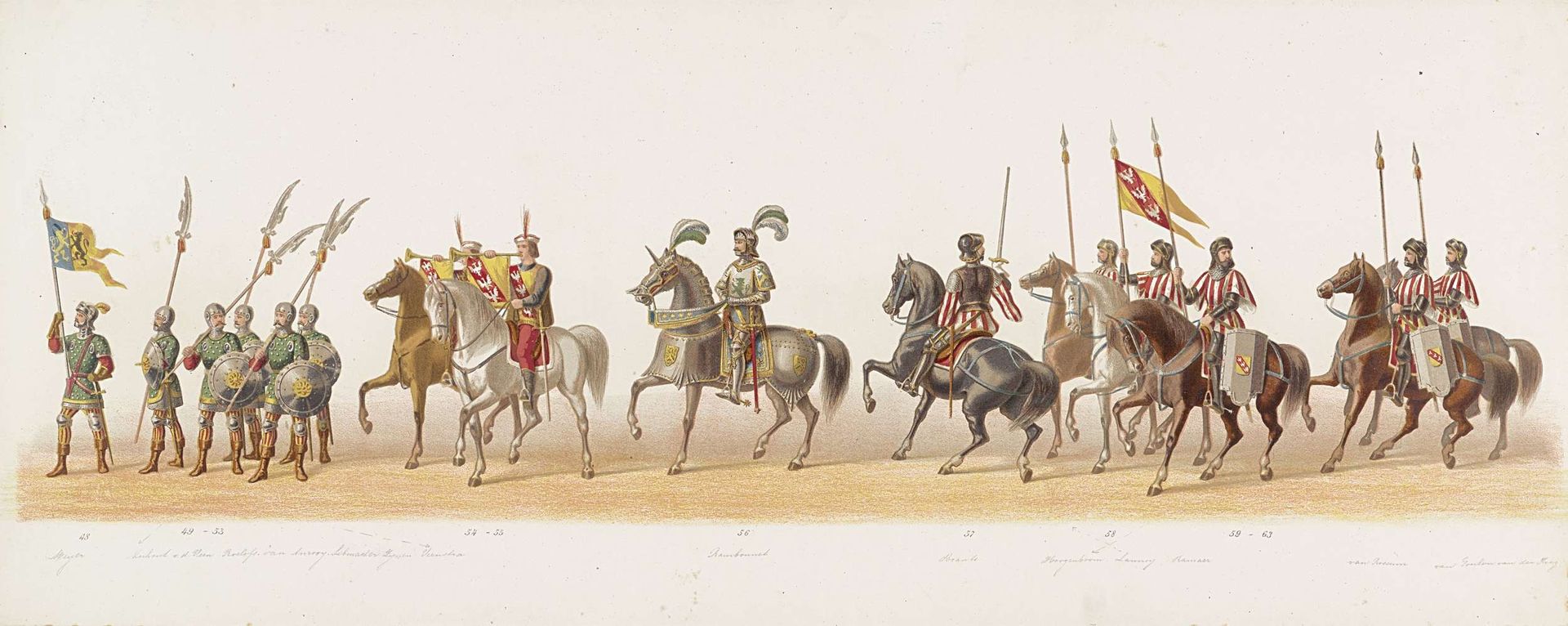
This anonymous 1873 print captures a procession in Delft. Prominently, we see equestrian figures and foot soldiers bearing flags and halberds, symbols of power and civic pride. The motif of the procession, or "triumph," has deep roots in antiquity, think of Roman emperors returning victorious. This iconography was resurrected in Renaissance art, celebrating secular and religious power. Consider Mantegna's "Triumph of Caesar," where the same elements – the display of captured arms and the orderly march – serve to glorify the ruler. In Delft, this procession also evokes a collective memory of the city's past and its participation in broader historical narratives, it echoes through the ages. Though this image is modern, the same symbols are here, demonstrating how we, as human beings, use history to understand the present.

Artwork details
- Medium
- watercolor
- Dimensions
- height 290 mm, width 725 mm
- Copyright
- Rijks Museum: Open Domain
Tags
landscape
watercolor
watercolour bleed
watercolour illustration
genre-painting
history-painting
academic-art
watercolor
Comments
No comments
About this artwork
This anonymous 1873 print captures a procession in Delft. Prominently, we see equestrian figures and foot soldiers bearing flags and halberds, symbols of power and civic pride. The motif of the procession, or "triumph," has deep roots in antiquity, think of Roman emperors returning victorious. This iconography was resurrected in Renaissance art, celebrating secular and religious power. Consider Mantegna's "Triumph of Caesar," where the same elements – the display of captured arms and the orderly march – serve to glorify the ruler. In Delft, this procession also evokes a collective memory of the city's past and its participation in broader historical narratives, it echoes through the ages. Though this image is modern, the same symbols are here, demonstrating how we, as human beings, use history to understand the present.
Comments
No comments