About this artwork
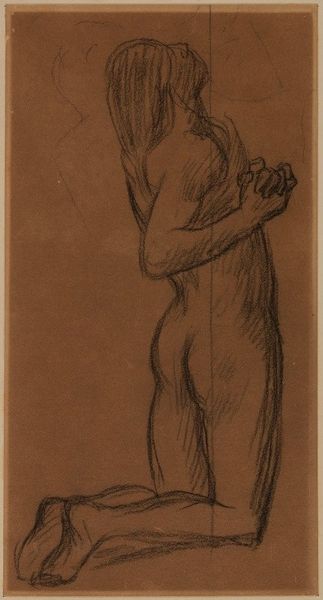
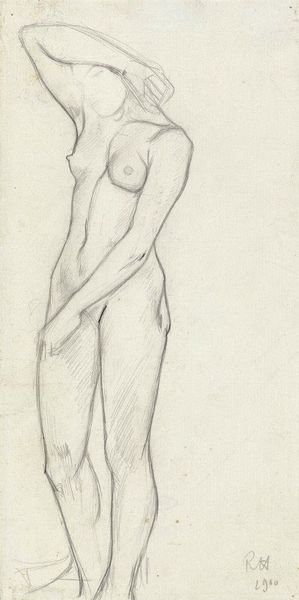
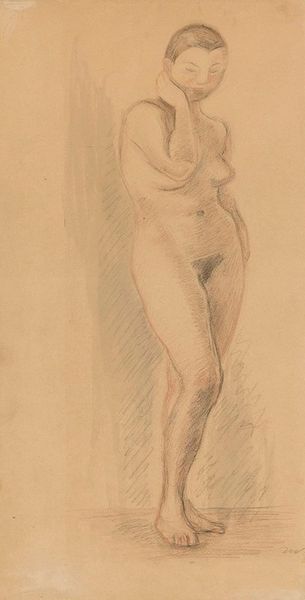
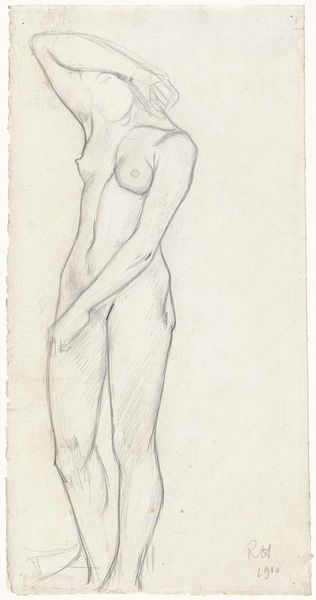
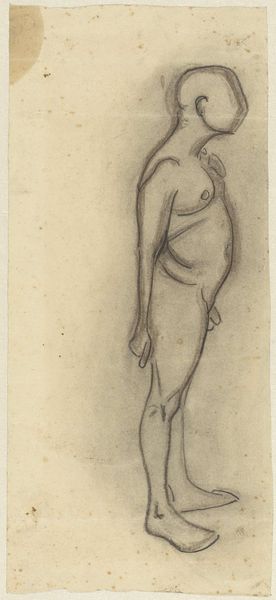
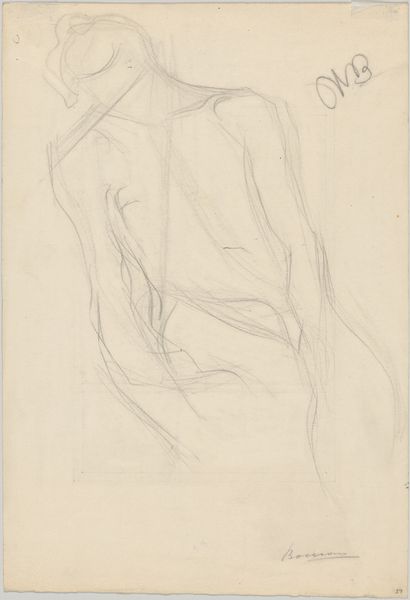
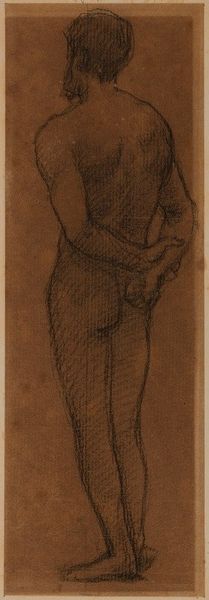
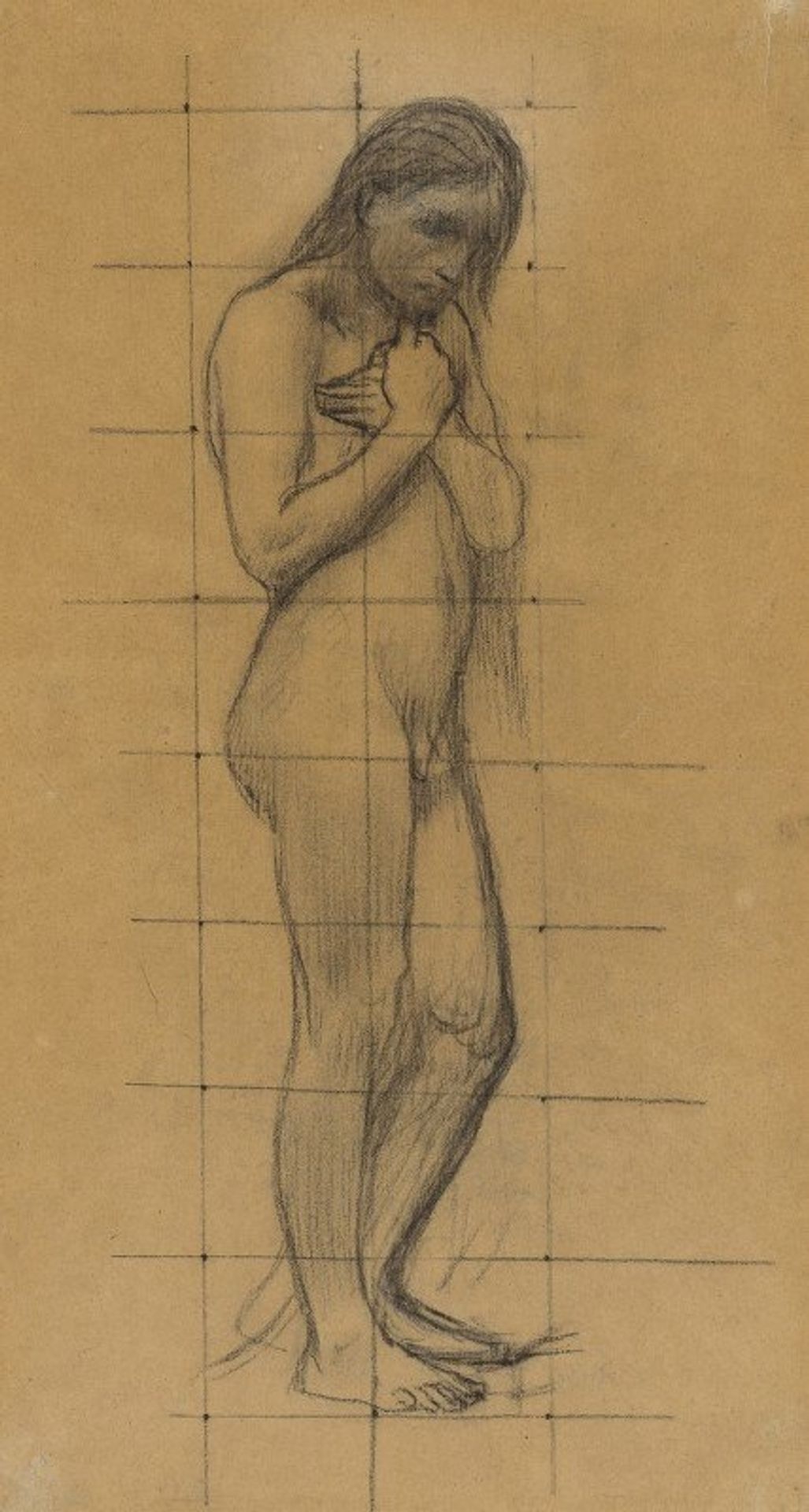
Curator: At first glance, this work feels quite vulnerable, almost melancholic. The figure seems to be shrinking in on himself. Editor: Indeed. What we have here is Pierre Puvis de Chavannes' "A Standing Male Nude," a pencil drawing from around 1879. It offers us a window into the academic artistic practices of the late 19th century. Curator: Those grid lines... it immediately suggests a study. We're not looking at a finished artwork in the traditional sense but a preparatory drawing. Perhaps an exercise in capturing the male form accurately. The paper itself looks aged and has clearly provided material support, a surface for a quick study. Editor: Precisely. This type of academic drawing emphasizes the artist’s mastery of anatomy. The nude as a subject held enormous cultural power, both then and now, and examining how figures are represented and framed in that specific cultural period is useful. Here we have a drawing on a utilitarian background which forces us to observe and consider art education at that point. Curator: It also humanizes the process, doesn't it? We're not presented with a polished, idealized version, but rather with a step in the working methods, labor, and materiality of a great master, which demystifies artistic production, no? Editor: Absolutely. And that intersection—between the classical ideal of the nude and its realization in the working studio—reveals a great deal about artistic creation and the artist's intention, how it can change or confirm societal conventions about how we look at things and people. This drawing lets us re-evaluate. Curator: Seeing the pencil strokes and grid lines makes this feel immediate, bringing the studio right here, in a moment captured. The model's gesture, those subtle anatomical imperfections, and the traces of artistic labor - it is an honest approach! Editor: A valuable, insightful reevaluation, indeed. It encourages us to explore art's development through academic traditions, emphasizing both historical background and tangible creation.

Artwork details
- Medium
- drawing, pencil
- Copyright
- Public Domain: Artvee
Tags
drawing
figuration
pencil
academic-art
nude
Comments
No comments
About this artwork
Curator: At first glance, this work feels quite vulnerable, almost melancholic. The figure seems to be shrinking in on himself. Editor: Indeed. What we have here is Pierre Puvis de Chavannes' "A Standing Male Nude," a pencil drawing from around 1879. It offers us a window into the academic artistic practices of the late 19th century. Curator: Those grid lines... it immediately suggests a study. We're not looking at a finished artwork in the traditional sense but a preparatory drawing. Perhaps an exercise in capturing the male form accurately. The paper itself looks aged and has clearly provided material support, a surface for a quick study. Editor: Precisely. This type of academic drawing emphasizes the artist’s mastery of anatomy. The nude as a subject held enormous cultural power, both then and now, and examining how figures are represented and framed in that specific cultural period is useful. Here we have a drawing on a utilitarian background which forces us to observe and consider art education at that point. Curator: It also humanizes the process, doesn't it? We're not presented with a polished, idealized version, but rather with a step in the working methods, labor, and materiality of a great master, which demystifies artistic production, no? Editor: Absolutely. And that intersection—between the classical ideal of the nude and its realization in the working studio—reveals a great deal about artistic creation and the artist's intention, how it can change or confirm societal conventions about how we look at things and people. This drawing lets us re-evaluate. Curator: Seeing the pencil strokes and grid lines makes this feel immediate, bringing the studio right here, in a moment captured. The model's gesture, those subtle anatomical imperfections, and the traces of artistic labor - it is an honest approach! Editor: A valuable, insightful reevaluation, indeed. It encourages us to explore art's development through academic traditions, emphasizing both historical background and tangible creation.
Comments
No comments