1923
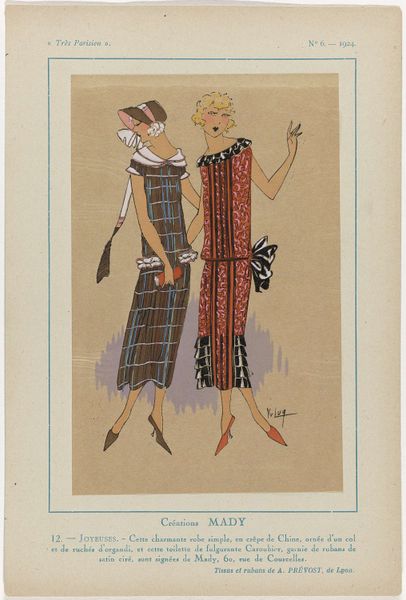
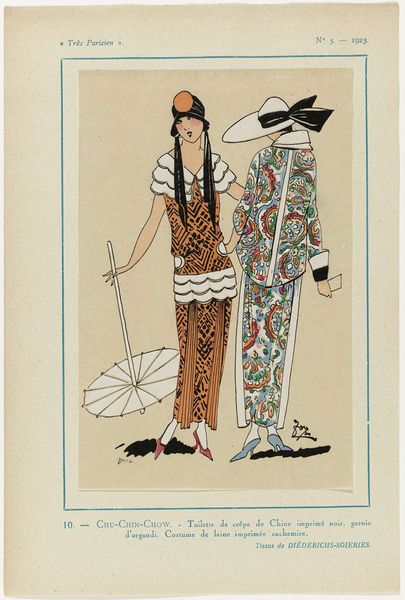
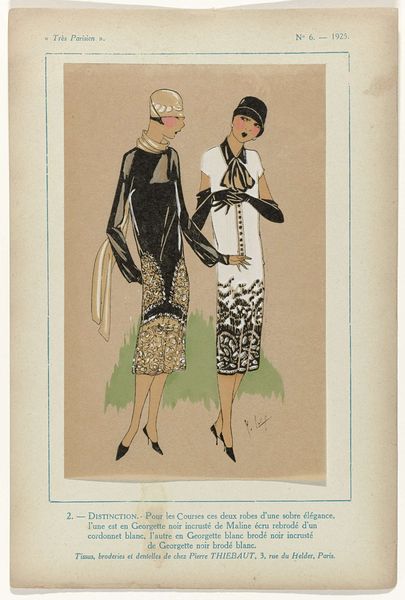
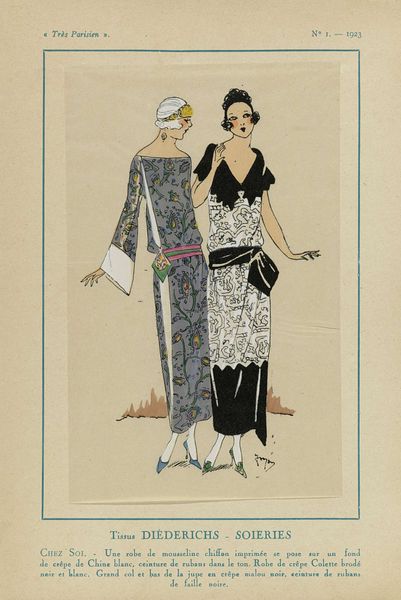
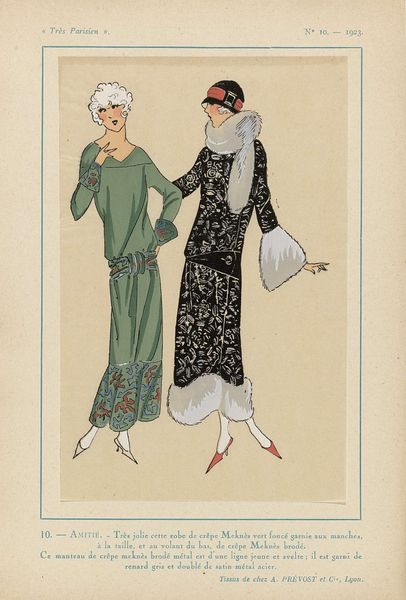
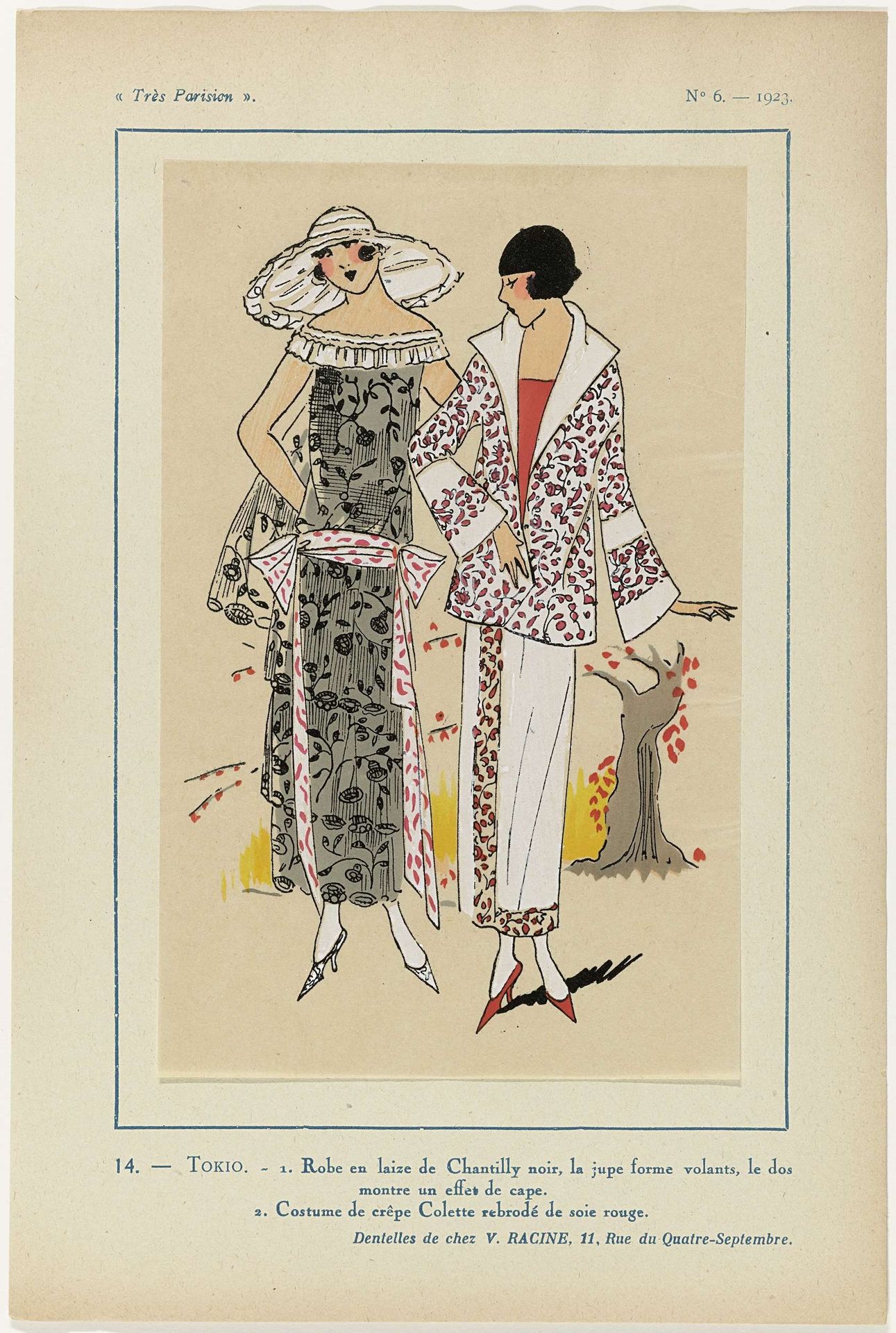
Très Parisien, 1923, No 6: 14. - TOKIO. - 1. Robe en laize de Chantilly...

Anonymous
@anonymousLocation
RijksmuseumListen to curator's interpretation
Curatorial notes
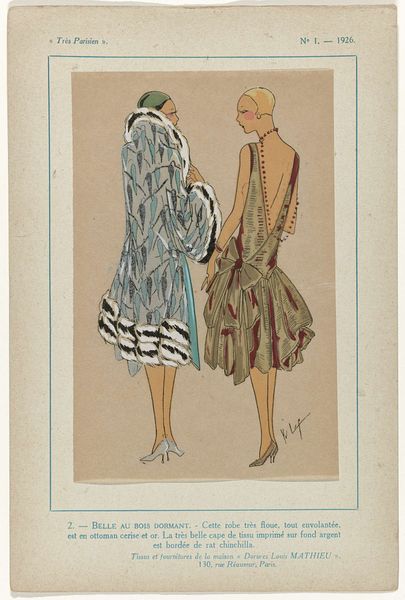
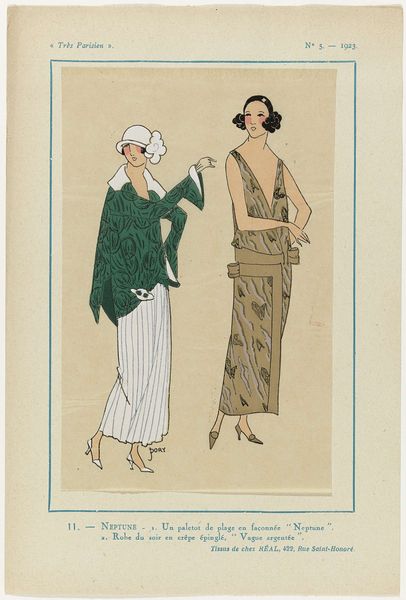
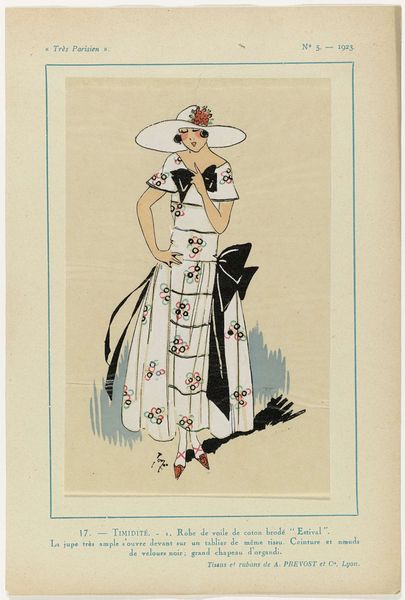
This fashion plate, titled "Très Parisien, 1923, No 6," presents two women’s garments made from Chantilly lace and crepe. Chantilly lace is a handmade bobbin lace known for its fine detail and delicate patterns. The dress on the left likely involved highly skilled lacemakers who meticulously interwove threads to create its intricate design. The process required specialized tools, patterns, and years of training to master. Similarly, the "Colette" costume utilizes crepe, a silk fabric with a distinctively crimped texture, which would have been re-embroidered with silk threads, adding further labor and artistry. In the 1920s, such garments symbolized luxury and status. The artistry and time-intensive processes involved reflect the hierarchical structures of the fashion industry, with designers at the top and skilled artisans at the base. The plate makes visible the relationship between elite consumption and labor-intensive production, blurring the lines between art, craft, and commerce.