About this artwork
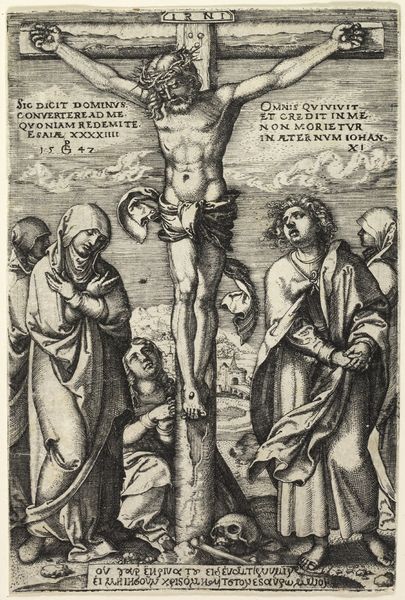
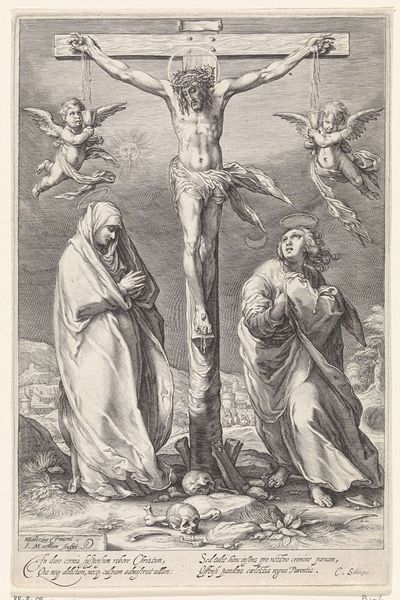
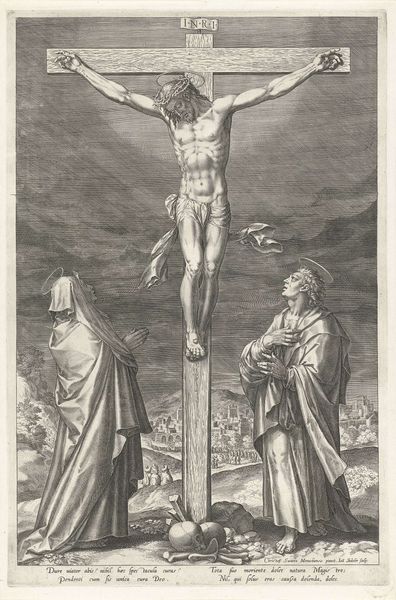
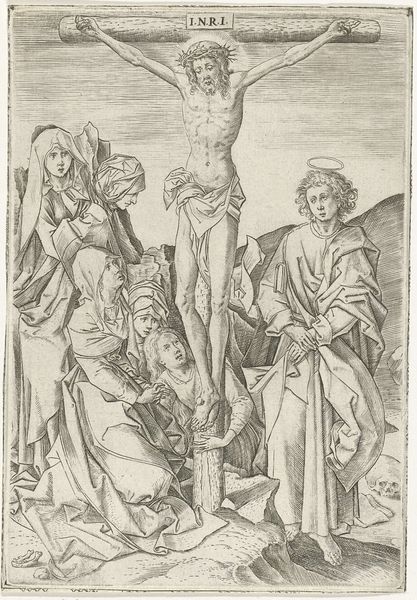
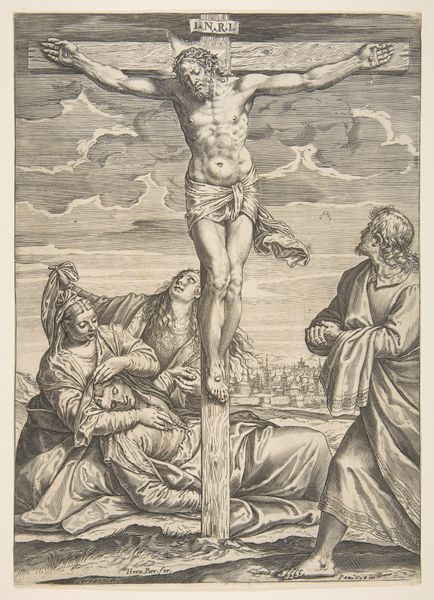
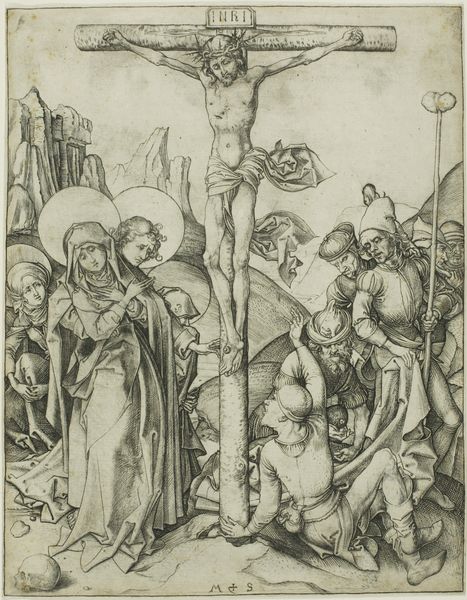
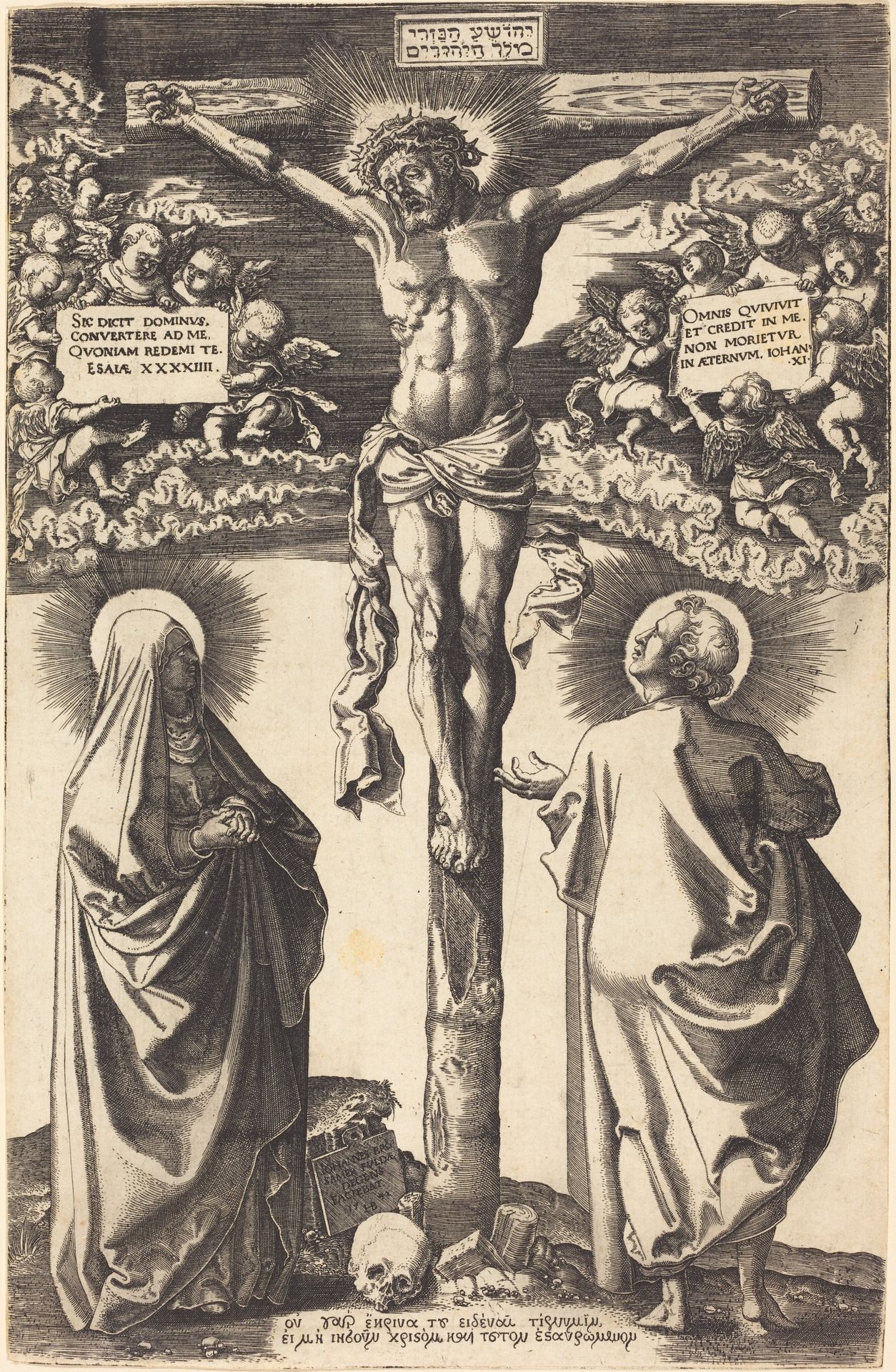
Editor: This engraving from 1542 by Hans Brosamer, "Christ on the Cross with the Virgin and Saint John," is incredibly detailed! I’m immediately struck by the stark contrast between the suffering of Christ and the almost ornamental quality of the angels surrounding him. What do you see in this piece that I might be missing? Curator: The proliferation of engravings like this one speaks to the burgeoning power of print culture in the 16th century. Images like these were not just devotional aids but also powerful tools for disseminating religious ideas, often used during periods of reformation and religious upheaval. The relatively small size of engravings meant that the sacred, previously confined to monumental spaces such as the Church, could now be owned and consumed in the private space of one's own home. How do you think that may have shifted an individual's relationship with their religious faith? Editor: That's fascinating! I hadn’t considered the impact of accessibility. Did the messages conveyed through these images differ across social classes, based on literacy levels? Curator: Absolutely. Even for the illiterate, the imagery itself was a powerful form of communication. The placement of specific figures, the prominence of text even if unreadable, all contributed to a visual rhetoric that reinforced certain doctrines or interpretations of faith. Did you happen to notice that there are Hebrew and Greek inscriptions included in this engraving as well? Editor: Wow, I didn’t catch that. Now, observing the cultural landscape through art changes how I view this piece, especially considering how the average person could interpret this. Thank you! Curator: Indeed! Analyzing its distribution reveals a complex dynamic of piety, politics, and visual communication in early modern Europe.
Christ on the Cross with the Virgin and Saint John
1542


Artwork details
- Medium
- print, engraving
- Dimensions
- sheet (trimmed to plate mark): 26.6 × 17.2 cm (10 1/2 × 6 3/4 in.)
- Copyright
- National Gallery of Art: CC0 1.0
Tags
Comments
Share your thoughts
About this artwork
Editor: This engraving from 1542 by Hans Brosamer, "Christ on the Cross with the Virgin and Saint John," is incredibly detailed! I’m immediately struck by the stark contrast between the suffering of Christ and the almost ornamental quality of the angels surrounding him. What do you see in this piece that I might be missing? Curator: The proliferation of engravings like this one speaks to the burgeoning power of print culture in the 16th century. Images like these were not just devotional aids but also powerful tools for disseminating religious ideas, often used during periods of reformation and religious upheaval. The relatively small size of engravings meant that the sacred, previously confined to monumental spaces such as the Church, could now be owned and consumed in the private space of one's own home. How do you think that may have shifted an individual's relationship with their religious faith? Editor: That's fascinating! I hadn’t considered the impact of accessibility. Did the messages conveyed through these images differ across social classes, based on literacy levels? Curator: Absolutely. Even for the illiterate, the imagery itself was a powerful form of communication. The placement of specific figures, the prominence of text even if unreadable, all contributed to a visual rhetoric that reinforced certain doctrines or interpretations of faith. Did you happen to notice that there are Hebrew and Greek inscriptions included in this engraving as well? Editor: Wow, I didn’t catch that. Now, observing the cultural landscape through art changes how I view this piece, especially considering how the average person could interpret this. Thank you! Curator: Indeed! Analyzing its distribution reveals a complex dynamic of piety, politics, and visual communication in early modern Europe.
Comments
Share your thoughts